

FIFA announced on Thursday that the 2026 World Cup final will feature the first halftime show in the tournament’s 96-year history — a production headlined by Shakira, Madonna, and South Korean pop group BTS, curated by Coldplay’s Chris Martin and produced by Global Citizen. The final takes place July 19 at MetLife Stadium in New Jersey, before an expected global television audience of more than one billion people.
The reaction was immediate, loud, and divided almost entirely along cultural lines.
What FIFA Announced
The halftime show will replace the traditional closing ceremony, which has historically taken place before kickoff of the final rather than at the interval.
Shakira — the Colombian artist who performed “Waka Waka,” the official song of the 2010 South Africa World Cup — will debut a new track called “Dai Dai” at the show, marking her return to the world’s largest sporting stage sixteen years after her first appearance. Madonna and BTS will co-headline alongside her.
The show was curated by Chris Martin in collaboration with FIFA and will benefit the FIFA Global Citizen Education Fund, with $1 from every ticket sold across all 104 World Cup matches donated to the fund. FIFA president Gianni Infantino, who telegraphed the announcement at a World Cup event in March 2025, described it as “a historic moment befitting the biggest sporting event in the world.”
For Latin American fans — and particularly for Colombian supporters, for whom Shakira’s involvement carries genuine national pride — the announcement of her role as the show’s anchor act landed well. The choice of the artist most identified globally with the intersection of Latin culture and fútbol is not an accident.
Shakira’s “Waka Waka” remains one of the most-streamed World Cup songs in history, and her new track “Dai Dai” will almost certainly become one of the defining sounds of the summer regardless of how purists feel about its context.
The Controversy
The backlash began within hours of the announcement and has not quieted since.
At the center of the debate is a question that cuts to the heart of what the World Cup is and who it is for. Critics — including former players, coaches, journalists, and fan groups across Europe and Latin America — argue that importing the Super Bowl halftime show format into fútbol’s premier event is a fundamental misreading of what makes the sport culturally distinct. The NFL halftime show exists, in part, because American football’s structure produces natural breaks of sufficient length to accommodate large-scale entertainment productions.
Fútbol does not.
The International Football Association Board, the body that writes the laws of the game, specifies that halftime breaks should not exceed 15 minutes. A production featuring three of the world’s highest-profile musical acts — with the stage equipment, crew choreography, and technical complexity that entails — cannot be executed in 15 minutes. FIFA has not confirmed how long the interval will be extended, and that ambiguity has fueled specific, practical objections from the coaching and medical communities.
Player recovery is the most cited concern. Fifteen minutes is calibrated to allow players to receive tactical instruction, address minor injuries, rehydrate, and return to playing temperature. An extended interval disrupts that calibration.
Studies on halftime duration and second-half performance in professional fútbol are limited but generally consistent: longer breaks produce more variable second-half output, with some evidence of muscle cooling effects that increase injury risk. For a World Cup final — the most consequential 90 minutes in the sport — those variables are not trivial.
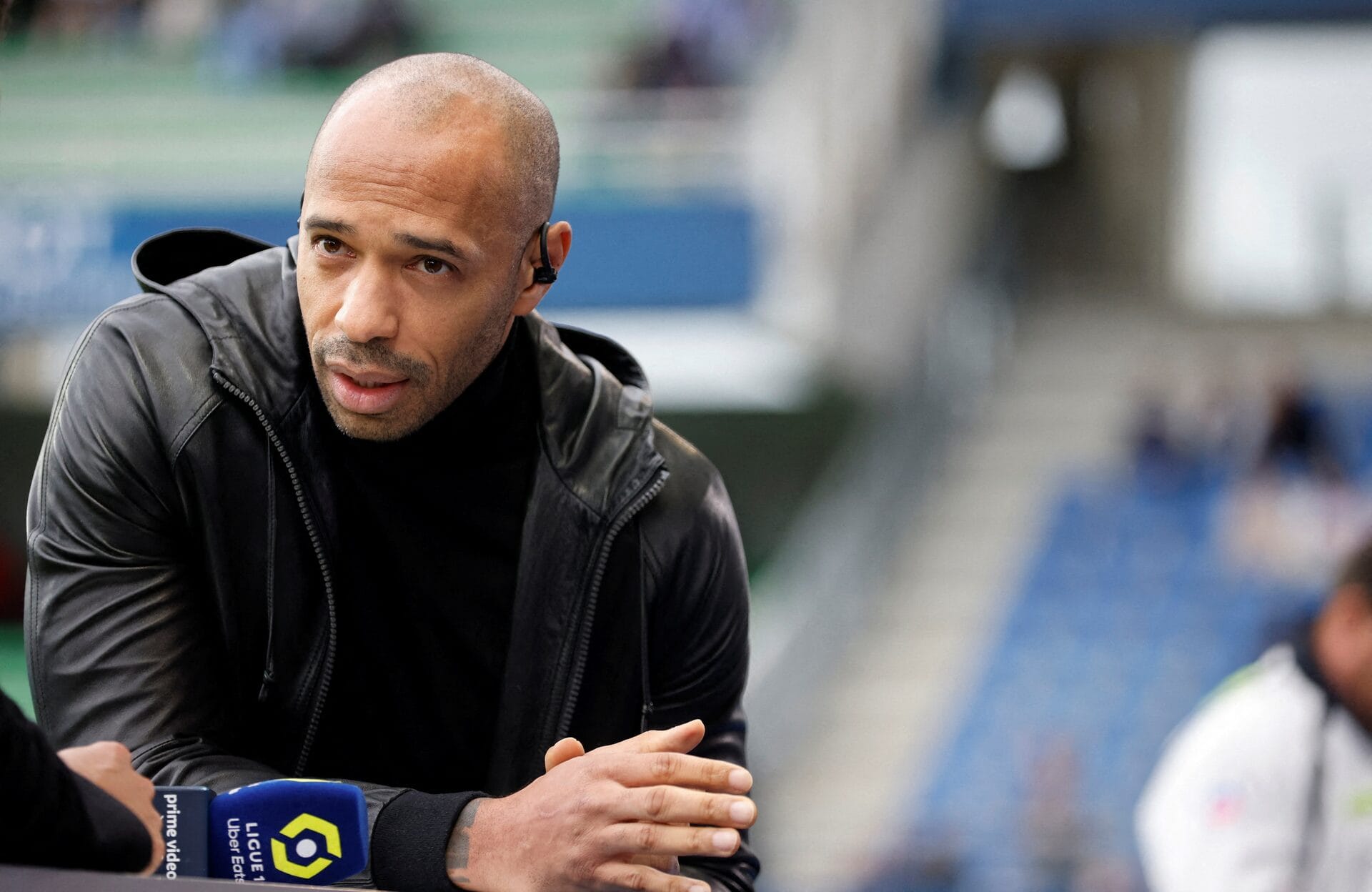
One of the World Cup Final’s most recent critics is France and Arsenal legend Thierry Henry who stated:
“Football is losing its soul little by little. A World Cup Final is supposed to be the purest form of football — pressure, intensity, emotion, tactics, suffering, history. Not a halftime concert made for people who don't even watch football.”
Pitch damage is a secondary concern. Moving staging equipment, hundreds of performers, and the infrastructure required for a production of this scale onto a natural grass surface introduces risk to the playing surface that standard fútbol operations do not. MetLife Stadium’s turf has already been the subject of scrutiny as a World Cup venue; the halftime show adds a new layer of complexity to its preparation.
The “Americanization” Debate
Beneath the practical objections lies a cultural argument that has been present in European and Latin American fútbol discourse since the United States was awarded co-hosting rights for 2026: the fear that the tournament’s commercial expansion into the U.S. market will gradually reshape the sport in the image of American entertainment rather than the other way around.
That fear is not irrational. The 2026 World Cup is the most commercially ambitious in the tournament’s history — 48 teams, 104 matches, 39 days, three host countries, and now a halftime show designed explicitly, as FIFA’s own framing acknowledges, to increase the tournament’s appeal in the North American market.
Each of those decisions has a coherent commercial logic. Taken together, they represent a significant departure from the tournament’s historical identity.
Supporters of the halftime show counter that fútbol’s global audience is not monolithic, that a billion-person television event can accommodate both serious sport and cultural spectacle, and that Shakira’s involvement in particular grounds the show in a Latin American cultural tradition that is inseparable from the sport itself. Colombia’s relationship with fútbol and with Shakira as a national symbol makes her an entirely legitimate face for a tournament being played in part in a country — the United States — where Latin American communities will constitute a significant share of the in-stadium and television audience.
Shakira & Latin America’s World Cup Moment
For the Latin American teams competing in 2026, the tournament carries weight that goes beyond the usual stakes of the quadrennial competition.
Argentina arrives as defending champion, seeking to become the first back-to-back men’s world champion since Brazil in 1962. Lionel Messi, 38, is playing in a record sixth World Cup and needs three goals to become the tournament’s all-time leading scorer. Brazil, Colombia, Mexico, Uruguay, Ecuador, Peru, Chile, Venezuela, Paraguay, Bolivia, and Panama — eleven CONMEBOL and CONCACAF nations in total — have qualified from the region, the largest Latin American representation in World Cup history under the expanded 48-team format.
For the diaspora communities across the United States who will watch those teams play on home soil — in Miami, New York, Los Angeles, Houston, and Chicago — this is a tournament unlike any other. The proximity, the scale, and now the cultural spectacle of a Colombian artist fronting the world’s biggest sporting event at a stadium 30 minutes from Manhattan make 2026 something that will not come again.
Whether the halftime show belongs in that picture is a legitimate debate. That Shakira belongs at the center of it is not.


