

MIAMI — Two things happened on Thursday that, taken together, tell you more about Washington's Cuba strategy than any single policy statement has.
First, CIA Director John Ratcliffe flew to Havana for a high-level meeting with senior Cuban officials — a visit confirmed by both governments, with photographs posted directly to the CIA’s official X account. Ratcliffe met with Cuban Interior Minister Lázaro Álvarez Casas, the head of Cuba’s intelligence services, and — notably — Raúl Guillermo Rodríguez Castro, the grandson of former Cuban President Raúl Castro. The CIA described the visit as an opportunity to tell Cuban leaders that Washington was prepared to engage on economic and security cooperation if Cuba made “fundamental changes.”
The offer, Ratcliffe made clear, would not remain open indefinitely.
Hours later, a U.S. Department of Justice official told Reuters that the United States plans to indict Raúl Castro himself — the 94-year-old former president, Fidel’s brother, and the man still widely regarded as the most powerful figure in Cuba — on charges related to the 1996 shootdown of two planes operated by the Miami-based humanitarian group Brothers to the Rescue.
The timing of the indictment was described as imminent, pending grand jury approval.
The carrot and the stick, delivered on the same day.
Brothers to the Rescue: What Happened in 1996
For the Miami Cuban exile community, the Brothers to the Rescue case is not a historical footnote. It is an open wound.
Brothers to the Rescue was a Miami-based humanitarian organization founded in 1991 by José Basulto, a Bay of Pigs veteran, to search for Cuban rafters crossing the Florida Straits and alert the U.S. Coast Guard to their locations. By 1996, the group had also begun flying over Cuban territorial airspace and dropping anti-Castro leaflets over Havana — activities that the Cuban government had repeatedly protested to Washington.
On February 24, 1996, Cuban MiG fighter jets shot down two of the group’s Cessna aircraft over international waters, killing four people: Carlos Costa, Mario de la Peña, Pablo Morales, and Armando Alejandre Jr. — all U.S. citizens or permanent residents. A third plane turned back before being intercepted. The Cuban government claimed the aircraft had violated its airspace.
The United States and international investigators, including the International Civil Aviation Organization, concluded the planes were shot down over international waters in violation of international law.
Today in Cuba 🇨🇺 🇺🇸 https://t.co/H2ECWpJGkg
— Sociedad Media (@sociedadmedia) May 14, 2026
The incident led directly to the passage of the Helms-Burton Act, which tightened the U.S. embargo on Cuba and made it significantly more difficult for any future U.S. president to ease restrictions without congressional approval. Fidel Castro publicly defended the shootdown. Raúl Castro, as head of Cuba’s armed forces at the time, is expected to face charges related to his role in authorizing or directing the operation.
For the families of the four men killed — and for the broader Miami Cuban exile community that has marked February 24 every year since — the potential indictment represents accountability that has been sought, and denied, for three decades.
What the CIA Offered
The CIA director’s visit to Havana was the highest-level direct U.S.-Cuba intelligence contact in years. According to U.S. officials cited by multiple outlets, Ratcliffe’s message to Cuban leadership was structured around a clear conditional: cooperation brings relief; non-cooperation brings consequences.
On the relief side, Ratcliffe reiterated the administration’s offer of $100 million in humanitarian aid, to be distributed through the Catholic Church and independent civil society organizations — the same offer Secretary of State Marco Rubio has repeatedly said Cuba has blocked. Cuban President Miguel Díaz-Canel responded to the aid offer publicly, saying Cuba would place “no obstacles” before genuine humanitarian assistance. His framing — conditional on U.S. sincerity — mirrors the administration’s own conditional framing almost exactly.
Ratcliffe also raised the possibility of expanded economic and security cooperation, framed around Washington’s position that Cuba can no longer function as what U.S. officials have described as a safe haven for enemies of the West — a reference to longstanding accusations about Russian and Chinese intelligence operations on the island, which Secretary Rubio highlighted in his April 27 warning that Cuba faces “two paths: neither good.”
The meeting also covered Cuba’s energy crisis directly. Cuba’s Minister of Energy and Mining stated this week that the island’s fuel reserves have been effectively exhausted: “Crude oil, fuel oil, of which we have absolutely none; diesel, of which we have absolutely none. The only thing we have is gas from our wells.”
A Russian oil shipment last month was described as Cuba’s only significant fuel lifeline since January — and those reserves are now gone.
The Indictment as Leverage
The simultaneous timing of Ratcliffe’s visit and the DOJ indictment announcement is being read by analysts and Cuban exile leaders as a deliberate dual-track strategy: engage the current generation of Cuban leadership with offers of economic relief while applying maximum legal and political pressure on the revolutionary generation that built the system they are being asked to dismantle.
Raúl Castro, 94, has been formally retired from the Cuban presidency since 2021, when he handed the role to Díaz-Canel and announced his withdrawal from the Communist Party’s first secretaryship. He has not made significant public appearances since. Whether an indictment changes anything practically — Cuba has no extradition treaty with the United States, and Castro is unlikely to travel anywhere that would expose him to arrest — is a different question from what it signals.
What it signals is direct: Washington is treating the current Cuban leadership not as a separate generation from the Castro era, but as its continuation. An indictment of Raúl Castro is simultaneously a legal action and a political one — a formal statement that the United States holds the Cuban state accountable for 30-year-old crimes and that no amount of diplomatic engagement erases that accountability.
Cuban exile leader Ramón Saúl Sánchez, reached by Local 10 News in Miami, offered a characteristically measured response: “That’s a good step, but at the same time it doesn’t reconcile politically speaking that they are trying to engage with a regime at the same time that they are trying to indict their leader.”
He added that the Cuban exile community should reserve judgment until the full terms of Ratcliffe’s discussions become clear.
What It Means for Miami
For Miami’s Cuban-American community — which has lobbied for accountability over the Brothers to the Rescue shootdown since 1996 — Thursday’s developments are significant on two levels.
The indictment, if approved by a grand jury, would be the first U.S. criminal charge against a senior Cuban government official for crimes committed against U.S. citizens on this scale.
The families of Carlos Costa, Mario de la Peña, Pablo Morales, and Armando Alejandre Jr. have waited 30 years for a legal reckoning. The fact that it is coming, if it comes, from a DOJ that has already used federal indictments as a foreign policy tool — against the Sinaloa Cartel's political allies in Mexico, against Maduro in Venezuela — gives it a credibility that previous political statements have not carried.
The CIA visit, on the other hand, raises questions that the exile community has historically viewed with deep suspicion: what exactly is being offered to Cuban officials, and at what price?
The history of U.S.-Cuba negotiations is littered with arrangements that produced diplomatic progress while leaving the underlying power structure intact. Whether Ratcliffe’s visit represents a genuine path to political change or another round of managed engagement with a regime that has outlasted ten U.S. presidents is a question Miami’s Cuban community will be watching closely.
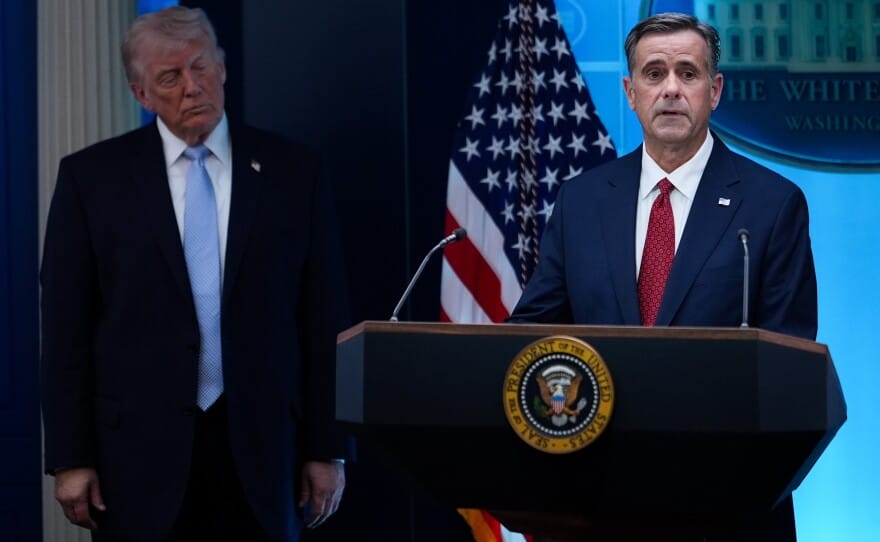
Trump said earlier this week that Cuba is “asking for help.”
On Thursday, his CIA director flew to Havana to define the terms.
Sociedad Media will continue to monitor any developments in the ongoing negotiations with Washington & Havana. Tips, sources, and feedback welcome at info@sociedadmedia.com
🚨🇨🇺🇺🇸 | URGENTE/CUBA: The U.S. Department of Justice is reportedly preparing to indict Raúl Castro, according to CBS, for his role in the downing of the 1996 Brothers to the Rescue civilian aircraft over the Florida Straits
— Sociedad Media (@sociedadmedia) May 14, 2026
The Cuban government has long held that the aircraft… pic.twitter.com/y1LMLDLShi


