

MIAMI — On the night of November 18, 2025, something happened in Haiti that the country had not experienced in 51 years: a reason to celebrate... together.
A 2-0 victory over Nicaragua in Curaçao sealed Haiti’s place at the 2026 FIFA World Cup — the nation’s second qualification in history, ending a drought that had lasted more than half a century. Louicius Deedson broke the deadlock in the ninth minute. Then Ruben Providence doubled the lead just before halftime. When the final whistle blew, Haiti had topped Group C of the CONCACAF qualifiers and booked its ticket to North America — reviving the half-beaten soul of an entire nation.
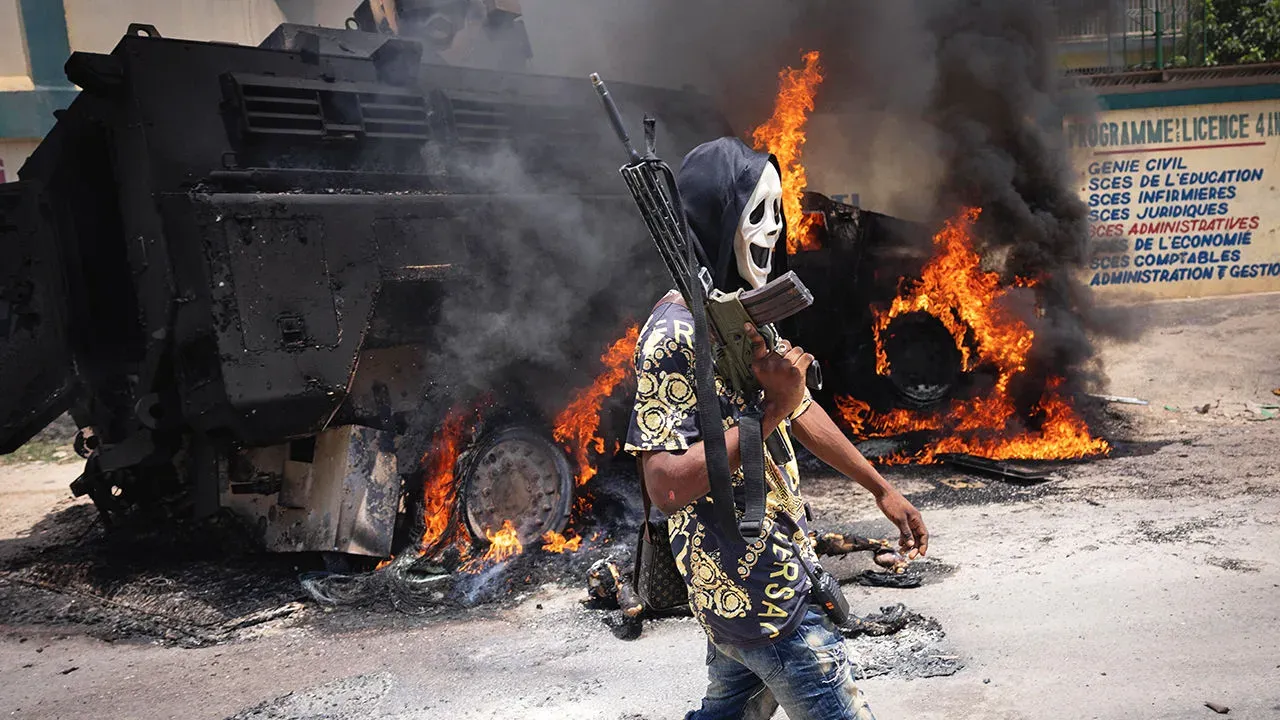
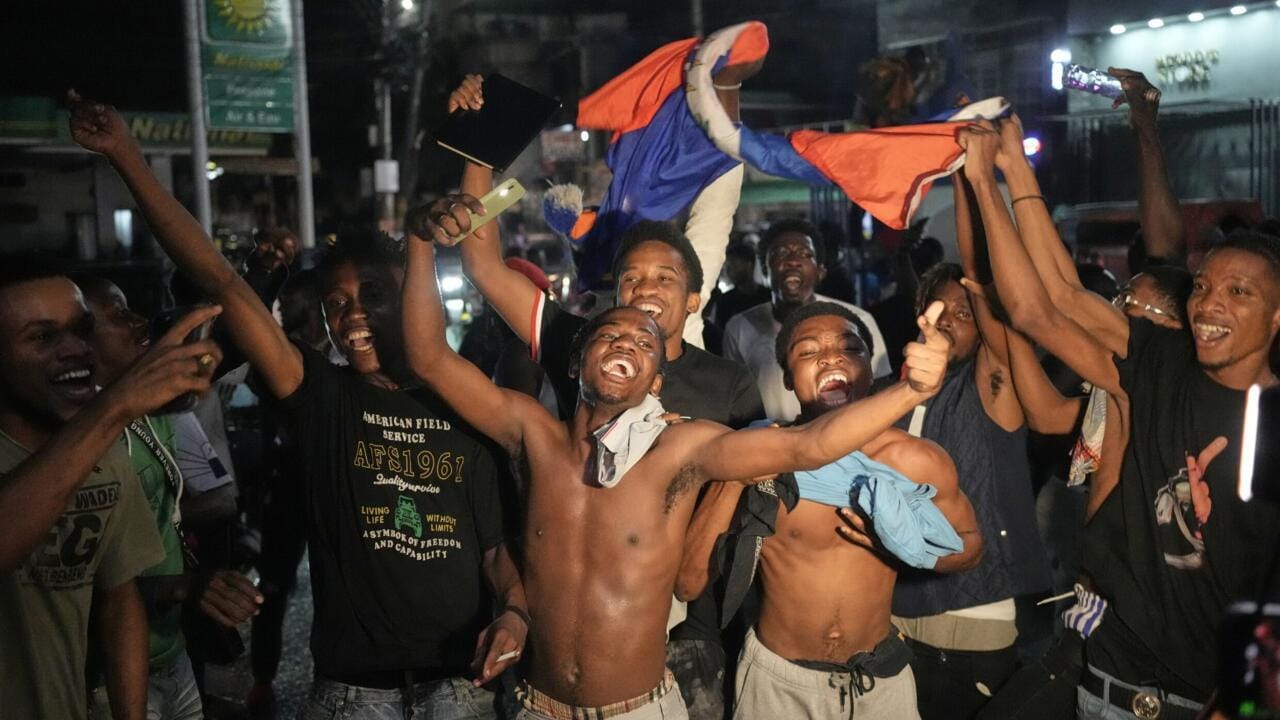
In Port-au-Prince, following the result, people poured into the streets. Fireworks lit up a city that more often hears automatic gunfire from AK-47s. Motorbikes wove through crowds that had no reason, in recent memory, to move through the capital with anything but fear and dread.
The victory came on November 18 — the 222nd anniversary of the Battle of Vertières, the final, decisive engagement of the Haitian Revolution that secured independence from France in 1803 and made Haiti the world’s first Black republic. The timing was not coincidental in the way it felt to Haitians. It was the kind of alignment that a nation in crisis reaches for and holds.
For a country that has spent years watching everything else collapse, this was the one thing that didn’t.
A Nation Behind its Team
Haiti descended into political chaos following the assassination of President Jovenel Moïse in July 2021. Governmental instability and deep economic hardship allowed armed gangs to exploit the resulting power vacuum. Today, gangs control nearly all of Port-au-Prince and are expanding their reach outward into three of the country’s ten departments.
Between January and March 2025, 1,617 people were killed, following 5,600 deaths recorded in 2024, most attributed to gang-related violence. Intentional homicides in the Artibonite and Centre departments increased by 210% between January and August 2025 compared to the same period the previous year.
As recently as the night of March 28–29, 2026, the Gran Grif gang killed at least 30 people in an attack in Petite-Rivière de l’Artibonite.
More than half of Haiti’s entire population — 6.4 million people — are in need of humanitarian support. More than 1.4 million are internally displaced. Of the displaced, more than half are children. Sexual violence has reached catastrophic levels: 8,000 cases of gender-based violence were recorded in 2025 alone, a 25% rise over the previous year.
Haiti has also witnessed a 1,000% increase in sexual violence against children since 2023.
Haiti still has no elected president or legislature. Since the assassination of Moïse, executive power has been exercised by unelected transitional figures. The Transitional Presidential Council’s mandate expired in February 2026. With the security situation too unstable to permit elections, Haiti faces a worsening political vacuum at precisely the moment when legitimate, capable, and accountable government is most critically needed.
This is the country that qualified for the World Cup, and these are the conditions under which its people have searched for something — anything, brighter to hang their hopes on.
The Coach Who Has Never Been to Haiti
The circumstances of Haiti’s qualification are themselves a story about what the crisis has done to the country’s institutions — including its own national team.
French manager Sébastien Migné, 52, has never set foot in Haiti since being appointed 18 months ago. The country’s security crisis — driven by gang control, mass displacement, famine-level hunger, and infrastructure collapse — makes travel essentially impossible for foreign nationals.
The coach of the Haitian national team has coached it entirely from the outside.
The players themselves are largely a diaspora squad — born or raised in the United States, Canada, and Europe, holding Haitian heritage and Haitian passports, playing for a country many of them have never lived in or can no longer safely visit.
Fabrice “FaFa” Picault, who plays for Inter Miami C.F. and the national team, watched the qualifying victory from home while recovering from injury. He celebrated wearing the jersey from the match where he got hurt.
The team is Haiti in miniature: scattered, rooted elsewhere, defined by a connection to a place that the world has largely written off — and still winning.
History is Everything
Haiti has qualified for the FIFA World Cup only twice in its history and is the only Caribbean nation to have done so. The first qualification came in 1974, when Les Grenadiers faced Italy, Poland, and Argentina in the group stage in West Germany — a historic moment of national pride during a politically difficult era under Jean-Claude Duvalier.
That 1974 team competed under a dictatorship. The 2026 team competes under a vacuum — no dictatorship, no democracy, no functioning government of any kind, just a transitional council whose mandate has already lapsed and a security force that cannot yet hold the capital.
The parallel is uncomfortable and instructive. Haiti’s two World Cup appearances bookend two distinct eras of dysfunction — and in both cases, the national team managed to qualify anyway. It says something about fútbol’s relationship to the Haitian spirit that the sport has proven more durable than the political systems surrounding it.
Haiti won the CONCACAF Championship in 1973 — one year before the 1974 World Cup — and remains the only Caribbean team to have won that title. The team’s footballing tradition runs deep, predating the crises that have defined the country’s recent decades. In the streets of Port-au-Prince and in the diaspora communities of Miami, Brooklyn, Montreal, and Paris, that tradition is remembered. It is part of what makes the qualification feel like a reclamation rather than a surprise.
The Foreign Presence — on the Pitch & Off it
Haiti’s World Cup journey coincides with what is now the fourth major foreign military intervention in the country's modern history.
In October 2025, the UN Security Council authorized the transformation of the Kenya-led Multinational Security Support Mission into a new “Gang Suppression Force” intended to contain 5,500 personnel.
On April 1, 2026 — ten weeks before the World Cup begins — the first GSF troops from Chad arrived in Haiti.
The mission has fewer than 1,000 personnel on the ground and has faced significant funding shortages. The U.S. failure to effectively support the mission it pushed for has left the Kenyan police in an impossible situation. Among the displaced, there is little confidence that the Gang Suppression Force will be anything but another failed foreign intervention.
The skepticism is grounded in history. The previous UN peacekeeping mission — MINUSTAH, which operated from 2004 to 2017 — was marred by allegations of widespread sexual assault by peacekeepers and the introduction of cholera by UN personnel, which killed nearly 10,000 Haitians.
The memory of that mission shapes how many Haitians receive the current one — with caution, if not outright hostility, regardless of its stated mandate.
A 2023 survey found that 70% of Haitians said they favored the deployment of an international armed force to fight the gangs. But the same population that welcomed the mission has watched it struggle, underfunded and understaffed, against gangs that have only consolidated their hold on the capital in the intervening months.
Foreign forces have arrived in Haiti to restore order. The order has not been restored, and yet the national fútbol team qualified for the World Cup without them.
What This World Cup Can & Cannot Do
There is a version of this story that ends with the World Cup transforming Haiti’s trajectory — generating attention, revenue, goodwill, and the kind of soft power that opens doors for a country that has been largely abandoned by the international community.
That version is not entirely wrong, but it requires precision about what fútbol can and cannot do.
Library Mapou owner Jean Mapou, a cultural anchor in Miami’s Little Haiti community, said of the qualification: “That would be very good for the morale. Because the way politics are going, the morale would be very down.”
He was not claiming that a World Cup would fix Haiti. He was saying that Haiti needs something to feel — and that this, for now, is something.
That is the honest framing. The World Cup will not disarm the Viv Ansanm gang coalition. It will not dismantle the Gran Grif gang and its torturous violence. It will not convene elections. It will not rebuild Port-au-Prince’s infrastructure or restore the hospitals that the gangs have torched. It will not resolve the political vacuum that has persisted since 2021 or deliver the democratic mandate that Haiti’s government has lacked for years.
What it can do is give 12 million Haitians — and the millions more in the diaspora — something to hold onto together. In a country where the state has failed comprehensively to provide security, medicine, education, or any semblance of sound governance, the national team has provided something the state cannot manufacture: a moment of collective pride that does not belong to any faction, any gang, any transitional council, or any foreign force.
Haiti’s manager said after the qualification: the team’s journey — displaced, doubted, forced into exile — mirrors the resilience Haiti has demonstrated for over two centuries. That is not rhetoric. It is accurate. The team trained outside the country because the country is not safe, and yet it qualified anyway. It will play in North America, close to the largest concentrations of the Haitian diaspora in the world, in a tournament that will be watched on screens across Port-au-Prince in neighborhoods where generators provide the only electricity.
The 1974 team played for Haiti under a dictatorship and gave the country something to cheer about despite it. The 2026 team is doing the same — not under a dictatorship but under something in some ways more disorienting: a state that has simply ceased to function, leaving its people to survive in the space where government used to be.
Fútbol has survived in that space for millions across the world. Les Grenadiers qualified in it. And on June 11, when the World Cup begins 49 days from now, Haiti will be there — one of 48 nations, the only one that qualified without a functioning government, without a coach who has ever seen the country, and without a single match played on home soil.
That, too, is Haitian identity. Resistance against impossible odds. The Battle of Vertières. The world’s first Black republic. The only Caribbean nation to qualify for the World Cup — and it has done so under the most extraordinary of circumstances.
Sociedad Media is monitoring the 2026 FIFA World Cup and Haiti’s ongoing crisis. For tips and reporting, contact info@sociedadmedia.com
🚨🇭🇹🏆 | AHORA/BIENVENIDA: For the first time in 52 years, Haiti has qualified for the FIFA World Cup pic.twitter.com/s8NVCiOhz0
— Sociedad Media (@sociedadmedia) November 19, 2025


