

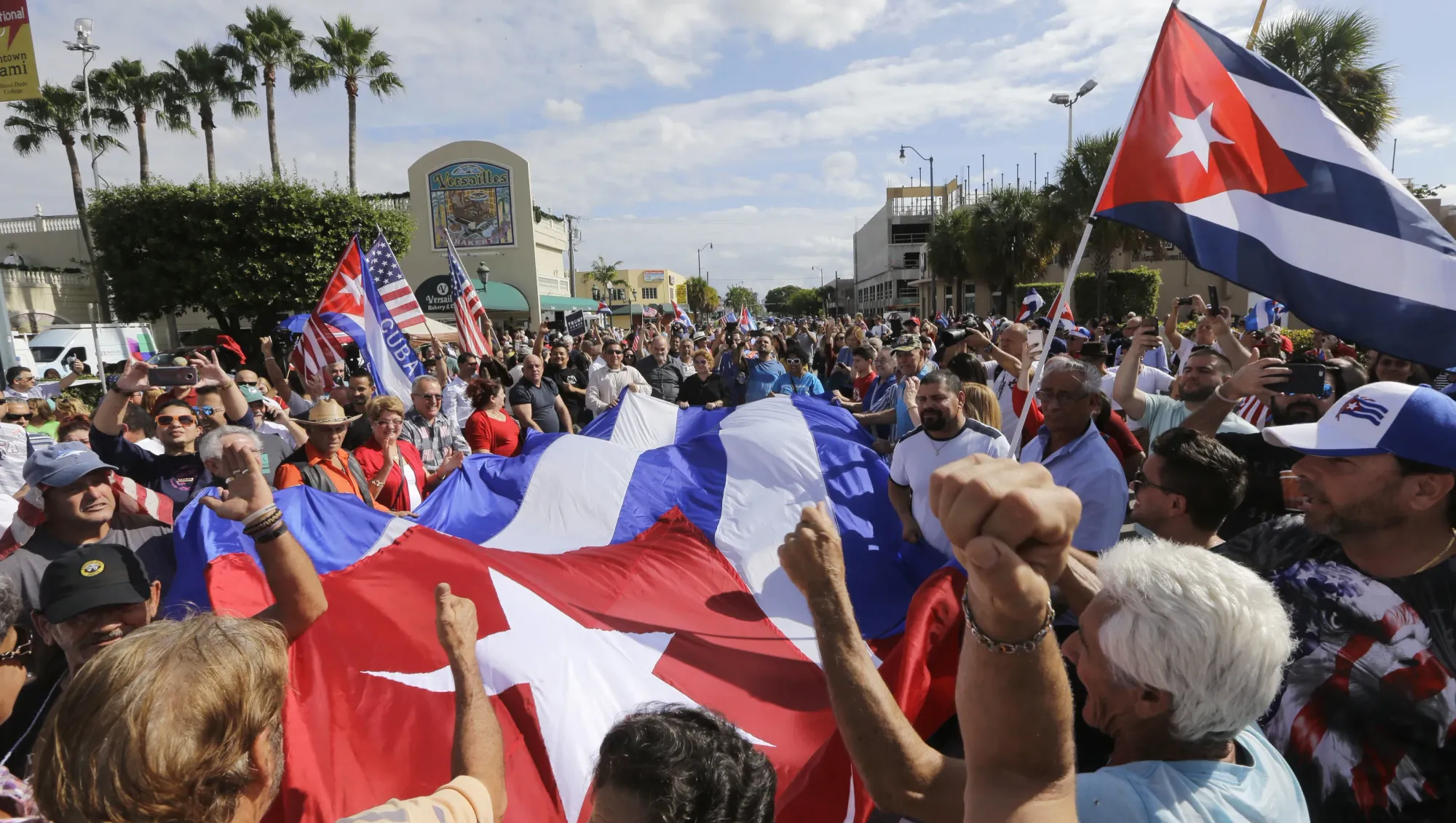
MIAMI — There is a version of Miami that exists in the imagination of Latin America: warm, free, prosperous, the place where you go to build something better. That version is not entirely wrong. Miami has grown into the financial and commercial hub of the Western Hemisphere, the city where Venezuelan exiles launch big retail businesses, where Colombian entrepreneurs set up regional headquarters to support operations in South America, and where Cuban families have maintained culture and community for more than sixty years. It is, in a real and meaningful sense, the capital of Latin America.
It is also a city where the average rent is $2,732 a month, where the median home price has risen 159% in a decade, where a family of four needs an annual income of over $100,000 just to cover basic expenses — and where 60% of Hispanic renters are paying more for housing than they can sustainably afford.
The gap between Miami’s promise and Miami’s price tag is the defining tension of life in this city for the majority of its Latino population.
This is what it actually costs to live here.
The Rent Reality
Miami is the sixth most expensive rental market in the United States. The overall median rent across all property types in the Miami metro stands at $3,000 per month — 57% higher than the national average.
The average rent for an apartment in Miami is $2,732 per month as of March 2026, according to RentCafe market analysis. Studio apartments average $2,118. One-bedroom units run $2,424. Two-bedroom apartments — the industry minimum for a family with children realistically needs — average $2,960 per month.
Those numbers describe a city where renting a modest two-bedroom apartment consumes the entire take-home pay of a worker earning $20 an hour — before utilities, groceries, transportation, or childcare. Florida’s minimum wage is $13 an hour. The gap between what Miami costs and what Miami pays its workforce is not a rounding error. It is the disparity that is not exclusive to the Miami market, but it is a problem that is more strongly felt in South Florida than many other areas in the United States.
According to Miami Homes For All and the Shimberg Center for Housing Studies at the University of Florida, 60% of all Hispanic renters in Miami-Dade are cost-burdened — meaning they pay more than 30% of their income on housing alone. That compares to 54% of white, non-Hispanic renters. The disparity tracks directly with lower homeownership rates among Latino households, which means more exposure to the rental market and less protection from rent increases.
One in three Miami families earns less than $35,000 per year. Of those families, 85% are housing cost-burdened. And when you combine housing and transportation costs together, Miamians spend an average of 56% of their income on just those two line items alone.
The rental market did cool off modestly in 2024 and 2025 after the historic post-pandemic surge — two-bedroom apartments saw a 7.7% year-over-year drop in early 2025, and one-bedroom units declined 5.9%. But the cooldown is relative. A 7% decline on a $3,350 apartment means you are now paying $3,115. That is still more than most of Miami’s fastest-growing jobs pay in a month.
Most of the fastest-growing jobs in Miami-Dade County pay less than $19 per hour, according to the Shimberg Center’s Miami-Dade County Housing Needs Assessment. The math simply doesn’t not work — and for Latino households, who are disproportionately represented in those jobs, the pressure is compounded.
The Homeownership Wall
For Latinos who arrived in Miami decades ago, homeownership was the path out of the rent trap, but that path has since narrowed dramatically.
The median sale price of a home in Miami was $675,000 in March 2026, up 3.1% compared to the previous year, according to Redfin. Miami’s median sale price is 54% higher than the national average.
Single-family home prices in Miami-Dade have risen for 168 of the past 170 months. Since 2016, median values have risen by more than 159%. A home that cost $245,000 in 2015 costs $675,000 today. The Latino families who bought in the 1990s and 2000s built significant equity, while those arriving now face a market that has priced out virtually anyone without either substantial savings, family wealth, or a cash buyer’s advantage.
Cash sales represented 38.1% of Miami closed sales in March 2026 — nearly 40% of all transactions. About 27% of U.S. home sales nationally are made in cash. Miami’s real estate market is increasingly shaped by international investors, domestic migrants relocating from New York and California with equity to spend, and ultra-wealthy buyers purchasing in the luxury segment. Sales of Miami properties priced at $5 million and above climbed 27% year-over-year in March 2026.
For a working-class Latino family trying to buy a first home in Miami-Dade, that is the competition. Not other first-time buyers. All-cash investors and equity-rich out-of-staters who do not need a mortgage and are not deterred by interest rates.
The Shimberg Center found that Miami-Dade has a gap of 90,181 affordable and available units for renter households with incomes below 80% of the area median income — a gap projected to grow to nearly 116,000 units by 2030 unless affordable units are added.
The county has declared an affordable housing crisis, and the gap continues to widen.
Everything Else...
Housing is the dominant line item in any Miami budget — but it is not the only one.
Miami’s overall cost of living is 17–21% higher than the U.S. national average as of 2026, according to multiple indices. The primary driver is housing, but energy, food, and transportation all run above national baselines. Energy bills in Miami average $223 per month — driven by year-round air conditioning in a subtropical climate where going without it is not a viable option for most of the year.
A gallon of regular gas in South Florida is now averaging above $4.00.
Miami has no public transportation system that meaningfully serves most of the county. A car is not a luxury — it is a prerequisite for employment across most of Miami-Dade. For a household that owns one or two older vehicles, insurance, fuel, and maintenance represent a significant fixed monthly cost on top of rent, utilities, and food.
A family of four in Miami spends approximately $8,550 per month on housing, food, utilities, transportation, and other essentials — equating to a required gross annual income of roughly $102,600, according to 2025 cost data. Florida’s median household income is approximately $67,000. The median household income in Miami-Dade is lower than the state median. The arithmetic is unforgiving.
Miami’s CPI inflation rate was 2.1% as of February 2026 — slightly below the national average of 2.4%. But the shelter index — the component most directly felt by renters — increased 3.2% over the same 12-month period.
For a household already spending the majority of its income on housing, a 3.2% shelter inflation rate is not a headline number. It is the difference between making rent and not making rent.
The Latino Paradox
Miami-Dade County is 72.25% Hispanic or Latino, and 58.1% of residents are foreign-born. The Latino community did not come to Miami to be the exception to the city’s prosperity. In many cases, they built it through construction, hospitality, healthcare, retail, and the small businesses that give Miami its essential character.
The Spanish-language economy of Miami is not a subculture. It is the culture.
And yet the data consistently show that Latino households bear a disproportionate share of the city’s affordability burden. They are more likely to rent than to own. They are more likely to work in sectors where wages have not kept pace with inflation. They are more likely to be cost-burdened — and more likely to face the choice between paying rent and covering everything else.
There is also a layer of pressure that is particular to Miami’s Latino immigrant population — the cost of maintaining transnational lives. Remittances sent to family in Venezuela, Cuba, Colombia, or Nicaragua. International phone plans. Travel costs for families separated by political repression or economics. These expenses do not appear in standard cost-of-living indices. They are real, they are recurring, and for a significant share of Miami’s Latino population, they represent an additional financial obligation that sits on top of an already impossible budget.
What This City Actually Demands
Miami asks a great deal of the people who come here chasing the version of it that exists in the imagination of Latin America. It asks them to pay rents that consume the majority of wages that have not kept pace with the cost of the city. It asks them to compete for homeownership against cash buyers and international investors. It asks them to absorb energy bills, car costs, and food expenses that run above national averages — in a county where the fastest-growing jobs pay under $19 an hour.
It asks all of this without a state income tax, which is frequently cited as a Miami advantage — and which is genuinely useful, but which is worth approximately $2,000 a year to a household earning $40,000, while the housing premium over national averages runs to tens of thousands of dollars annually.
None of this has stopped Miami from growing. None of it has stopped Latin Americans from coming. The city’s pull is real — the culture, the community, the weather, the proximity to the hemisphere, the feeling of being somewhere that speaks your language and understands your history and tradition.
But the gap between what Miami promises and what Miami charges is a number that millions of Latino households in this city are quietly calculating, every month, whether they say so out loud or not.
Sociedad Media is published from Miami and covers Latin America in English as the city’s dedicated news source for issues and developments that impact Miami’s growing Hispanic population. For tips and reporting, contact info@sociedadmedia.com


