

MIAMI — The rise of digital newsrooms in Miami, or more often personified in the form of a sole freelance journalist operating out of a congested studio apartment with a laptop and headphones in Hialeah and Doral, commonly seeking refuge in the United States, because they can no longer enter their native countries. Their sources call from burner phones. Their governments have revoked their press credentials, frozen their bank accounts, or issued warrants for their arrest. Others have even experienced the dread of a wet, scorching jail cell in Caracas or Havana. Their outlets — some of the most-read news operations in Venezuela, Cuba, and Nicaragua — now exist entirely outside the borders they cover.
They landed in Miami. And from here, they are keeping alive the only independent journalism their countries have left.
The Scale of the Crisis
A landmark regional study titled “Displaced Voices: A Profile of Latin American Journalistic Exile 2018–2024,” produced by the University of Costa Rica in collaboration with Fundamedios, UNESCO, and the Association of Venezuelan Journalists Abroad, documents that more than 92% of all exiled journalists in Latin America come from three countries: Venezuela, Nicaragua, and Cuba.
The numbers are specific and staggering: more than 477 journalists from Venezuela have been forced into exile since 2018 — more than half of the 913 documented cases across the entire region. Nicaragua follows with 268, and Cuba with 98.
The report found these professionals fled to protect their lives and the security of their families — and that many, upon arriving in host countries, abandoned journalism entirely due to a lack of opportunities or legal barriers to practicing the profession.
The Inter-American Press Association — itself headquartered in Miami — ranked Venezuela and Nicaragua as nations “without freedom of speech” in its 2025 Chapultepec Index, while Cuba, Ecuador, Bolivia, Honduras, Peru, Mexico, Haiti, and El Salvador all fell into the “high restriction” category.
In Nicaragua, the situation has deteriorated to the point where the only journalism about the country is now produced in exile. “In Nicaragua, you have a process of planned eradication of journalism that has been ongoing since 2018. It has reached a point where today the only kind of journalism about Nicaragua is produced in exile,” said RSF’s Americas director.
Miami As a Refuge For Press Freedom
The geography is not accidental.
Miami is the capital of the Latin American diaspora in the United States — the city where Venezuelan professionals, Cuban exiles, Nicaraguan dissidents, and journalists fleeing a dozen other countries have historically built new lives while keeping one eye fixed on home. It has the Spanish-language infrastructure, the diaspora audiences, the legal community, and the cultural familiarity that journalists need to continue working.
It is close to the countries they cover. And for decades, it has had a political culture — shaped in large part by the Cuban exile community — that is instinctively hostile to the authoritarian governments that expelled these journalists in the first place.
The result is a concentration of exile media that has no equivalent elsewhere in the Americas.
CiberCuba, one of the most-read independent Cuban news operations in the world, operates from Miami and reported 5.89 million followers across its platforms as of January 2026 — driven by coverage of the Maduro capture that broke through even Cuba’s censorship apparatus. The outlet’s app broke download records the week of January 3, 2026.
EVTV Miami — a Venezuelan exile television operation — broadcasts to Venezuelan audiences across the hemisphere from its studio in Miami. Martí Noticias, funded by the U.S. government and targeted explicitly at Cuban audiences on the island, operates from the Miami area and is among the most-blocked news sources in Cuba precisely because the government considers it effective.
Venezuelan journalist Clavel Rangel went into exile in Miami in 2020 after being accused of libel over articles she wrote about the metal sector in southern Venezuela. From Miami, she has continued covering the Maduro and post-Maduro governments, and described the crackdown that drove her out as “a new era of totalitarianism after years of autocracy.”
These are not isolated cases. They form an ecosystem — a parallel media infrastructure that exists because the original one was destroyed.
How Regimes Silence the Press
The methods vary by country. The outcomes do not.
In Venezuela, more than 400 media outlets have closed in the past two decades, according to the Venezuelan National College of Journalists. The online media that remain as references in Venezuelan journalism are led almost entirely by journalists in exile.
In Cuba and Venezuela, dozens of journalists have been imprisoned on charges of “terrorism” or “inciting hatred” for reporting on social protests or electoral fraud, or for opinions posted on social networks. The state exercises direct and indirect censorship, including blocking internet access during protests to prevent documentation of repression.
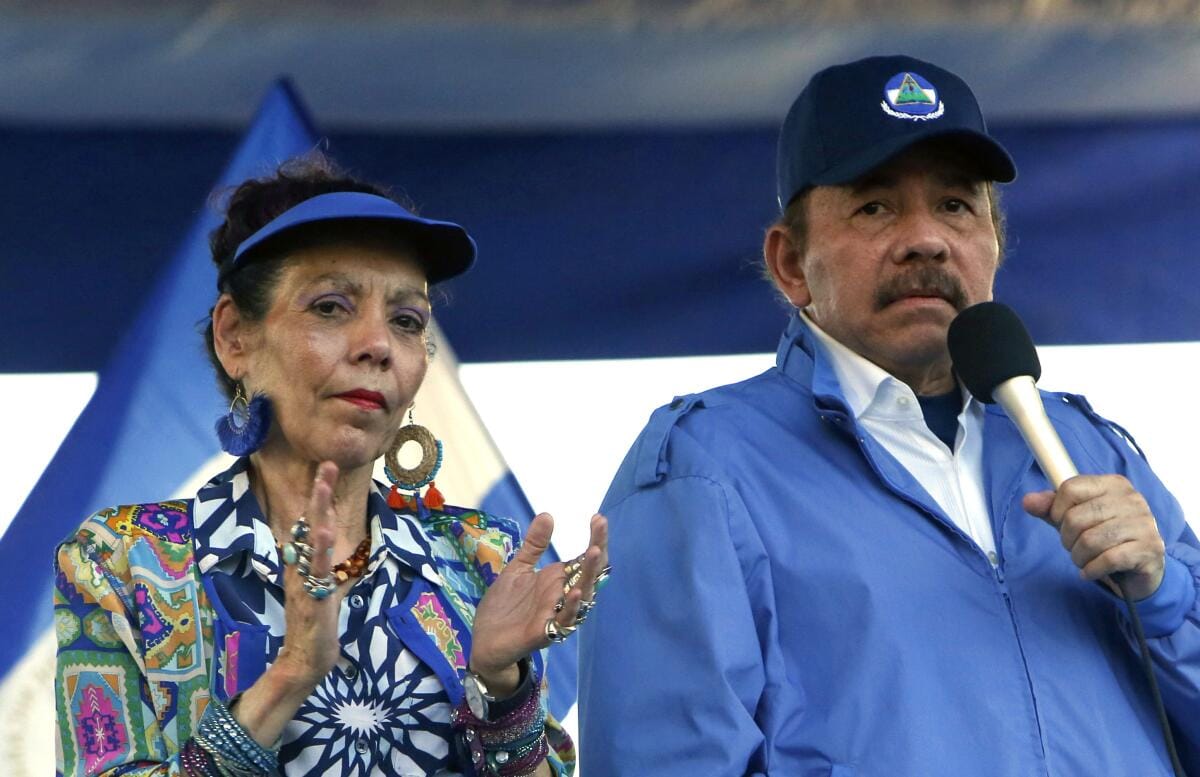
In Nicaragua, the pattern escalated dramatically after 2018: media outlets were confiscated and seized, television channels were censored, journalists were imprisoned, and press freedom was formally criminalized. More than 20 Nicaraguan digital media outlets now operate from exile — mostly from Costa Rica, the United States, and Spain. Among them are Confidencial, 100% Noticias, and La Prensa, all of which were illegally confiscated by the Ortega regime in 2021 and continue producing journalism from outside the country.
Carlos F. Chamorro, founder of Confidencial and one of Nicaragua’s most prominent journalists, has described the broader phenomenon with precision:
“When all freedoms have been eliminated — freedom of reunion, freedom of mobilization, electoral freedom, religious freedom — the last reserve of freedom is journalism in exile. This is what keeps us working, every day in exile.”
The independent press survives in these three countries through an ecosystem supported entirely by journalism in exile. Where the rule of law has collapsed and civil society is also under siege, the only defense of the independent press lies in its own credibility — maintained from thousands of miles away — and it’s Miami, where these operations have now called their home.
Mexico and El Salvador present a different variant of the same problem. There, the threat comes not primarily from state censorship but from organized crime and laws that criminalize foreign funding for independent outlets.
In El Salvador, more than 53 journalists have been forced into exile since President Nayib Bukele’s state of exception was declared in 2022. The consequences are measurable: after the departure of dozens of journalists, the number of investigative reports about El Salvador has demonstrably decreased.
The Exile Model — and its Limits
Journalism in exile works. It also has profound limitations that the journalists who practice it acknowledge openly.
The access problem is fundamental. Reporting on a country you cannot enter, from sources who communicate at personal risk, through channels that may be monitored by the governments you are covering, is structurally different from on-the-ground journalism. In the United States, some Venezuelan journalists in exile have joined Spanish-language outlets but find they cannot report freely on issues related to Venezuela — either because of legal concerns, editorial restrictions, or the complexity of covering a country whose diaspora audience has strong political sensitivities.
In Spain, the socialist government of Pedro Sánchez was widely known to have either close contact and/or coordination with the Maduro regime in Caracas prior to his removal by U.S. special forces.
The financial sustainability challenge is also acute. At least 300 journalists have fled Nicaragua, Ecuador, and Guatemala, according to press freedom organizations, and in exile they face threats, lack of protection, and economic precarity. Continuing to work becomes one of their biggest concerns, and the help they receive is usually not enough.
Exile outlets have experimented with membership campaigns, content agencies, virtual stores, and events — with mixed results.
The psychological and personal costs are rarely discussed publicly, but are significant.
Cuban journalist Lázaro Yuri Valle Roca, who spent years in prison for his reporting and accepted exile to Miami only after a hunger strike and deteriorating health, described the experience simply:
“My fight was in Cuba for the freedom of the island. I never wanted to leave.”
He ultimately left behind his daughter and two grandchildren.
Asylum Concerns from Latin American Journalists
For years, Miami functioned as an uncomplicated sanctuary. Exile journalists could work, build audiences, and apply for asylum with a reasonable expectation that the United States — given its rhetorical commitment to press freedom and its political hostility to Cuba, Venezuela, and Nicaragua — would protect them.
That assumption is now contested.
The United States is the second-largest host country for exiled Latin American journalists after Costa Rica, according to records from the Network of Exiled and Persecuted Journalists. But for journalists already in the United States, the situation has become confusing. Asylum processes have been at a standstill for years, with cases of journalists who have been in the country for three or four years without receiving an interview before a judge that was supposed to be scheduled within the first year.
The cancellation of humanitarian parole — a mechanism many Nicaraguan journalists, in particular, had used to stay in the United States and reunite with their families — has created acute uncertainty. In Nicaragua’s case, journalists who face deportation would be returned to a country where they were systematically persecuted.
Press freedom organizations have attempted to obtain a response from Secretary of State Marco Rubio regarding the situation of exiled journalists. The secretary did not respond directly, instead opting to refer to the Nicaraguan dictatorship under the Ortega-Murilli regime, and how its leaders were “enemies of humanity.”
Miami’s New Role
What makes Miami distinct from other exile journalism hubs — Madrid, Bogotá, San José — is the density and depth of its Latin American diaspora.
A Venezuelan journalist covering Venezuela from Miami is, in a real sense, embedded in her audience. The community she reports for lives next door. The sources she cultivates are her neighbors. The political debates that shape her coverage play out at the coffee counter and in the WhatsApp groups of Little Havana and Doral.
That proximity creates accountability that remote exile journalism lacks. It also creates pressure — the exile community has its own politics, its own factions, its own organization, its own expectations of what coverage should look like, and journalists who stray from those expectations can face social and professional consequences as real as anything they faced at home.
The best exile journalism that emerges from Miami navigates that pressure without succumbing to it. As one Salvadoran journalist in exile put it, describing the broader mission: “I’m continuing to do my job, even if the situation gets complicated. Nothing lasts forever. As long as we are there, as we are telling the story, as we are criticizing, I think we are building that freedom of conscience, of resistance, that is a principle for change for those who have to make the change possible.”
That is the bet that hundreds of journalists have made by landing in Miami. It is a bet that the information their countries need will find its way home — through VPNs and Telegram channels and WhatsApp groups and satellite signals — even when the governments in power are doing everything they can to stop it.
It is a bet that has not yet been lost.
Sociedad Media is published from Miami and covers Latin America in English. For tips, press freedom concerns, and reporting, contact info@sociedadmedia.com


