

MIAMI — On June 7, 2025, a 15-year-old boy shot Senator Miguel Uribe Turbay in the back in a Bogotá park as he addressed supporters at a campaign rally. Twice in the head. Once in the leg. Uribe Turbay, 39 years old and one of the most prominent conservative opposition figures and a 2026 Colombian presidential hopeful, died on August 11 after spending two months in a coma.
The attack was filmed. It was watched across Colombia and the world. It was the most viscerally shocking act of political violence in the country in decades — a reminder, in a single horrifying video, of the years when presidential candidates were routinely assassinated by cartels and guerrilla factions, and the question was not whether a politician would be killed but when.
Colombian prosecutors determined the murder was ordered by the Segunda Marquetalia — the FARC dissident faction led by a former commander operating under the alias Iván Márquez — and executed through a local urban criminal network. The attack was characterized as aimed at “generating an impact on democracy and the country’s political processes.”
On Wednesday, one more piece of that network was removed from the streets — not in Colombia, but in Buenos Aires.
The Arrest in Argentina
Brayan Ferney Cruz Castillo, a Colombian national, was arrested by Argentina’s Federal Police on an Interpol red notice on Wednesday. The circumstances of his capture were almost mundane in their irony: Cruz Castillo had previously been detained in Buenos Aires on a robbery charge, released, and summoned back to court for an abbreviated trial in that same case.
He showed up on time and Argentine authorities arrested him on the spot — this time on an international warrant for his alleged role in one of the most significant political assassinations in Latin America in recent years.
Cruz Castillo is accused of being one of the logistical operators of the assassination. Specifically, he conducted surveillance on Uribe Turbay over an extended period — mapping his daily routines, identifying vulnerabilities in his security detail, and providing that intelligence to the network that carried out the attack. He was also the partner of Katherine Andrea Martínez, alias “Gabriela” — the woman who physically handed the weapon to the teenage shooter and who has already been convicted and sentenced to 21 years in prison.
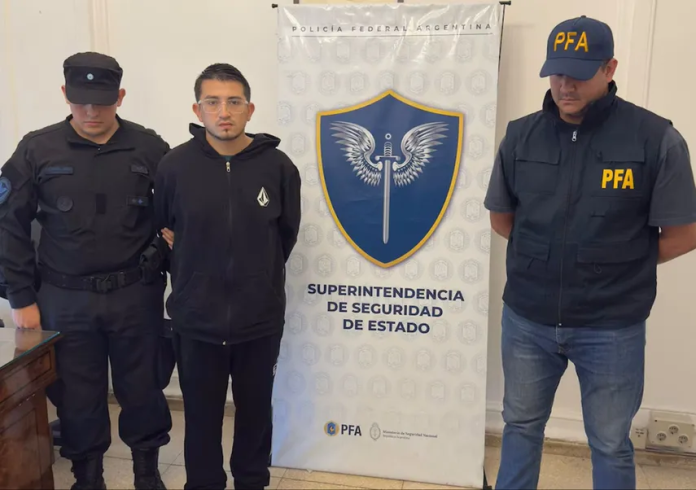
Cruz Castillo’s alleged involvement extended further. Four days before the shooting, he allegedly planted a magnetic explosive device on a vehicle in Uribe Turbay’s security convoy — a failed assassination attempt that was investigated as a separate preparatory act. The shooting on June 7 was not the first attempt on Uribe Turbay’s life. But it was the one that succeeded.
Argentina’s Security Minister Alejandra Monteoliva confirmed the arrest publicly: “Argentina is not a refuge for terrorists. He is detained and is going to be removed from the country.” Cruz Castillo now faces extradition to Colombia, where he will join at least nine others already arrested and four already convicted in connection with the assassination.
The Network Behind the Trigger
The arrest of a logistics operative answers one question and raises a larger one: who gave the order, and how far does the network reach?
Colombian prosecutors have been unambiguous. The Segunda Marquetalia — a FARC dissident faction that emerged after the 2016 peace agreement when a faction of the original FARC’s leadership rejected the deal and returned to armed conflict — ordered the killing. The local urban criminal network that carried out the attack was acting on behalf of, and under direction from, the dissident group.
The Segunda Marquetalia is not a marginal faction operating from remote jungle camps. It has a strategic rearguard in Venezuela — a documented relationship with the Maduro and post-Maduro governments that has been the subject of U.S. Treasury sanctions, DEA investigations, and repeated State Department reports.
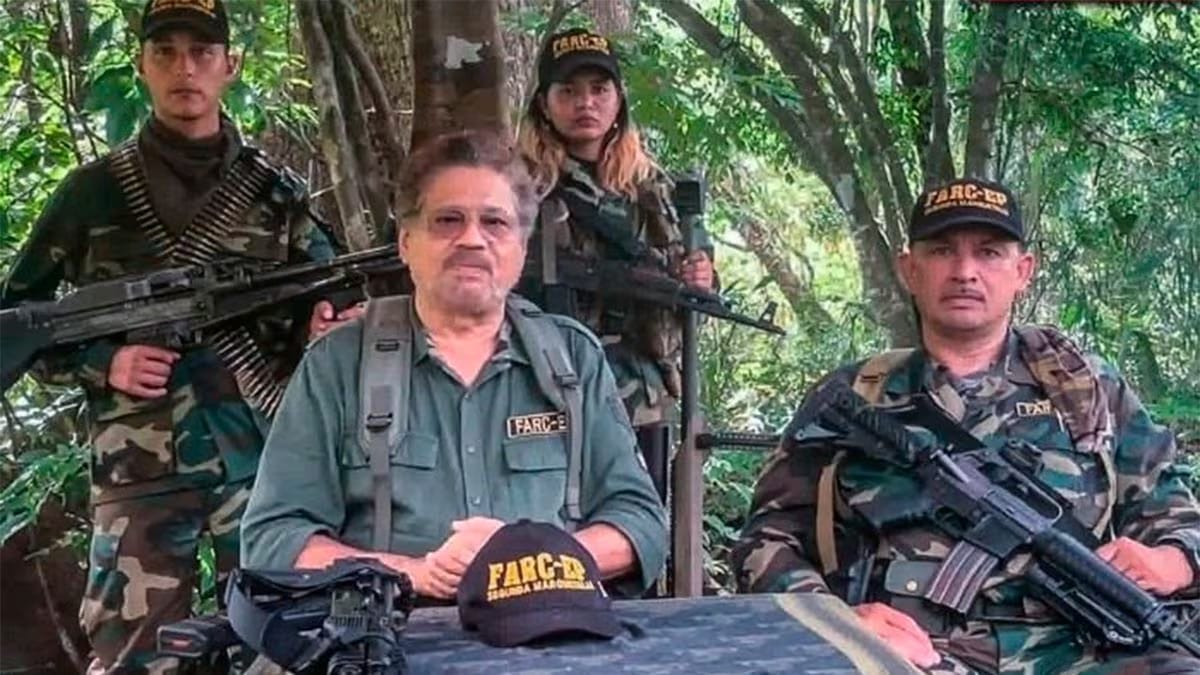
Its leadership operates across the Colombian-Venezuelan border with a degree of impunity that Colombian security forces have been unable to meaningfully disrupt.
The implication of the prosecution’s findings is direct: the assassination of a Colombian presidential candidate was planned and ordered by an armed group that uses Venezuelan territory as a sanctuary. That is not a bilateral irritant. It is a structural threat to Colombian democracy with a regional dimension that neither Bogotá nor Caracas has fully reckoned with.
The Garcia Márquez Shadow
The murder of Miguel Uribe Turbay carries a particular weight in Colombian cultural memory that goes beyond his political profile.
His mother was Diana Turbay — one of Colombia’s most prominent journalists, who was kidnapped by Pablo Escobar’s cartel in 1990 and killed during a botched rescue operation in 1991 with Colombian authorities. Her abduction and death were immortalized by Nobel Prize-winning author Gabriel García Márquez in his 1996 nonfiction account, News of a Kidnapping.
Miguel Uribe Turbay grew up in the shadow of that history. He entered politics knowing the risks that Colombian public life could carry. He was shot while standing in an open park giving a campaign speech — the kind of security exposure that Colombian politicians had largely stopped worrying about after decades of relative calm following the dismantling of the major cartels.
The attack did not just kill a candidate. It reactivated a collective trauma that Colombia had spent thirty years trying to move past. The video of the shooting circulated on Colombian social media within minutes. Reactions were not just grief — they were recognition. This had happened before. It was happening again.
37 Days Before the Election
Colombia votes on May 31. The presidential campaign is taking place against a backdrop of economic crisis — a fuel price surge driven by the Iran conflict, a trade war with Ecuador that has effectively halted $2.8 billion in annual bilateral commerce, a central bank standoff that has left monetary policy in institutional limbo, and a fiscal deficit projected above 4% of GDP through 2027.
Sociedad Media has covered those economic dimensions in depth here.
What the economic analysis cannot fully capture is the security dimension now sitting beneath all of it.
The assassination was characterized by prosecutors as an act designed to generate an impact on democracy and the country’s political processes. Whether the Segunda Marquetalia achieved that goal depends on how the next 37 days unfold. The arrest of Cruz Castillo in Buenos Aires is a prosecution success — but it is the arrest of a surveillance operative, not of the command structure that issued the order.
The candidates now running for the presidency that Uribe Turbay was seeking are campaigning in a country where the network that killed him is still operational, where its alleged commanders remain beyond the reach of Colombian justice in Venezuelan territory, and where the structural conditions — a weakened state, a peace process in tatters, armed groups with political reach — that enabled the assassination have not been resolved.
Whether any of them faces the same threat Uribe Turbay faced is a question that Colombian security agencies are presumably assessing. It is also a question that hangs, unspoken, over every campaign event between now and May 31.
What the Arrest Means — and Doesn’t
The extradition of Cruz Castillo to Colombia, when it is completed, will add another name to a prosecution that has moved with unusual speed and determination. Four convictions in less than a year for a politically motivated assassination with multiple layers of organizational complexity is not nothing.
But the prosecution of logistics operatives and local facilitators does not reach the order-givers. The teenage shooter is in juvenile detention. The woman who handed him the weapon is serving 21 years, and the man who allegedly conducted surveillance is in Argentine custody awaiting extradition. All this, as the Segunda Marquetalia leadership that allegedly directed the operation continues to operate from Venezuelan territory.
Colombia’s democracy survived the assassination of Miguel Uribe Turbay. The country held its April 12 first-round election. Now a runoff is scheduled. The institutions, fractured as they are, have continued to function.
But what the Uribe Turbay assassination demonstrated — and what the Buenos Aires arrest this week confirms — is that the threat to those institutions did not end when Uribe Turbay died. It persists in the operational networks that planned his killing, in the armed groups that ordered it, and in the regional geography that continues to shelter them.
Whoever wins on May 31 will govern with that knowledge.
Sociedad Media is continuing to monitor events as they lead up to Colombia’s May 31 presidential election, including the Uribe Turbay assassination investigation and security developments across the Andean region. For tips and reporting, contact info@sociedadmedia.com


