

MIAMI — Brazil’s official campaign period started on Sunday, August 15 and the first-round vote is now set for October 4, for Latin America’s largest and most consequential election of the year now entering its final, decisive stretch.
The race is now tightening dramatically just as candidates prepare to formally register.
All The Runners
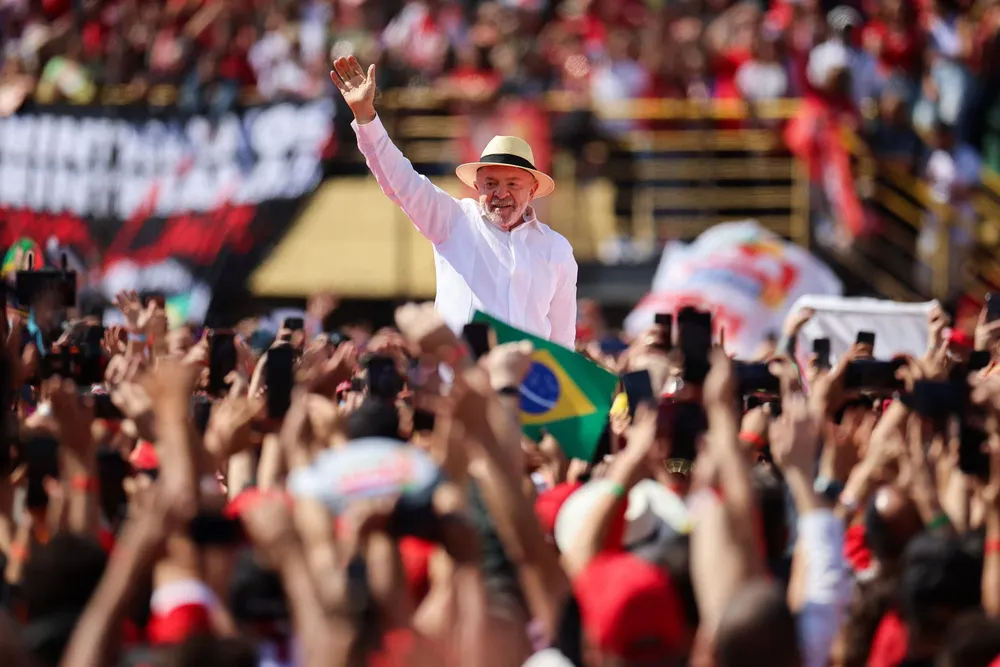
President Luiz Inácio Lula da Silva of the Workers’ Party (PT) is seeking an unprecedented fourth term at age 80, having already governed from 2003 to 2011 and again since January 2023.
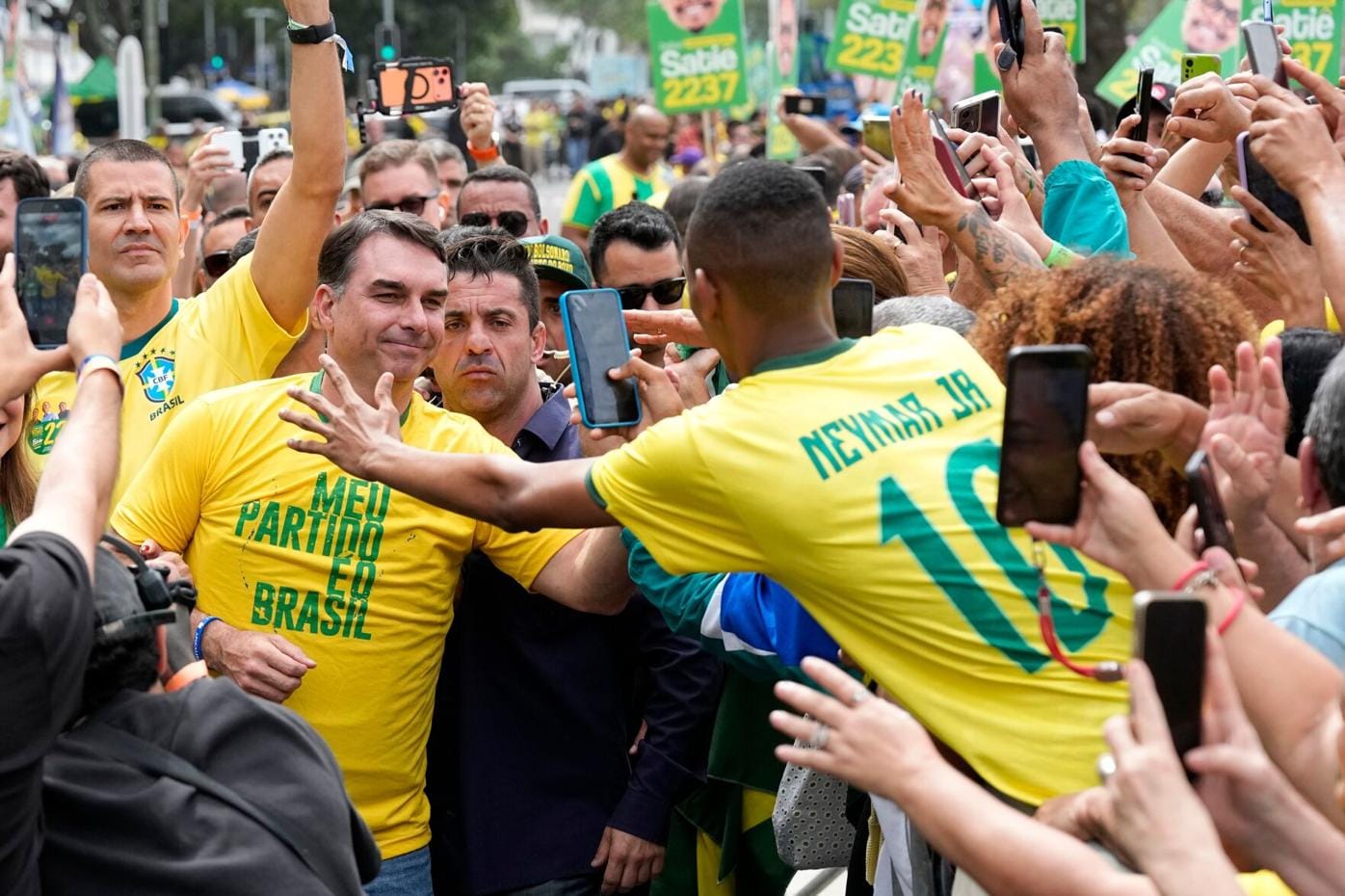
His principal challenger carries a familiar name under different circumstances: Senator Flávio Bolsonaro of the Liberal Party (PL), endorsed by his father, former President Jair Bolsonaro, who remains ineligible to run himself after being indicted and imprisoned in September 2025 for plotting a coup following his 2022 election loss.
Flávio inherits his father’s far-right political movement without the benefit of incumbency or Jair’s own personal following, making this less a rematch than a genuinely new contest wearing a familiar face.
Beyond the two frontrunners, several other candidates round out the field: Romeu Zema, governor of Minas Gerais and a member of the pro-business NOVO party; Ronaldo Caiado, former governor of Goiás running under the center-right Social Democratic Party; and Renan Santos, an anti-establishment activist whose support has been growing notably among younger Brazilian voters. Registration for all candidates closes August 15, formally launching the campaign period that runs through October 3.
Where the Race Stands Right Now
The contest has swung sharply and repeatedly over the past several weeks. A Quaest poll for TV Globo published on August 14 found Lula’s runoff lead over Bolsonaro had narrowed to just 43% to 40% — effectively a statistical tie once the poll’s two-point margin of error is factored in. That represents a significant erosion from Quaest’s own polling trajectory: Lula led by 8 points in July, by 5 points in an early-August survey, and now holds just a 3-point edge.
In a first-round scenario, Lula maintains a more comfortable position, at 38% to Bolsonaro’s 31%, though Brazil’s runoff system means the tightening head-to-head number is the one both campaigns are watching most closely.
Under Brazilian electoral law, if no candidate wins an outright majority in the October 4 first round, the top two finishers advance to a second-round runoff, expected in late October.
Given the current polling spread across a field that includes Zema, Caiado, and Santos siphoning off single-digit support, most analysts consider a first-round decision unlikely, meaning the runoff scenario polls — where Lula and Bolsonaro’s numbers have converged most sharply — are the figures both campaigns are treating as the real contest.
Lula formally launched his re-election bid August 2 at the Workers’ Party’s national convention in São Paulo, casting himself explicitly as a defender of Brazilian sovereignty against U.S. pressure. “I want to be prepared, so that no one invades this country,” he told the convention, calling for increased defense spending and pledging to shield Brazil’s reserves of rare earths and other critical minerals from foreign control — language directly responding to the tariff conflict that has come to dominate the campaign's international dimension.
The Tariff Fight at the Center of the Race
No single issue has shaped this election’s international stakes more than Washington’s tariff campaign against Brazil.
The dispute traces back to July 2025, when Trump first threatened a 50% tariff on all Brazilian exports, explicitly tying the threat to Brazil’s prosecution of Jair Bolsonaro and accusing Brazilian courts of running a “witch hunt.” That tariff took effect, and the Trump administration escalated further in mid-July 2026 with an additional 25% tariff on a broad range of Brazilian goods, following a Section 301 investigation the USTR opened in July 2025.
Rubio, whom Trump has tasked with managing pressure on Brazil, was blunt about the rationale when the tariff was finalized: “President Lula and his government have not negotiated with the U.S. in good faith. His economic policies are bad for Americans and bad for Brazilians.”
Brazil’s government rejected that framing entirely, calling July 15, 2026 “a regrettable milestone” in bilateral relations and stating there was “no justification for unilateral measures against our country” while explicitly accusing the Bolsonaro family of orchestrating the tariffs “driven by electoral motives.”
Flávio Bolsonaro has publicly denied triggering the tariffs and asked Trump to delay their implementation until after the election, warning in a letter that Brazil’s political landscape “will be redefined within roughly ninety days” — an appeal that produced no concessions; Rubio responded that the U.S. still had “substantial differences” with Brazil over the underlying issues.
The economic case behind the tariffs is itself contested: the U.S. actually ran a $14.4 billion goods trade surplus with Brazil in the prior year, up 112.8% year-over-year, meaning Washington exports more to Brazil than it imports — an unusual target profile for a Section 301 “unfair trade practices” action typically reserved for countries running large surpluses against the U.S., like China.
How Tariffs Shaped the Race
The political effects have cut in more than one direction. Lula’s team has leveraged the tariff fight to promote a confrontational, patriotic narrative that helped him gain ground in the polls through much of the summer, framing the dispute as a sovereignty issue rather than a trade dispute — a strategy some analysts described as a political gift, handing Lula a nationalist rallying point Trump inadvertently supplied.
But that “resist America” approach appears to be wearing thin: the same tightening reflected in this week’s Quaest poll suggests Brazilian voters’ patience with an extended standoff may have limits, particularly as the economic costs of the tariffs work their way through export-dependent sectors.
What a Result Would Mean for the Region & Washington
Brazil’s election is widely regarded as the decisive test of how far the rightward political realignment sweeping Latin America this year — visible already in Peru, Colombia, Chile, Argentina, and Bolivia's recent elections — extends to the region’s largest economy and most consequential democracy.
A Bolsonaro win would complete that realignment and likely accelerate Brazil's convergence with the security and economic frameworks Washington has built out across the hemisphere this year, from the Shield of the Americas coalition to expanded bilateral security assistance.
A Lula win, by contrast, would leave Brazil as the most significant remaining holdout against that trend, likely prolonging the tariff standoff and reinforcing Brazil’s posture as a counterweight to U.S. influence within regional blocs like Mercosur and the BRICS grouping, alongside continued friction over the treatment of the Bolsonaro family.
Either outcome carries consequences well beyond Brazil’s borders: the election will help determine whether Washington’s aggressive, tariff-and-sanctions-driven approach to reshaping Latin American governments produces the electoral outcomes it appears designed to encourage, or whether it instead hardens resistance in the region’s largest and most influential democracy.
With the campaign period now formally underway and the race closer than it has been in months, the coming eight weeks are likely to determine not just who governs Brazil, but how the rest of Latin America reads the durability, and the limits, of Washington’s regional playbook.
Sociedad Media brings readers on-the-ground reporting and analysis on the political, security, and economic forces shaping Latin America & the Caribbean.
Questions, tips, or corrections? Reach our editorial team at info@sociedadmedia.com.