


The Supreme Court’s press office told Gazeta do Povo it had no information on the decision, and the reason for the order has not been officially confirmed.
BRASÍLIA — President Luiz Inácio Lula da Silva won a fourth term in Brazil’s runoff on Sunday, defeating Senator Flávio Bolsonaro. The Superior Electoral Court (TSE) showed him with 51.78% of valid votes to 48.22%, with 99.97% of ballots counted.
But Bolsonaro says that he refuses to recognize the result and will ask the courts to annul the election. His challenge centers on a ruling, issued minutes after polls were due to close, that extended voting by two hours, and on who issued it.
Electoral lawyers are divided on whether the dispute could threaten the result.
The Result
Lula led by nearly 4.4 million votes, CBS News reported, but had trailed in the first round on October 4, with 45.16% to Bolsonaro’s 47.03%. Lula is the first candidate to win after finishing second in the first round since Brazil returned to democracy in 1985. He will resume an unprecedented fourth term in office on January 5, 2027, and will govern with a Congress where the right is the largest force, according to Gazeta do Povo.
TSE President Kassio Nunes Marques said he called both candidates to confirm the result. More than 128 million of 158.7 million registered voters cast ballots.
President Lula said the result was “a defeat for denialism and lies.” He added: “We will not be robbed by mayors, governors or businessmen,” a reference to the bus shortages that surfaced during voting day.
Dispute
The dispute grew out of problems getting voters to the polls. In Bahia, a Lula stronghold, at least 75 buses were blocked from leaving municipal garages in Salvador, a state electoral judge said.
Mayor Bruno Reis, a Bolsonaro ally, blamed trade unionists. Lula’s camp called it voter suppression. In São Paulo, a court had ordered the city to run 100% of its bus fleet, and reports from several cities described fewer buses than usual.
Separately, rain and flooding hit parts of São Paulo, Paraná and Santa Catarina, where Bolsonaro was favored.
How the Extension Unfolded
Lula’s Workers’ Party (PT) asked the TSE at 1:22 p.m. to act on bus problems in three Bahia cities. At about 3 p.m., PT lawyers asked for a nationwide extension. At 3:27 p.m., Bolsonaro’s Liberal Party (PL) asked the TSE for more time in parts of São Paulo, Paraná and Santa Catarina because of weather. Nunes Marques did not rule. He instead gave municipal governments 30 minutes to explain the bus shortage, per Metrópoles, and asked regional courts for information.
The Electoral Prosecutor-General’s Office opposed an extension, arguing for keeping the hours set by law.
PT then went to the Supreme Court (STF). Its first request, at 3:46 p.m., covered only the Bahia cities. At 4:29 p.m. it asked for a nationwide extension, and the case was assigned to Justice Cristiano Zanin at 4:33 p.m.
Zanin’s ruling came just after 5 p.m. It extended voting until 7 p.m. nationwide. Zanin, who was Lula’s defense attorney for years and was appointed to the court by Lula in 2023, wrote that both campaigns had raised problems with voter transport, Metrópoles reported.
By then, many polling stations had closed. Their electronic machines had been shut off and could not be restarted, and in some places poll workers had left.
The TSE paused the national count at about 5:20 p.m. At about 6 p.m., Zanin issued a second decision limiting the extension to polling places where machines were still open. Nunes Marques signed a memo at 5:49 p.m. telling open sections to stay open.
The TSE’s 6:44 p.m. notice said voting continued only where it had not closed by 5 p.m., and that the count would resume after 7 p.m. Reports of closed Rio de Janeiro machines that couldn’t restart and of poll workers leaving Brasília early point to uneven effects.
None of the reports indicate an accurate number of stations or voters who were affected.
The TSE’s Response
Nunes Marques said no rule authorized the extension and that none had ever been granted in the TSE’s history. He said the decision “created difficulties,” that thousands of machines had already closed, and that technical measures prevented harm to the count. He said the ruling did not change the result.
“Everything was unusual,” he said, according to Poder360. Reports also describe a closed-door meeting of TSE ministers after the ruling.
Bolsonaro’s Challenge
Speaking around 10:40 p.m. at his campaign headquarters where he had followed the count, Bolsonaro said: “It is impossible to recognize the result of the elections in the context in which these things happened.” He later said: “I will ask for the annulment of these elections.” He cited Zanin’s ruling, which he called a “canetada” (a unilateral stroke of the pen).
Bolsonaro also cited Zanin’s past as Lula’s lawyer, and claimed PL poll watchers were removed from the TSE’s counting room after the ruling. He said he will never know how many votes he lost in places where polls did not reopen.
Analysts are split on any potential annulment, and most do not expect annulment. Fernando Neisser, an electoral law professor at the Fundação Getulio Vargas, said the decision opens the possibility of annulment requests, but that this does not mean the result would be annulled. He noted that a closed machine “cannot be reopened.”
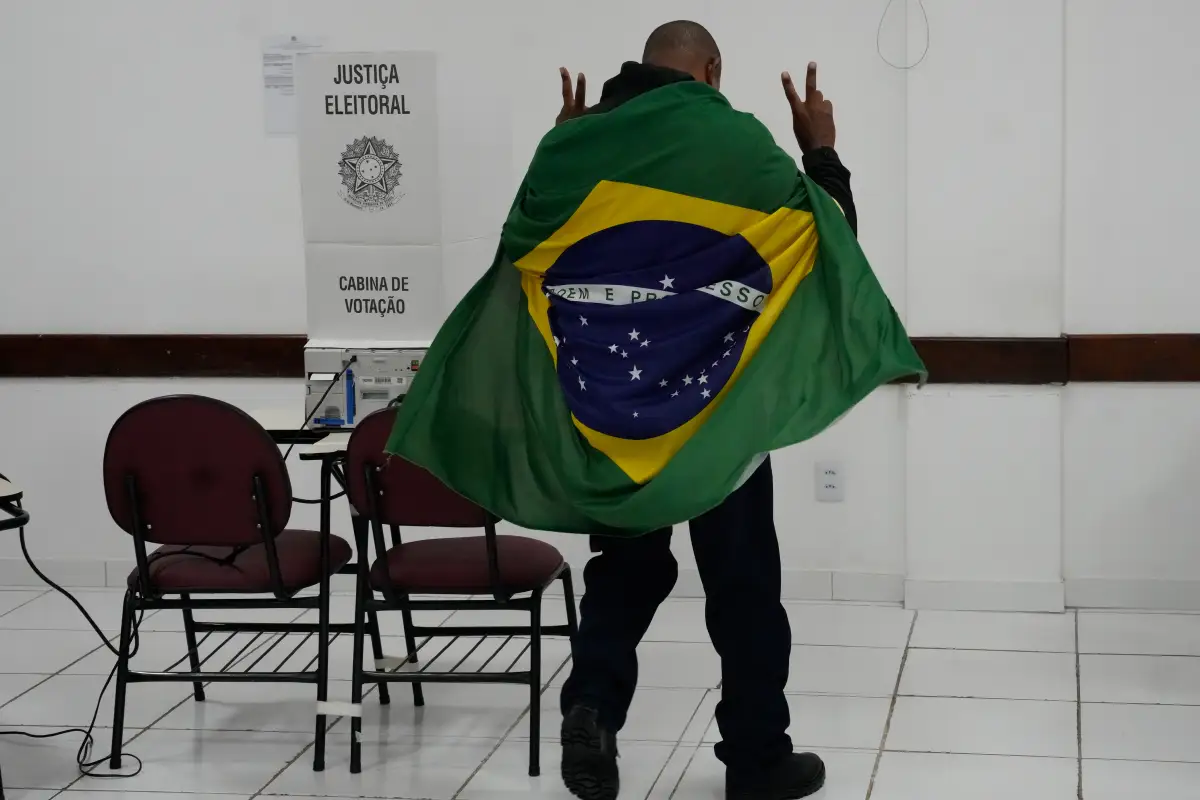
André Borges, a former electoral judge, said he sees “no chance of annulling anything,” that the STF should not have intervened because the TSE was the competent court, and that “rules exist, including the timing, and must be followed.”
Alberto Rollo, an electoral lawyer, said Zanin “irresponsibly created a legal monster” by ordering the extension without understanding that closed machines can’t be reopened, and that it brings “legal and political insecurity.”
Lawyer Gustavo Guedes said both Nunes Marques, for not deciding, and Zanin, for deciding, got it wrong. He said the extension’s limited scope means nothing here has the potential to force a third round.
Several experts cite the Electoral Code. Gazeta do Povo noted that Article 220 voids voting held at a different hour than designated or closed before 5 p.m.
Lawyer João Otávio Spilari Goes cited Article 219, under which annulment requires proof of concrete harm, so it is not automatic. Raimundo Cândido Neto argued a nullity claim is weakened because both campaigns requested more time.
Reuters quoted two constitutional lawyers saying the jurisdiction question and bus disruptions could support post-election challenges. One of them, Vera Chemim, said the losing side might try to contest the outcome.
Key questions are whether Bolsonaro files and where, how many stations kept voting after 5 p.m. and where they were, and whether the TSE’s final tally and certification draw challenges.