

DALLAS, TEXAS — President Trump promised a $5,000 payment to every adult American citizen if Republicans retain control of both the House and Senate in November’s midterm elections, an extraordinary campaign pledge that would likely cost more than $1 trillion and require congressional approval Trump does not currently have.
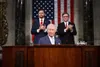
President Trump made the promise on Wednesday night, September 9, headlining the Republican National Committee’s first-ever midterm convention at the American Airlines Center in Dallas, Texas.
“Here is my promise: if the Republicans win the House of Representatives and the United States Senate, both of them... because of our tremendous strength and success economically, I will issue a dividend to every adult citizen in the United States of America for $5,000,” he told the crowd.
Trump attached one specific condition: “The only caveat I have is that the dividend that we’re making must be spent in the United States of America. We don’t want you going to Canada to spend the money. We don’t want you going to China to Germany. You’ve got to spend the money in the United States of America.”
Trump framed the payment as financed by tariff revenue and broader economic success from his policies, drawing a direct contrast with Democrats: “The reason the Democrats can’t do that is because they don’t do tariffs, they don’t take in money, all they know is poverty.”
Vice President JD Vance later narrowed the scope of the proposal, suggesting wealthy Americans would not qualify for the payment, and pointed to tariff revenue — which totaled roughly $154.5 billion in the first 10 months of fiscal year 2026 through July — as the funding source.
The Numbers
The gap between the promise and the available revenue is substantial. The nonpartisan Tax Policy Center projects tariffs will raise approximately $1.7 trillion in total across fiscal years 2026 through 2036, with $177 billion of that raised in 2026 specifically. A $5,000 dividend paid to every American adult would cost more than $1 trillion on its own — meaning the pledge alone would consume roughly three-quarters of the entire tariff revenue the government is projected to collect over the next eleven years, not just this year’s haul.
Most of that projected revenue has not yet been collected; it remains an economic forecast rather than money currently sitting in federal accounts, and the projection does not account for the cost of retaliatory tariffs other countries have imposed on U.S. exports in response to Trump’s trade policy.
The proposed $1 trillion-plus payout also arrives against a backdrop of an already strained federal budget. The national debt surpassed $40 trillion for the first time last month. The government has already spent $1.27 trillion paying interest on that debt in the current fiscal year alone, and $1.36 trillion is committed to defense spending in 2026.
The federal deficit — the gap between what the government spends and what it collects — currently runs at roughly $1.8 trillion annually.
The proposal is further complicated by the fact that the Supreme Court struck down much of Trump’s underlying tariff program last year, throwing into question the durability of the very revenue stream Trump and Vance have cited as the dividend's funding source.
Wednesday’s pledge is the latest and largest in a series of tariff-funded payment proposals Trump has floated over roughly the past year, none of which have materialized.
In November 2025, Trump told reporters he planned to issue $2,000 tariff dividend checks to individuals of “moderate income, middle income,” with payments beginning “somewhere prior to... probably the middle of next year.”
At the time, Treasury Secretary Scott Bessent noted such dividends would require legislation, and it was unclear whether Congress had the appetite to pass it.
Even that considerably smaller $2,000 proposal, limited to low- and middle-income individuals, was projected to cost well over $200 billion — more than the government collected in total tariff revenue in fiscal 2025.
Prediction markets treated the earlier $2,000 promise with substantial skepticism: on Polymarket, the odds of Trump actually creating a tariff dividend by the end of 2025 stood at just 16%, and by early 2026 the odds of the dividend materializing by March 31 had fallen to 11%. Wednesday’s $5,000 figure represents a significant escalation from that earlier $2,000 pledge, now tied explicitly to a specific electoral outcome rather than a general timeline.
Trump separately compared the new “Trump dividend” to the $1,776 “Warrior Dividend” his administration issued to more than 1 million U.S. military service members in early 2026, which was funded through a congressionally approved housing supplement — a considerably smaller and already-completed payment that offers a different funding model than the tariff-revenue approach behind the newly promised $5,000 payment.
With no legislative vehicle currently in place, a funding source whose legal foundation the Supreme Court has already partially undermined, and a price tag that would require Congress to approve well over $1 trillion in new spending during an already record-high debt environment, the practical path from Wednesday’s promise to an actual $5,000 check in Americans’ hands remains a challenge to real payouts.
Whether the pledge proves durable enough to survive past the midterms themselves, as Trump’s earlier $2,000 tariff dividend promise has not, will likely depend on the outcome of the very election the payment is explicitly conditioned upon.