

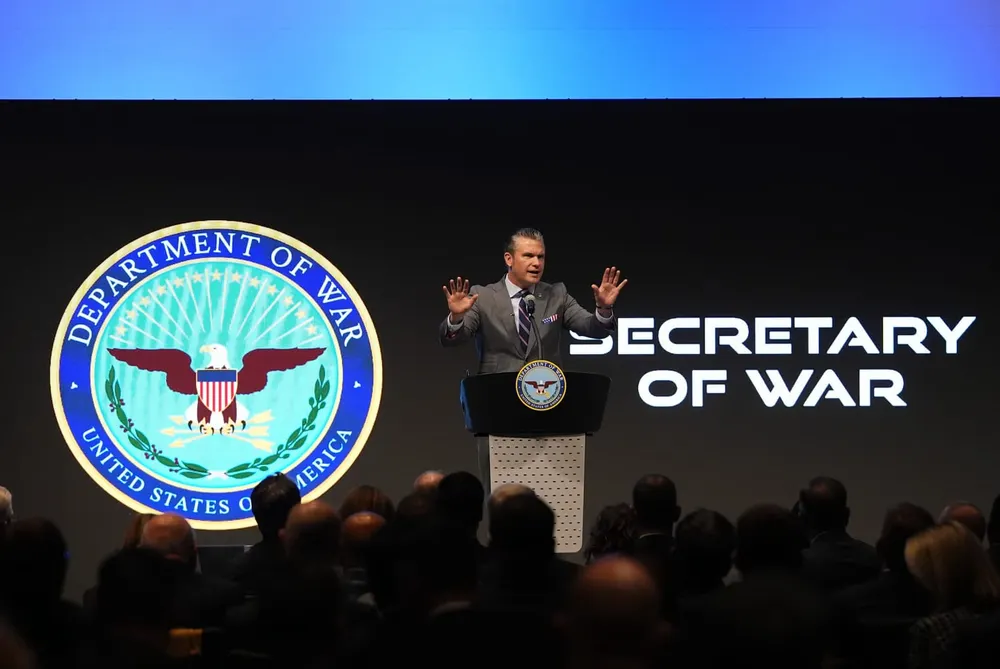
The U.S. War Department confirmed on Monday, August 24, that it is committing $750 million to help finance the acquisition of Brazil’s only rare earths mine currently in commercial operation — a deal that ties a strategically critical mineral supply directly into the U.S. defense industrial base, and lands amid an already tense stretch in U.S.-Brazil relations.
The War Department — the renamed U.S. Department of Defense — said it is investing $750 million in a special-purpose vehicle called US SIIE LLC, created specifically to purchase the entire output of mixed rare earth carbonates produced by Serra Verde Group’s Pela Ema project in Minaçu, in the northern part of Brazil’s Goiás state.
The figure represents a $250 million increase over the $500 million originally planned for the vehicle. “This strategic partnership will establish a secure supply chain for rare earth elements critical to national defense and economic security,” the War Department said in its announcement.
The capitalization satisfies one of the conditions required to complete USA Rare Earth’s acquisition of Serra Verde, a deal first announced in April 2026 and valued at $2.8 billion. With the War Department’s direct investment combined with debt financing, the special-purpose vehicle now has $1.25 billion in available capital, on top of a separate $300 million future purchase commitment from the War Department — bringing the total capitalization of the acquisition vehicle to $1.55 billion, roughly R$8 billion.
The War Department’s direct equity stake alone, the $750 million figure, converts to approximately R$3.9 billion. A separate bank credit line of up to $500 million has also been proposed as part of the financing structure, though it has not yet been formalized or disbursed.
USA Rare Earth (NASDAQ: USAR) shareholders are scheduled to vote on the proposed acquisition at a special meeting on August 28.
Pending that approval and the satisfaction of remaining closing conditions, the company expects to complete the acquisition shortly afterward.
Why Minaçu
Serra Verde’s Pela Ema project is Brazil’s only rare earths mine currently in commercial operation, giving it outsized strategic significance despite the country’s broader rare earth reserves.
The shift in where that production has gone tells its own story: throughout 2025, Minaçu shipped roughly 678 metric tons of rare earths to China and just 51 kilograms to the United States — a ratio of more than 13,000 to 1.
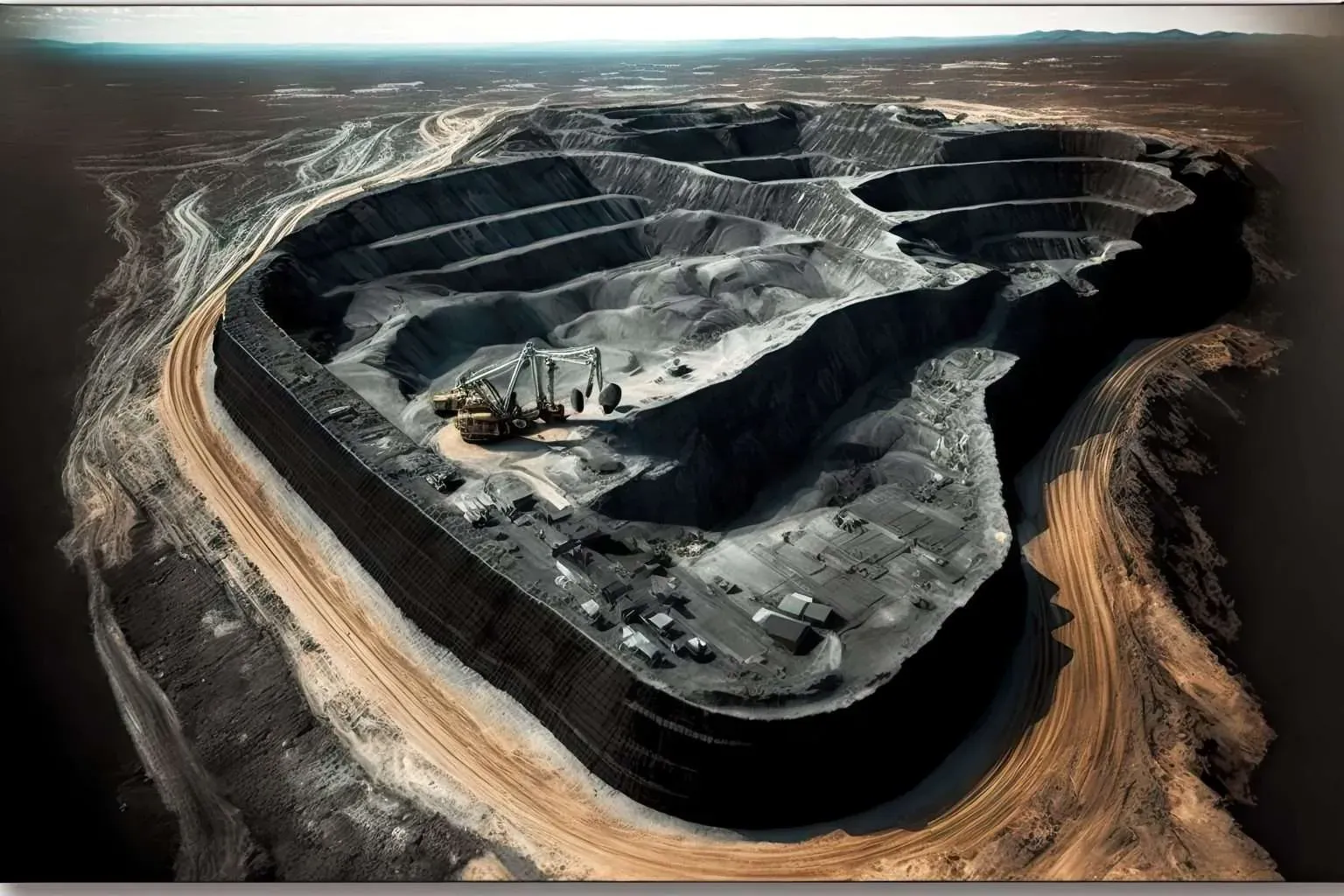
In 2026, that flow reversed entirely: zero shipments have gone to China, while the first meaningful shipment to the U.S., 2 metric tons, went out in February. Once the mine reaches its planned annual production of 6,400 metric tons of total rare earth oxides by the end of 2027, that entire volume will be contractually committed for 15 years to the vehicle now capitalized by the War Department.
Part of a Larger U.S. Stockpiling Push
Monday’s announcement builds on an existing federal effort to secure rare earth supply chains outside China, which controls roughly 60% of global rare earth mining and nearly 90% of global refining capacity — dominance Beijing has used as leverage in trade disputes with Washington.
Serra Verde had already received a loan from the U.S. International Development Finance Corporation (DFC), increased to $565 million (roughly R$2.9 billion) in February, as part of “Project Vault,” a $12 billion (roughly R$62 billion) federal program aimed at building strategic mineral stockpiles.
The defense-industrial link is explicit. Barbara Humpton, CEO of USA Rare Earth, told Fox News in April that acquiring Serra Verde’s production would give the United States access to critical inputs for its defense industry — materials used in the powerful magnets found in F-35 fighter jets, drones, and precision-guided munitions like Tomahawk missiles.
Questions in Brazil Over Sovereignty
The acquisition has drawn scrutiny within Brazil over questions of strategic control and sovereignty regarding the country’s mineral resources.
Reporting by Brazilian investigative outlet Agência Pública noted that Serra Verde declined to answer questions about whether the rare earths extracted from Minaçu could ultimately be used to manufacture American weapons systems.
The deal also arrives against the backdrop of a broader, unresolved negotiation between Washington and Brasília over rare earths access more generally: President Lula and his government has pushed for any rare earths agreement with the U.S. to guarantee domestic processing within Brazil, rather than simply exporting raw material for refining abroad — a demand that, as of a prior standoff in March, led Washington to instead sign a separate rare earths agreement directly with Goiás state authorities rather than with Lula's federal government.
U.S.-Brazil Tensions
The Serra Verde investment arrives during an already strained period in the bilateral relationship, layered on top of the tariff dispute tied to former President Jair Bolsonaro’s prosecution and this month's public exchange between Lula and Secretary of State Marco Rubio, whom Lula accused of interfering in Brazil’s October election.
The strategic minerals deal is only the latest example of how deeply U.S.-Brazil relations have become entangled with Brazil’s October election. Lula has repeatedly framed Washington’s economic pressure — the tariffs, the terrorism designation applied to Brazilian criminal organizations PCC and Comando Vermelho, and now the U.S. government’s direct financial stake in a strategically sensitive Brazilian mineral asset — as part of a broader pattern he alleges is designed to benefit his electoral opponent, Flávio Bolsonaro.
Polling from Quaest has found nearly half of Brazilian voters already view this year’s U.S. economic actions toward Brazil as politically motivated rather than purely commercial, meaning a defense-and-minerals deal like Serra Verde’s, however narrowly framed by Washington as a supply-chain security matter, is likely to be read domestically in Brazil through the same politically charged lens as the tariff dispute and the Lula-Rubio exchange that preceded it.
Whether the rare earths deal becomes a further point of friction, or proceeds as a largely separate track of U.S.-Brazil economic engagement, is likely to become clearer once USA Rare Earth’s shareholder vote concludes August 28.
With the special-purpose vehicle’s capitalization now complete, the remaining steps toward closing the acquisition rest on shareholder approval and standard closing conditions.
If finalized, the deal would formally place Brazil’s only operating rare earths mine inside a supply chain explicitly built around U.S. defense and economic security needs — a striking outcome for a resource Lula’s own government has spent months trying to keep processed, and controlled, domestically.