

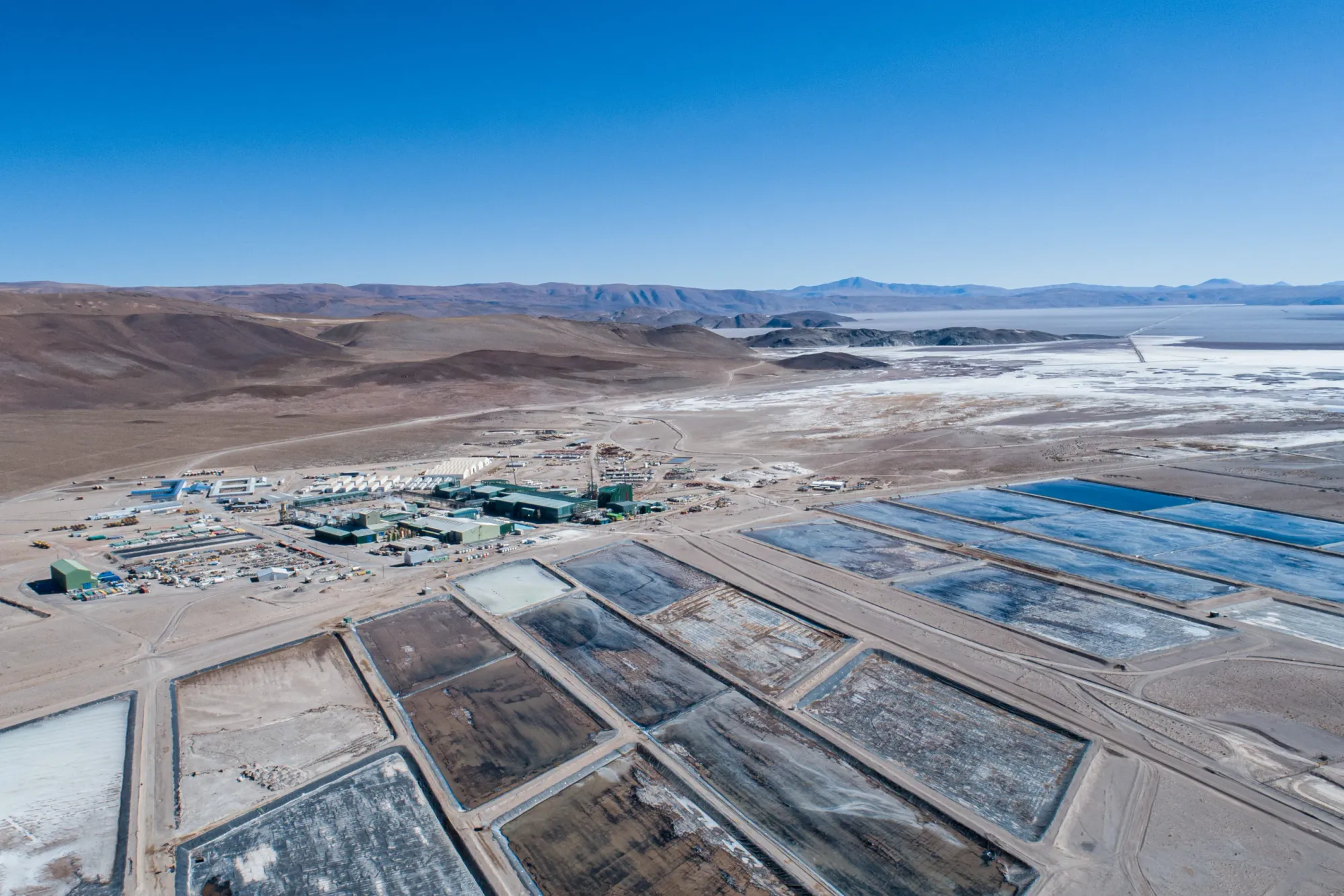
Beneath the salt flats of Chile’s Atacama Desert, the high-altitude plateaus of Bolivia, and the Andean highlands of Argentina lies the largest concentration of lithium on earth — the metal at the heart of every electric vehicle battery, every grid-scale energy storage system, and every rechargeable device manufactured anywhere in the world. Latin America holds more than 50% of the planet’s known lithium reserves. It is also home to the world’s largest copper deposits, significant rare earth elements, and emerging reserves of graphite, nickel, and cobalt — the full suite of materials that analysts and governments now classify as critical minerals: resources so essential to modern industry and defense that their supply chains have become matters of national security.
Two of the world’s three largest economies have concluded that access to those minerals will shape the balance of power for the rest of the century. Their competition to secure that access — through investment, diplomacy, infrastructure, and, increasingly, direct political pressure — is the defining geoeconomic story of Latin America in 2026. The governments sitting on those resources are watching both sides carefully, and most have concluded that the right answer is to say yes to everyone, for now.
What Is in the Earth?
The numbers are worth stating plainly because they are extraordinary. Latin America has long been a mineral resource powerhouse. Its gold and silver were key to the military might of the Spanish empire; its bauxite and chromium helped the Allied war effort in World War II; and its copper, nickel, and lithium are now central to geoeconomic competition between China and the United States.
Chile is the world’s largest copper producer and holds the largest lithium reserves of any single country. Bolivia’s Salar de Uyuni is the world’s largest known lithium deposit — an estimated 21 million tonnes sitting under a flat expanse of salt in the Andes that is larger than the state of Connecticut.
Argentina’s lithium triangle, shared with Chile and Bolivia, contains roughly 60% of the world’s identified reserves. Brazil holds significant rare earth deposits and is the world’s leading producer of niobium, a metal used in high-strength steel and superconductors. Peru is the world’s second-largest copper producer and is developing emerging lithium deposits.
Mexico also holds significant silver and copper, and its rare earth potential remains largely unexplored.
The rapidly increasing power demands of artificial intelligence loom large in the increased importance of critical minerals and what Latin America has to offer. AI has a voracious appetite for power, and is already straining power grids in frontrunners like China and the United States. The chips that run AI systems require rare earth elements. The data centers that house them require copper. The energy systems that power them increasingly require lithium. Every projection of AI growth is simultaneously a projection of critical mineral demand — and that demand points directly at Latin America.
China Got There First
From 2000 to 2021, Beijing channelled almost $57 billion into mineral extraction and refining across nearly 20 countries in Africa, Latin America and Asia. By contrast, Congress shut down the U.S. Bureau of Mines in 1996. In 2024, the United States accounted for only 1 percent of global critical mineral production.
Chinese companies remain dominant in mineral processing, particularly rare earths, where more than 90% of global processing occurs in China. That dominance is not accidental. China recognized decades ago that the strategic value of critical minerals lay not just in extraction but in processing — in owning the refineries, the supply chains, and the technological know-how that convert raw ore into the battery-grade materials that manufacturers actually need.
A country that mines lithium but cannot process it remains dependent on the country that can. China built that processing capacity deliberately and over a long time horizon.
Beijing announced in late 2024 harsh export restrictions on dual-use technologies and barriers to trading critical minerals — a move widely read as a signal to Washington that China’s mineral dominance was a leverage point it was prepared to use. The restrictions accelerated a U.S. reckoning that had been building for years.
Washington’s Belated Push
The United States has poured more than $1 billion into critical minerals investments across Latin America since January 2025, signaling a more assertive effort by Washington to secure supplies of lithium, copper and rare earths vital to energy, defense and advanced technology.
The investment has taken several forms. The Inter-American Development Bank signed an agreement to provide more than $140 million to improve critical mineral production and processing capacity in Latin America. The U.S. International Development Finance Corporation extended a $565 million financing agreement with Brazilian rare earths miner Serra Verde — a sign that the second Trump administration takes competing with China in the region very seriously.
Argentina, Bolivia, Brazil and Peru were all represented at the U.S. 2026 Critical Minerals Ministerial, where ministers from more than 50 countries gathered to discuss how to reduce reliance on China. The Trump administration used a $20 billion trade package negotiated with Argentina as partial leverage for preferential minerals access arrangements — a template it is attempting to replicate across the region.
The U.S. approach reflects a fundamental shift in how Washington treats the mining sector. The spending surge reflects a broader shift in how governments view mining, with critical minerals increasingly treated as matters of national and energy security rather than simply commodities tied to the energy transition.
The Latin American Dilemma
For the governments sitting on these resources, the U.S.-China competition presents an opportunity and a trap simultaneously.
The opportunity is straightforward: two of the world’s largest economies want what you have, and that demand gives you leverage to extract better terms — higher royalties, processing partnerships, technology transfers, infrastructure investment. Chile has used that leverage to negotiate significant increases in lithium royalties from both Chinese and Western producers.
Bolivia, under its new Paz government, is renegotiating several Chinese lithium joint ventures to increase the state’s share of profits. Peru is fielding competing investment proposals from U.S., Chinese, European, and Australian mining companies for its copper and lithium projects simultaneously.
The trap is equally real. The energy transition is intensifying competition for resources that are already generating social and environmental tensions in the region. Lithium mining in the Atacama consumes enormous quantities of water in one of the world’s driest environments, straining relations with indigenous communities that have managed those water systems for centuries.
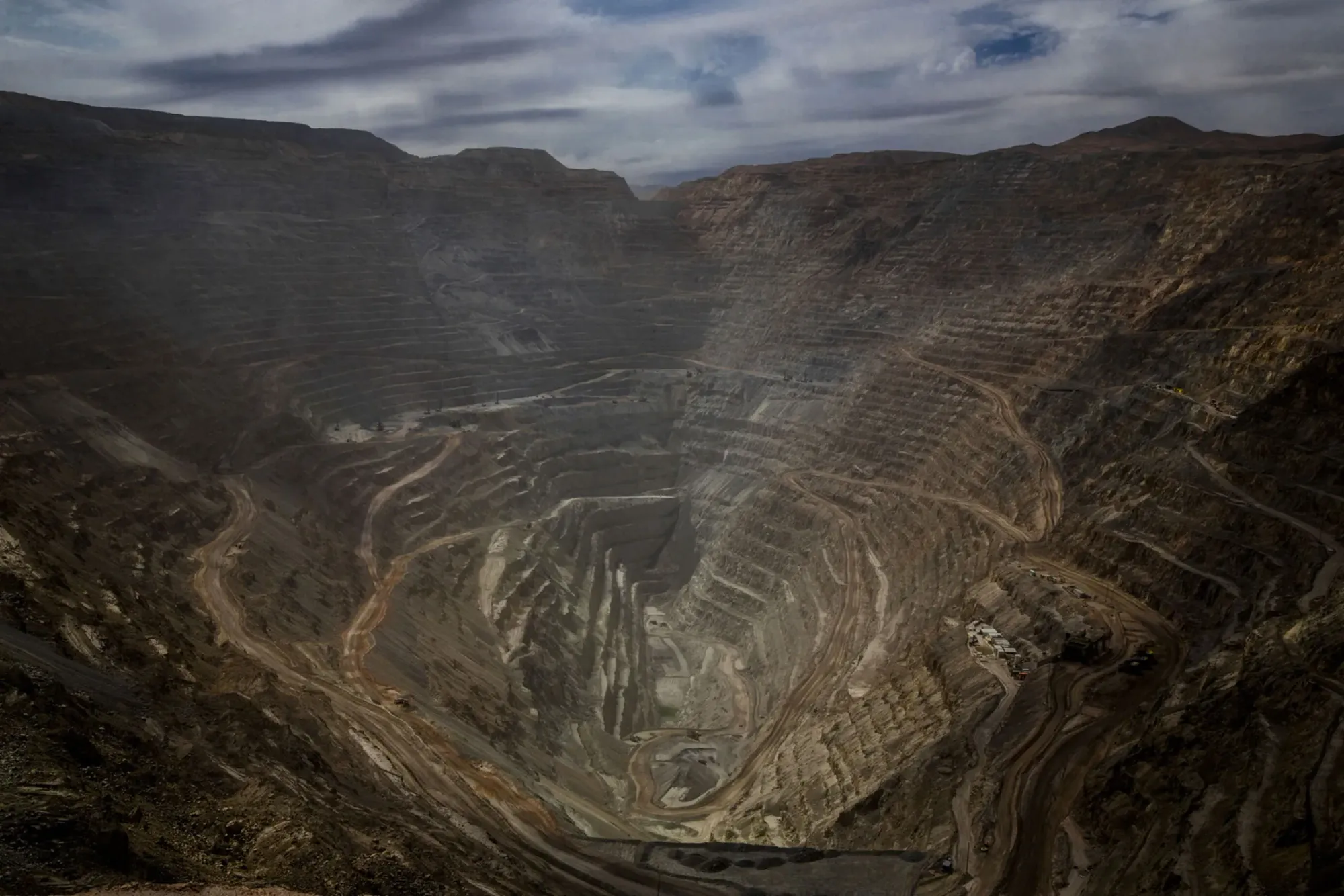
Copper mining in Peru has produced repeated waves of community protests that have shut down major projects for months at a time. The social license to mine — the consent of the communities above the deposits — is not something that Washington or Beijing can guarantee, and both are learning that the hard way.
There is also a deeper structural question about whether the minerals windfall translates into lasting development. Latin America has been here before: the colonial silver boom, the rubber boom, the oil boom, the commodity super-cycle of the 2000s. Each produced significant export revenues. But none produced the kind of industrial transformation that converts resource wealth into diversified economic growth. Whether Latin American countries can use their critical minerals as a springboard to industrial growth is a question that will define the century. The answer depends on whether governments can negotiate not just extraction rights but processing capacity, technology transfer, and domestic industrial development — the things China built for itself over decades.
The Pragmatic Consensus
What is striking about the current moment is the degree to which Latin American governments have refused to choose sides.
Governments across the region remain pragmatic, welcoming investment from both sides as they seek capital and technical expertise to develop mineral resources. Brazil under Lula has deepened cooperation with China on trade and infrastructure while simultaneously participating in Washington’s Critical Minerals Ministerial and accepting U.S. development finance for Serra Verde. Chile under newly inaugurated President José Antonio Kast has signaled a closer alignment with Washington on security issues while maintaining China as its largest trading partner and primary destination for copper exports. Argentina under Milei has embraced the Trump administration’s investment framework while keeping Chinese mining companies operating in its lithium sector.
The pragmatism is rational. Decoupling China from regional production networks raises deeper questions about whether it makes good business or strategic sense to disrupt a global production network that produces 80 to 90 percent of the world’s lithium-ion batteries. No Latin American government can currently process its own critical minerals at scale without Chinese technology and capital. Choosing Washington over Beijing today, before alternative processing infrastructure exists, would mean selling raw ore at lower margins rather than battery-grade material at premium prices.
The incentive to keep both doors open is powerful.
What’s Next
The critical minerals competition in Latin America is still in its early stages. The $1 billion the U.S. has invested since January 2025 is significant but modest relative to China’s decades of positioning. The processing gap — the fact that China controls the facilities that turn raw materials into usable industrial inputs — will not close quickly. Building alternative processing capacity in Latin America, in the United States, or in allied countries is a project measured in decades and hundreds of billions of dollars.
What changes the calculus is the pace of demand. Battery-grade lithium carbonate traded near $18,200 per tonne in early January 2026, rebounding as grid-scale energy storage systems expand. Copper demand for electrical infrastructure — grids, transmission lines, data centers — is projected to double by 2035. Every AI chip requires rare earth elements. Every electric vehicle requires lithium. The minerals under Latin American soil are not a future asset. They are a present one, and their value is rising.
The governments that own them know this. The question they are navigating — how to convert geological endowment into lasting industrial power without becoming a raw material colony of whoever offers the best terms today — is one of the most consequential economic policy questions of the 21st century. It is also one that Latin America, after five centuries of resource extraction by outside powers, has more reason than most to get right.