
LA PAZ — Allies of Bolivia’s President Rodrigo Paz are alleging the political opposition of the nation’s newest government is attempting a coup. Critics of Paz are arguing a genuine popular uprising, rooted in economic troubles for the country’s laborers, but one — to outsiders — that a politically motivated former president has every incentive to push as far as it will go.
The two things are not mutually exclusive. Understanding Bolivia right now requires holding both of them at once.
What Is Actually Happening on the Streets
In May 2026, ongoing mass protests have occurred in La Paz, the administrative capital of Bolivia. Miners comprised a large part of the protesters, but they were also accompanied by teachers, farmers, and other workers. The protests were caused imminently by a law allowing land mortgage, but they occurred during a wider period of economic downturn in Bolivia prior to the start of the new government of President Rodrigo Paz who entered office in November of 2025.
The law in question — Ley 1720, promulgated on April 8 — allows voluntary conversion of small titled agricultural properties into medium-sized properties that can be used as bank collateral. Supporters call it a credit-modernization tool; indigenous and peasant federations argue it enables corporate land concentration and weakens communal-territory protections. Paz repealed it on May 13 under mounting pressure from opposition groups. But the protests continued anyway — a signal that the law was a trigger, not the root cause.
Thousands of miners and workers marched to La Paz, facing fuel shortages and threats to indigenous lands. Among them were workers who had marched over 1,100 kilometers from Bolivia’s northern Amazon territories, many wearing nothing more substantial on their feet than plastic sandals. That image — of people walking for over 20 days through freezing high-altitude terrain to reach the capital — is not the image of a manufactured political operation. It is the image of people who have run out of other options.
Bolivia has 67 active roadblocks across the country, choking food and fuel supply to La Paz and prompting the Defensoría del Pueblo to call for humanitarian corridors. Roadblocks have led to shortages of food, medical supplies and oxygen for hospitals, with thousands of trucks halted on highways.
Inflation has reached 14% — the most acute pressure since the late MAS collapse of 2024-2025.
The economic foundation of the crisis is not in dispute. Bolivia used to be a major exporter of natural gas, but in recent years its reserves began to shrivel and its production has plummeted under 20 years of socialist rule. Now, rather than being a fuel exporter, it has become a net importer, reliant on oil and natural gas from abroad. The collapse of the natural gas industry has been coupled with dwindling supplies of foreign currency. The result has been soaring inflation, supply shortages and higher prices.
Bolivians have experienced long lines for fuel, and hospitals have reported a lack of basic supplies like oxygen and medication.
Last December, Rodrigo Paz eliminated fuel subsidies, doubling gas prices virtually overnight. The move triggered nationwide protests and road blockades led by transportation workers and joined by miners, teachers, factory workers, indigenous organizations and the COB. Bolivia’s Central Obrera Boliviana — the country’s principal labor confederation — is now carrying 190 demands, led by a 20% wage increase, support for the rural teaching corps and abrogation of Ley 1720.
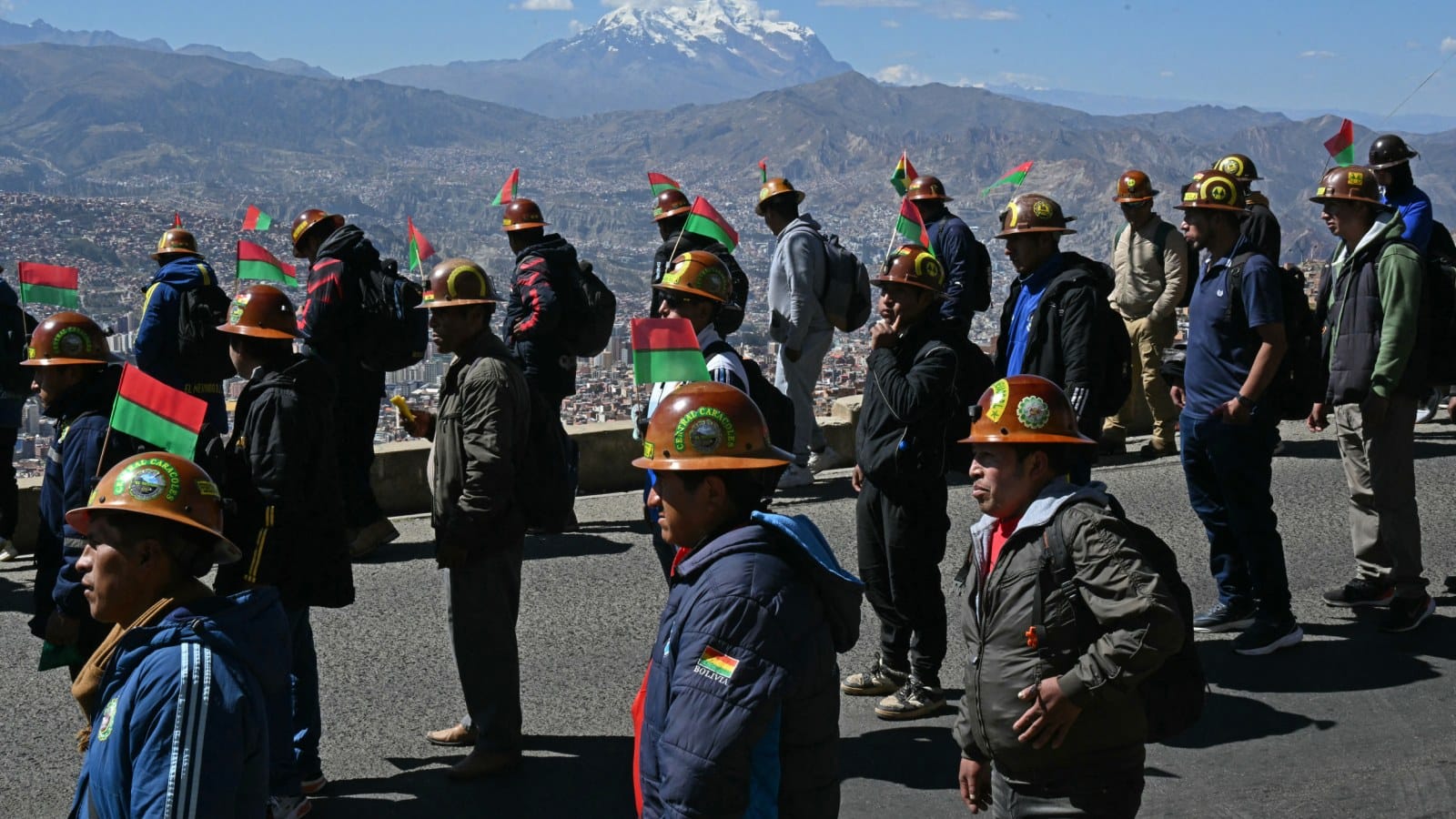
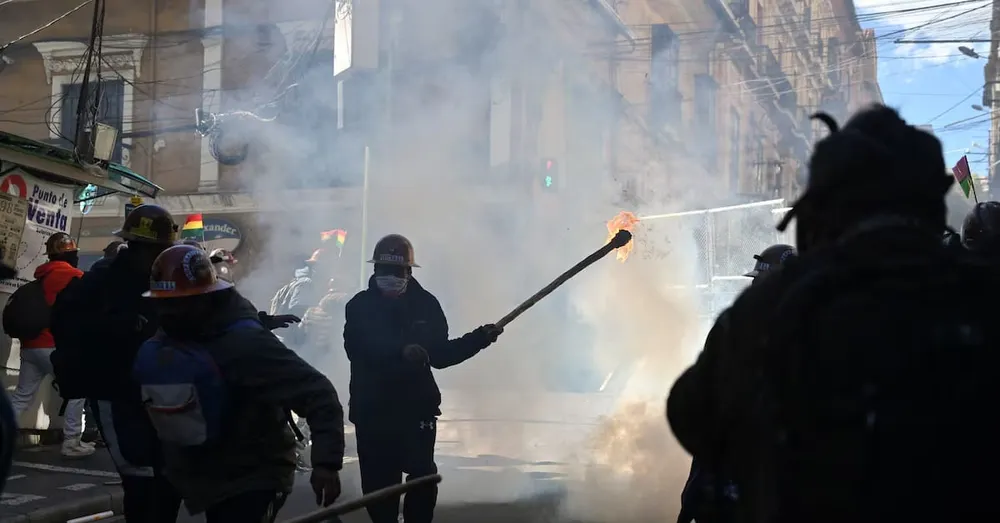
On May 14, the protests grew out of control when miners began to detonate small sticks of dynamite in the city as some protesters attempted to enter the presidential palace forcefully. Some protesters reportedly threw Molotov cocktails at security officers during the confrontation.
Police used tear gas to combat the protesters and blocked roads around the presidential palace.
Where Morales Fits
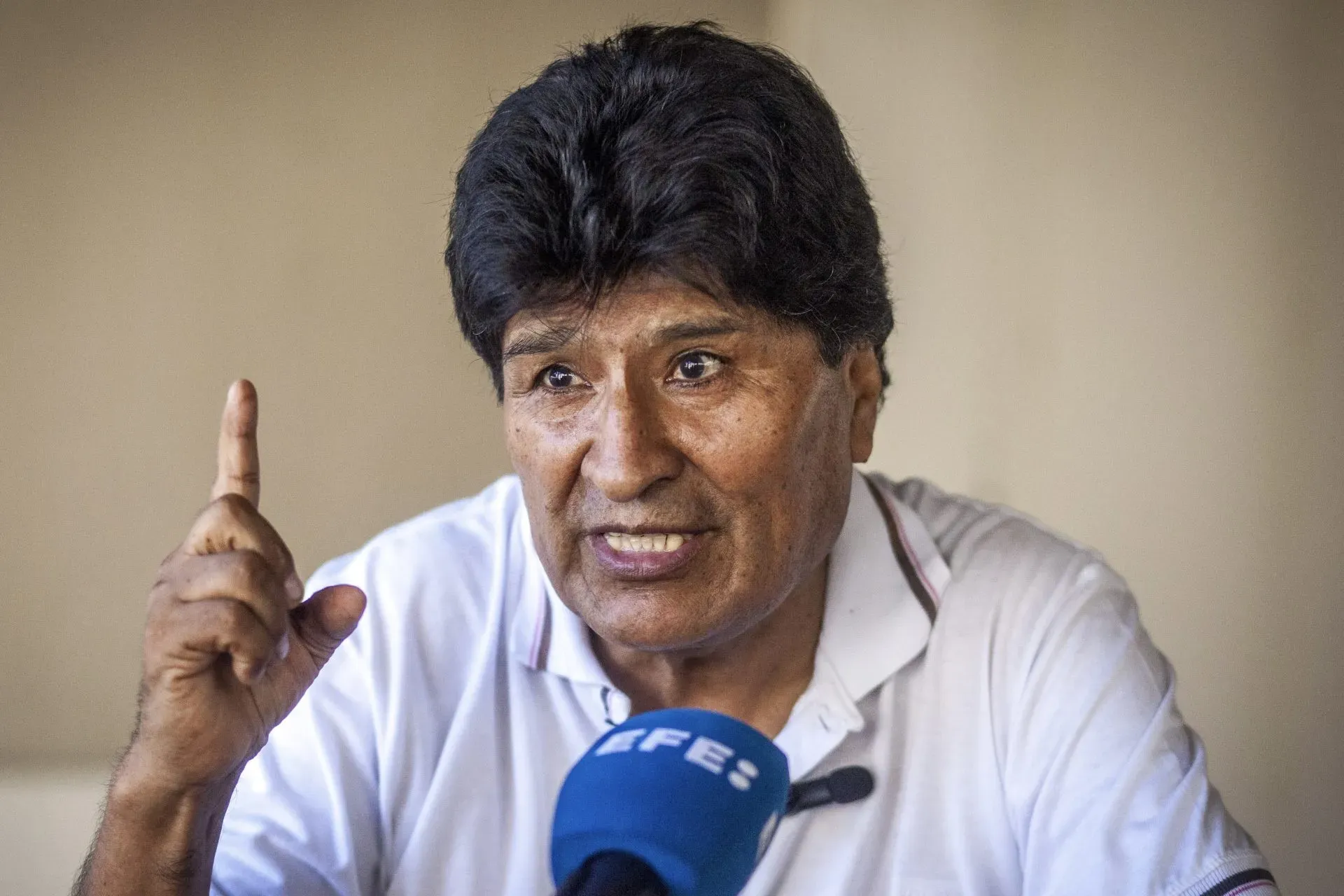
Government officials have blamed the opposition and former leftist President Evo Morales for stoking the demonstrations. Morales, who last week was held in contempt for not appearing in court in a trafficking case, supported those protesting on X, saying on Thursday that “as long as the structural demands such as fuel, food, and inflation are not addressed, the uprising will not be halted.”
That statement — from a man facing criminal charges, barred from running for office, and with every political incentive to see the Paz government collapse — sits in a complicated space. Morales’ administration did not create Bolivia’s fuel crisis, its collapsing natural gas reserves, or the poverty driving people to walk 1,100 kilometers in plastic sandals. Those conditions predate his political calculations and in some cases are the legacy of his own government’s failure to diversify the economy during the boom years.
What Morales has done is position himself as the voice of the uprising — amplifying it, legitimizing it politically, and ensuring that every escalation is framed as evidence that the Paz government has lost the mandate to govern.
Some of Paz’s allies have blamed the unrest on Morales, a former trade union leader who continues to draw popular support in Bolivia’s rural areas. Whether his involvement rises to the level of coordination — actively directing the protests rather than simply endorsing them — is a distinction that Paz’s government has asserted but not yet publicly evidenced.
The contempt ruling against Morales, issued last week after he refused to appear for trial on human trafficking charges, adds another layer. A man under active criminal prosecution, publicly stoking protests against the government overseeing his prosecution, is engaged in political activity that is simultaneously constitutionally protected and nakedly self-interested.
What Paz Is Doing
A group of 20 miners were invited to the presidential palace to meet with Paz and discuss their demands. Economy Minister José Gabriel Espinoza said his government was “open to dialogue.”
Among the issues reportedly discussed were fuel subsidies, welfare benefits and changes to Ley 1720, which was repealed after outcry. Still, officials have refused demands that Paz step down. “The president is not going to resign,” Minister of Public Works Mauricio Zamora said.
At the Gran Encuentro Nacional in Cochabamba on May 9, Paz presented what he framed as a structural reset of the Bolivian economic model: a new Electricity Law, an Investment Law, a Mining Law, a Green Economy Law and a Boliviano Entrepreneur Law, plus electoral-system reforms. Whether that legislative agenda survives the current crisis long enough to be debated is an open question.
Miners’ Revolt or Attempted Coup?
The honest answer is that Bolivia is experiencing both things simultaneously — and the distinction matters less to the people living it than to the analysts describing it.
The miners, teachers, farmers, and indigenous communities in the streets have legitimate grievances that have been building for years. The economic collapse of Bolivia’s natural gas sector, the fuel subsidy removal, 14% inflation, and hospital oxygen shortages are not manufactured crises. They are the product of policy failures spanning multiple governments — including, in significant part, the Morales governments that presided over the boom without building durable institutions for the bust.
Morales is exploiting those grievances for political survival. That does not make the grievances less real. It makes the situation more difficult to resolve — because any negotiated solution that stabilizes the Paz government is a solution that removes Morales’s most powerful remaining political tool.
Bolivia has been here before. Those historic struggles marked rebellions of workers, peasants and indigenous masses that toppled two presidents and created the conditions for the rise of MAS (Movimiento al Socialismo — Movement for Socialism) under Morales. Whether 2026 follows that pattern — or whether Paz finds a way to absorb the pressure without falling — is the question that will define Bolivia’s political trajectory for the rest of the decade.
Sociedad Media will continue to cover Bolivia’s political and economic crisis as it develops. Tips, sources, and feedback welcome at info@sociedadmedia.com