

Peru’s National Jury of Elections confirmed on Sunday what a month of vote-counting had made increasingly clear: Keiko Fujimori of Fuerza Popular will face Roberto Sánchez of Juntos por el Perú in a presidential runoff on June 7. The announcement was not a surprise. But the chaos that produced it was.
The National Office of Electoral Processes finalized its count on May 15, more than a month after the April 12 first-round vote. Fujimori gathered 2.8 million votes, or 17.19% of the total. Sánchez received 2.015 million votes, or 12.03%. Ultra-right candidate Rafael López Aliaga finished third with 11.9% — separated from Sánchez by only 21,210 ballots.
That margin, and the month-long count that confirmed it, produced one of the more extraordinary moments in recent Latin American electoral history.
What Happened After the First Round
Following Sánchez’s rise in votes later in the tabulation process, López Aliaga reportedly began a campaign against electoral authorities, accusing the process of fraud. Electoral observers from the European Union and Peruvian authorities denied that voting irregularities took place.
López Aliaga did not stop at accusations. He called for a nationwide “insurgency” if the elections were not invalidated and offered 20,000 Peruvian soles to individuals who assisted his argument of electoral fraud. He now faces criminal charges related to alleged incitement of civil disorder from the Public Ministry of Peru.
During a speech, he threatened the JNE president with graphic violence if he did not annul the elections.
The JNE ruled 3–2 against annulling the first round and said the second round would occur on its already scheduled date of June 7. The EU election observation mission, which deployed 150 members across Peru, noted problems in how the vote was conducted but gave its seal of approval. JNE President Roberto Burneo acknowledged the difficulties directly: “We cannot deny that there were many difficulties and flaws in the logistical deployment by the organising entity, ONPE.”
The Players
This will be the fourth time Fujimori, 50, is running for president. For Sánchez, a 57-year-old former trade minister under Castillo, this is his third bid for the office.
Keiko Fujimori is the daughter of the late President Alberto Fujimori, who governed Peru from 1990 to 2000 before fleeing to Japan amid corruption and human rights abuse scandals, was extradited, convicted, and died in prison in 2023. She has been the dominant figure on Peru’s right for fifteen years, leading the Fuerza Popular party through three previous presidential campaigns, two of which she lost in the final round. In 2016 she lost to Pedro Pablo Kuczynski by 0.24%.
In 2021 she lost to Pedro Castillo by 44,213 votes — a result she disputed for months, alleging fraud that international observers did not find.
Roberto Sánchez is a center-left economist and former trade minister who served under Castillo. That association is both his political base and his most significant liability.
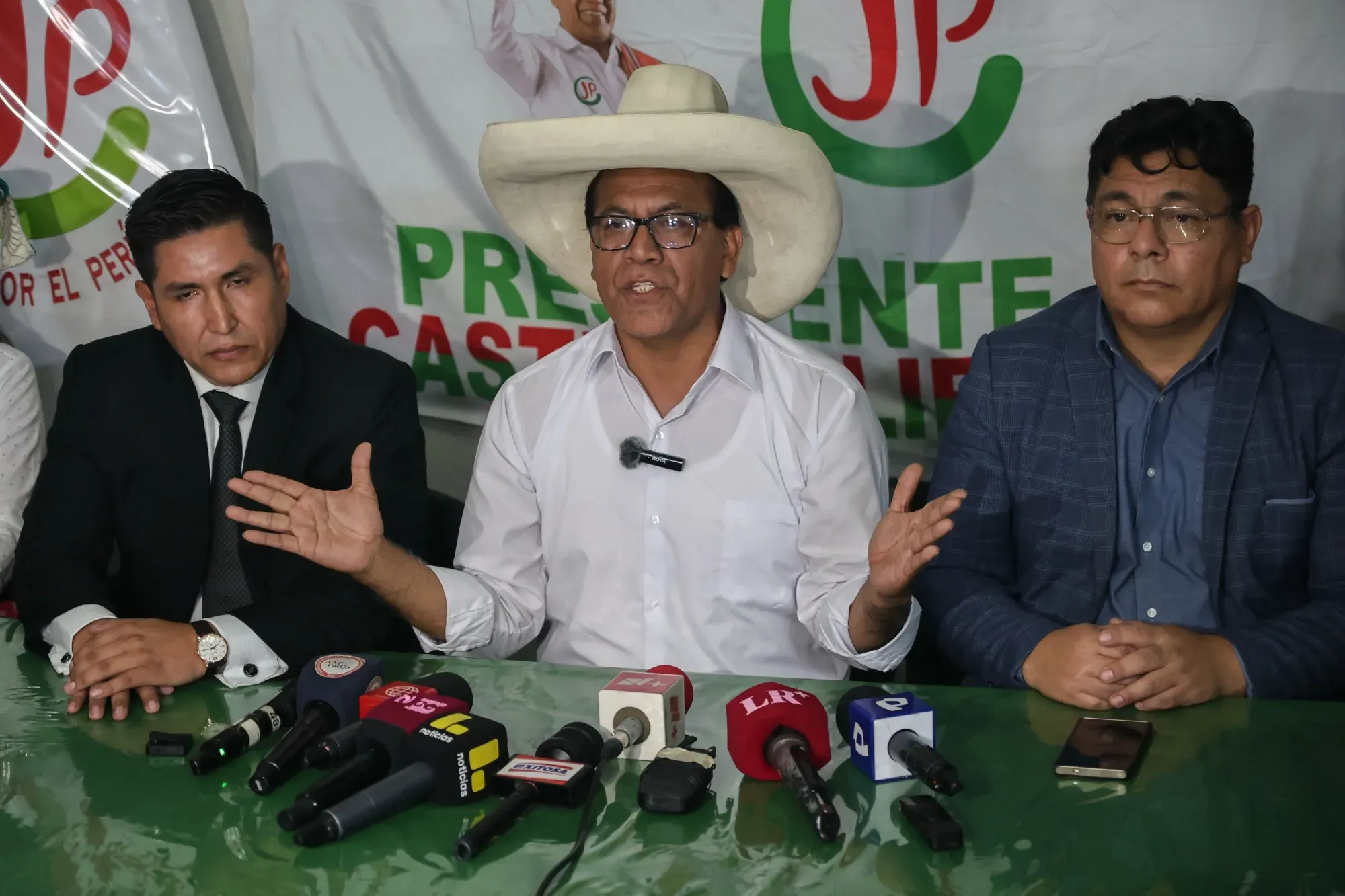
Sánchez begins his runoff campaign embroiled in legal troubles. Prosecutors have requested a prison sentence of five years and four months against him for allegedly providing false information to the electoral authority regarding campaign contributions between 2018 and 2020. His connection to Castillo — who attempted to dissolve Congress in December 2022, was removed from office within hours, and is now serving 11 years and five months in prison for the failed coup — is the line his opponents will use against him throughout the runoff.
The Shadow of 2021
The framing matters. Peru has not digested 2021. Fujimori lost that race to Pedro Castillo by 44,213 votes. Castillo’s December 2022 self-coup collapsed within hours and ended with him in prison. The institutions that replaced him never rebuilt trust.
The two candidates will compete for the presidency amid profound political instability, with Peru having cycled through eight presidents since 2016. The majority were either removed from office or stepped down to avoid a similar fate over corruption accusations.
That institutional fragility is the defining context of the June 7 vote. Peru has a strong macroeconomic framework — the central bank is independent, the currency is stable, the fiscal rules are respected — but a political system that has consistently failed to produce stable governance. Former Finance Minister Alonso Segura warned publicly this week that the Fujimori-Sánchez matchup puts that macroeconomic stability at risk, citing investor uncertainty about both candidates’ economic policy intentions and the broader institutional environment in which the next president will govern.
The Stakes Beyond the Presidency
Two issues sit beneath the presidential contest that will shape Peru regardless of who wins.
The first is China. The Chancay megaport — a $3.6 billion Chinese-built deepwater port north of Lima that opened in November 2024 — and the Sinopec offtake renewal and Chinese-financed transmission lines represent the litmus tests of any continuity narrative. Peru’s relationship with Beijing is deeply embedded in its mining and infrastructure sectors. Both Fujimori and Sánchez will face pressure from Washington — which has identified Chinese infrastructure investment in Latin America as a national security concern — to recalibrate that relationship.
Neither candidate has offered a clear framework for how they would do so.
The second is security. Peru is battling a deepening security crisis, fueled by a sharp rise in organized crime. The first round produced some of the most extreme security proposals in recent Peruvian electoral history — one candidate proposed surrounding prisons with venomous snakes; another called himself “the Peruvian Bukele” and proposed designating all criminals as military targets.
Those candidates did not make the runoff. But the conditions that made their proposals viable campaign material did not disappear when the vote was counted.
What Comes Next
The runoff is June 7. The new president serves a five-year term beginning July 28 — the same date Peru celebrates its independence, a constitutional requirement. Voting is compulsory, with administrative penalties for those who do not cast a ballot.
Current polling gives Fujimori a modest lead in the runoff, but Peru’s polling history — which failed to predict the Castillo surge in 2021 — counsels caution about any projections. What the polling does consistently show is that a significant share of Peruvian voters, faced with a choice between Fujimori and Sánchez, would prefer neither. The blank and null vote, which under Peruvian law is valid and counted, may be a meaningful factor on June 7.
The upcoming runoff is expected to mirror the deeply polarized second round of 2021. The difference is that in 2021, the institutions were tested by the outcome. In 2026, they were tested by the process itself — by a month-long count, a third-place candidate who called for an insurgency, and a 3–2 JNE ruling that confirmed the results over active political opposition. Whether those institutions hold through another cycle is the question that will define Peru’s political trajectory for the next five years.