
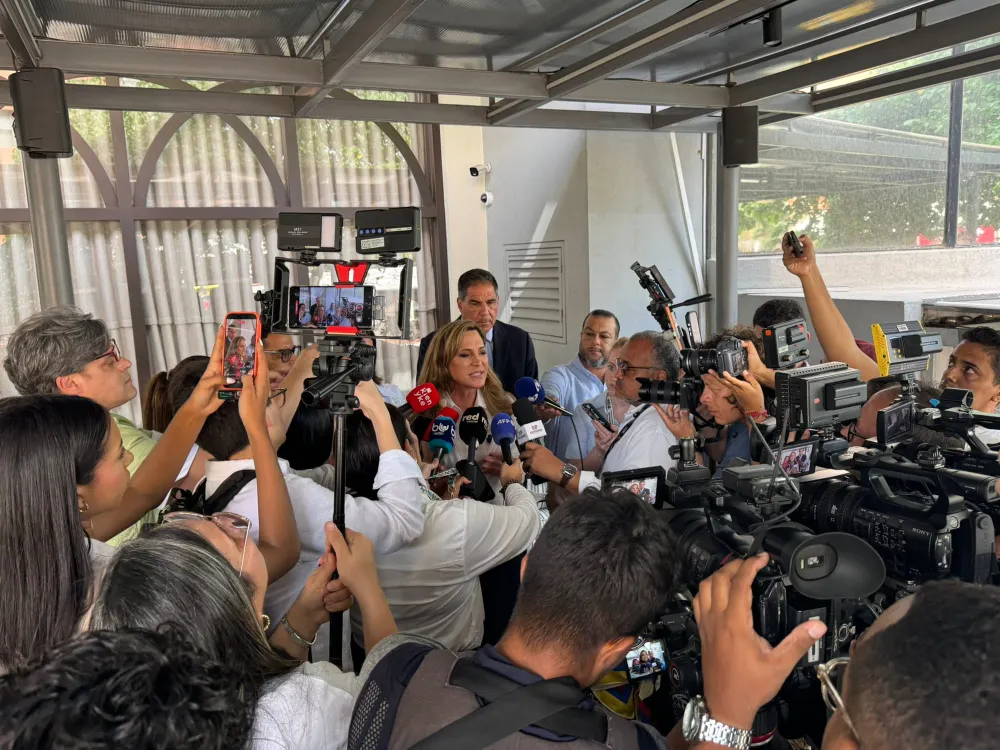
MIAMI — Florida Congresswoman María Elvira Salazar published two contradictory verdicts on President Trump’s massive new Venezuela oil deal within the span of about an hour this weekend — a reversal that, beyond the political whiplash it generated online, illustrates a genuine and unresolved tension between Washington’s political and economic engagement with Maduro’s left-over government and the demand for actual democratic elections that has defined Salazar’s own political identity for years in South Florida’s politics.
New Oil Deal
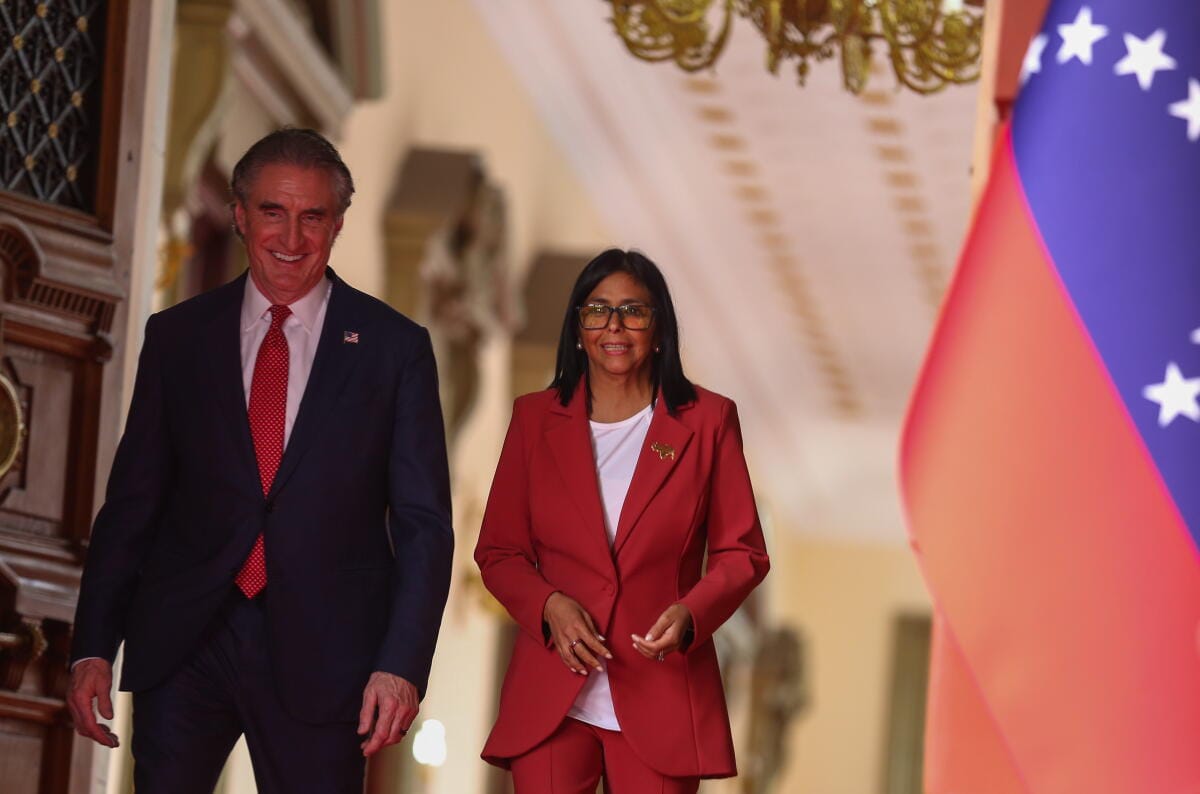
Trump revealed on Friday that the United States had negotiated an agreement granting private American companies access to what he called 65 billion barrels of Venezuela’s proven oil reserves, describing it as “THE BIGGEST OIL DEAL IN WORLD HISTORY” and saying it would come “at no cost to the American Taxpayer.”
Trump credited Secretary of State Marco Rubio, Defense Secretary Pete Hegseth, and acting Venezuelan President Delcy Rodríguez for negotiating the pact.
Reporting on the deal’s structure indicates that the United States would secure a majority stake in the arrangement.
Salazar’s First Post: A Direct Rebuke
Salazar’s initial reaction, posted in Spanish from her personal X account was sharply critical:
“Any ‘agreement’ with the interim Venezuelan regime expires the day President Trump leaves the White House,” she wrote, describing Rodríguez as the “interim dictator” of Venezuela and accusing her of using the deal simply to “buy time.”
Salazar warned that Venezuela’s government “has stolen American investments before, and it will do again the moment it can,” and argued explicitly that “a lasting deal can only be made with a democratically elected government that respects the rule of law, protects private property, and is backed by strong democratic institutions.”
The Reversal
Roughly an hour later, Salazar deleted both the Spanish and a parallel English version of the post. In their place, she published a new statement — this time in English, from her official congressional X account — declaring that the agreement is “a great deal for the United States and for the Venezuelan people.”
Salazar criticized China for having “for years took advantage of Venezuela’s weakness to buy its oil at steep discounts,” framing the U.S. deal as America finally “taking the lead” toward what she described as a path to “peace, stability and security” for Venezuela.
El acuerdo petrolero entre Estados Unidos y Venezuela es un gran acuerdo para Estados Unidos y para el pueblo venezolano.
— Rep. María Elvira Salazar (@RepMariaSalazar) August 29, 2026
Durante años, China se aprovechó de la debilidad de Venezuela para comprar su petróleo con grandes descuentos. Ahora Estados Unidos está tomando la…
Even in this reversed posture, Salazar did not fully abandon her original skepticism: she maintains that Rodríguez remains “the wrong person to make this deal with,” and tied the agreement’s long-term legitimacy directly to Venezuela’s political future, writing, “We want this deal to last 100 years” — a duration she said would require free elections, functioning democratic institutions, and genuine rule of law in Venezuela.
Two Audiences, Two Messages
What makes the episode more than a simple flip-flop is the platform Salazar used for each version. Her first, critical post went out in Spanish on her personal account — a channel typically reaching Venezuelan and Cuban diaspora communities directly.
Her second, more favorable post went out in English on her official congressional account — a channel more likely to reach Washington media, congressional colleagues, and the broader English-speaking political audience assessing Trump’s deal on its economic and geopolitical merits.
That split suggests Salazar was navigating two genuinely different audiences with two different sets of expectations, rather than simply changing her mind at random.
What This Reveals About Miami’s Latino Electorate
Salazar’s initial instinct — sharp, suspicious, immediate, delivered in Spanish, and explicitly conditioning any legitimacy on democratic elections — reflects a political reality she has had to answer to consistently throughout her career representing Florida’s 27th Congressional District and greater South Florida, home to one of the country’s largest concentrations of Venezuelan and Cuban exiles.
This community has shown persistent impatience with any arrangement that appears to normalize or economically benefit a Venezuelan government not chosen through free elections, regardless of which U.S. administration is involved.
Salaza’s own record reflects this pressure directly: she has been an outspoken, consistent critic of Rodríguez’s government since it assumed power following Maduro’s January capture by U.S. Special Forces, and has repeatedly tied U.S.-Venezuela engagement to the demand for a genuine democratic transition rather than merely a change in personnel at the top of Venezuela’s government.
The Deal’s Underlying Tension
The reversal captures, in miniature, the broader contradiction running through Washington’s current Venezuela policy. The Trump administration has pursued direct, high-value economic engagement with Rodríguez’s government — this oil agreement being the most significant example yet, layered on top of earlier moves including eased sanctions on financial institutions and direct Treasury and State Department meetings in Caracas — even as it has not secured, or in some cases even publicly demanded, a concrete electoral timeline from that same government.
Salazar’s brief public wavering mirrors that same unresolved question: is economic engagement with Rodríguez’s government a stepping stone toward eventual democratic elections, or a substitute for them? Her final position attempts to hold both ideas at once — welcoming the deal’s economic terms while insisting its long-term legitimacy still depends on democratic conditions that, as of this writing, remain unmet.
Salazar has not issued further public clarification beyond her second post, and neither the White House nor Rodríguez’s government has directly addressed her specific criticisms or the conditions she attached to the deal’s long-term durability.
With Venezuela’s political dialogue process still unresolved and no confirmed date for elections on the horizon, Salazar’s rapid public reversal is likely to remain a notable data point in the broader story of how South Florida’s Venezuelan and Cuban-American political leadership continues negotiating the gap between pragmatic engagement with Caracas and its own community’s enduring demand for a genuinely democratic outcome.