

Miami Jury Convicts Former Marco Rubio Roommate for Secretly Lobbying For Maduro
MIAMI — A former Miami congressman and longtime friend of U.S. Secretary of State Marco Rubio was convicted on Friday in connection with a secret $50 million lobbying campaign on behalf of Venezuela during the first Trump administration.
David Rivera, 60, and his associate Esther Nuhfer were both found guilty on all counts, including failing to register as a foreign agent with the Justice Department and conspiracy to commit money laundering as part of their work for former Venezuelan President Nicolás Maduro’s government.
Rivera had been out on bond, but Judge Melissa Damian ordered him taken into custody, finding that he posed a flight risk because he has access to sizable funds, faces a potentially long prison sentence, and faces additional federal charges in Washington, D.C., in a related foreign lobbying case.
Rivera had long been friends with his former roommate Rubio and became friends with Former Attorney General Jeff Sessions when he was in Congress, and after Maduro gave him a $50 million contract he attempted to leverage those relationships. Rivera used approximately $600,000 from the contract proceeds to fund his Florida state congressional campaign, among other personal uses.
The irony embedded in the conviction is specific and extraordinary. In an 11-count indictment unsealed in 2022, prosecutors alleged that Rivera was tapped by then Foreign Minister Delcy Rodríguez — now Venezuela’s acting president — to work Republican connections from Rivera’s time in Congress to get the first Trump administration to abandon its hard-line stance and ease crippling sanctions on Venezuela. The woman who hired Rivera to lobby against sanctions is now Washington’s trusted partner in the post-Maduro transition. And the man she paid is in federal custody.
The seven-week trial offered a rare glimpse into Miami’s role as a crossroads for foreign influence campaigns aimed at shaping U.S. policy toward Latin America, highlighting the city’s reputation as a magnet for corruption and anti-Communist crusaders among its sizable exile population.
“These convictions expose a simple truth: the defendants sold access and influence to a hostile foreign regime for money,” said U.S. Attorney Jason Reding Quiñones.
“They accepted millions tied to the Maduro regime, concealed that relationship from the United States government, and used trusted personal and political relationships to secretly advance the interests of Venezuela’s regime. In South Florida, where so many families fled communist oppression, that kind of betrayal carries real weight.”
Rubio testified against his former roommate in the trial. The Secretary of State who is now the architect of the Donroe Doctrine — the policy that sent U.S. forces into Caracas to capture Maduro — and testified that he was used as a pawn by the man who slept in the next room when they were both young Florida state legislators in Tallahassee earlier in their careers. That is the specific human geography of the Venezuela story as it plays out in Miami — and no other publication covers it from this city, with this community’s understanding of what it means like Sociedad Media.
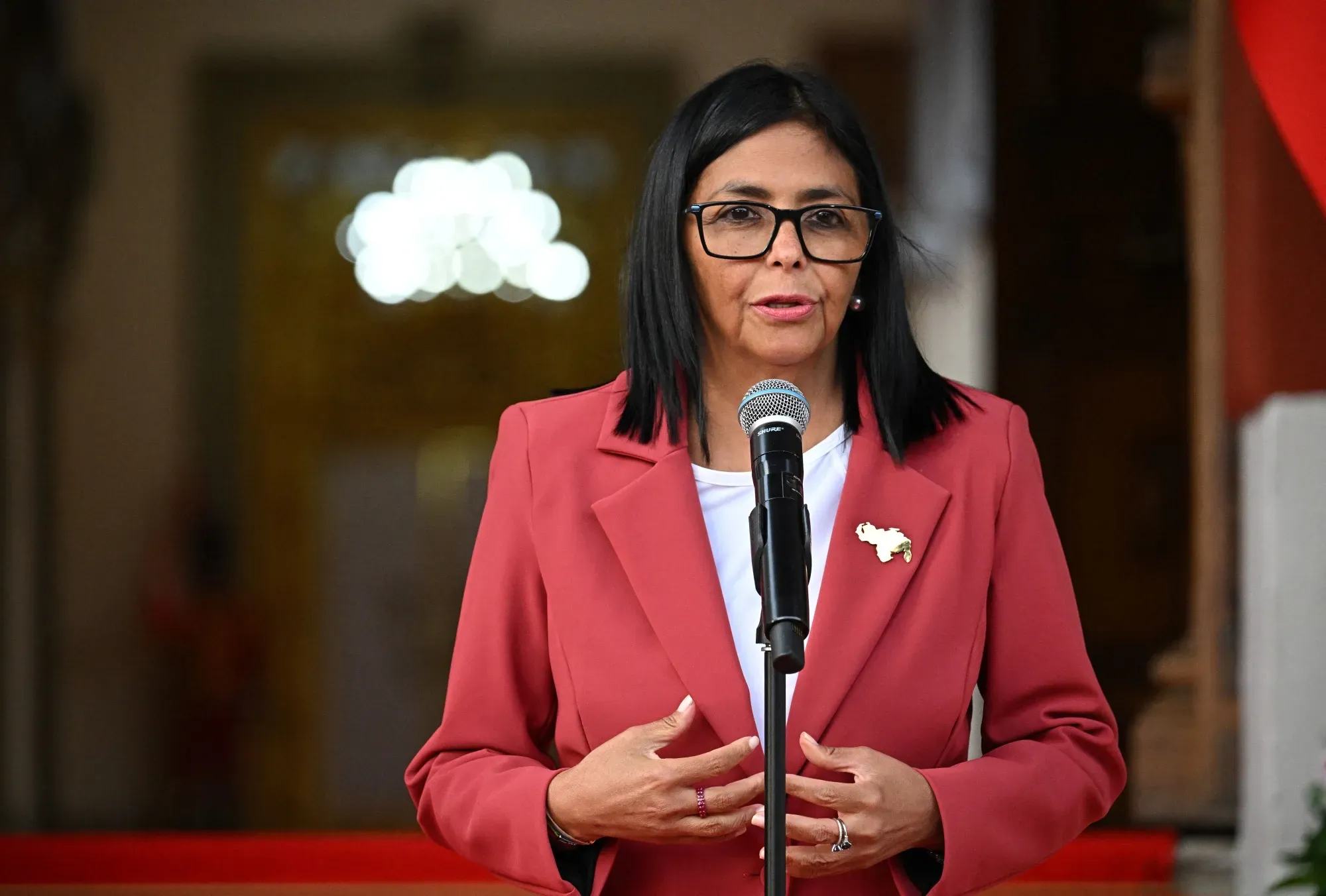
Rodríguez Leaves Venezuela For The First Time Since January 3
Venezuela’s acting President Delcy Rodríguez traveled to The Hague on Saturday — the first time she has left the country since U.S. forces captured Nicolás Maduro in January — to present Venezuela’s case before the International Court of Justice in the centuries-old land dispute with Guyana over the oil-rich Essequibo region.
The trip carries significance beyond the ICJ hearing itself. Rodríguez, a longtime supporter of Maduro’s Chavismo movement, has remained compliant with a list of U.S. demands, including stopping oil deliveries to Cuba, opening Venezuela’s state-owned oil industry to foreign companies, and releasing political prisoners — while at the same time striking a careful balance with Venezuela’s influential internal security apparatus and military.
The Essequibo dispute is Venezuela’s most significant territorial claim — the sprawling region bordering eastern Venezuela accounts for two-thirds of Guyana’s current territory, and the discovery by ExxonMobil of offshore oil deposits there gave Guyana — with a population of less than a million — the largest per capita crude oil reserves in the world.
Rodríguez’s willingness to travel internationally is itself a diplomatic signal — that Washington has given her sufficient security assurances to leave Venezuelan soil while Maduro remains in U.S. custody. Despite saying she was invited to the United States by the Trump administration, she has so far not made that trip. The Hague is the testing ground for international travel.
Washington is the destination still pending.
Maduro Back In Court Over Legal Fees
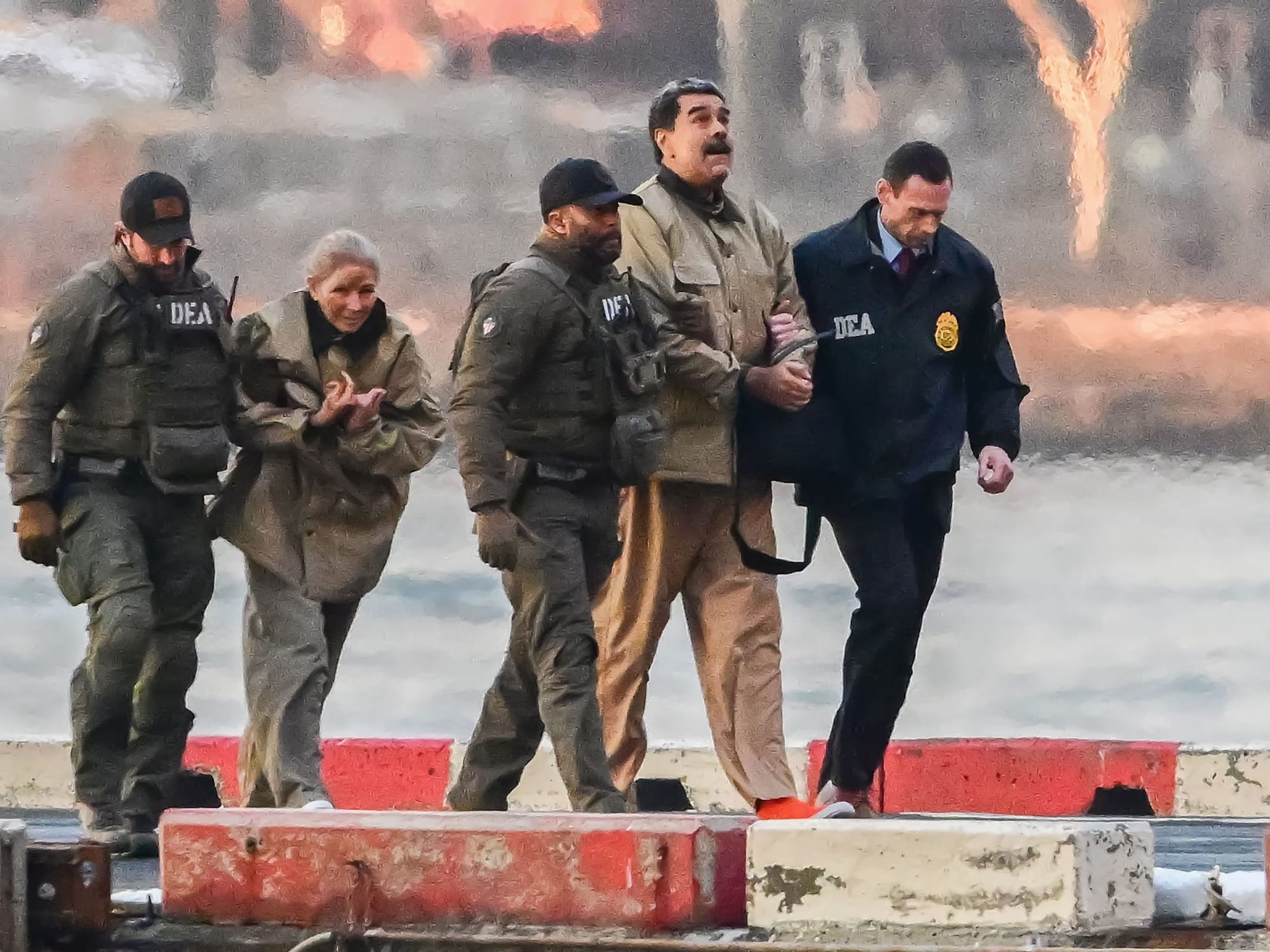
Former Venezuelan President Nicolás Maduro and his wife were back in a New York courtroom on Thursday as they seek to have their drug trafficking indictments thrown out over a geopolitical dispute over legal fees.
The case has produced one of the more extraordinary legal arguments in recent memory — a former head of state attempting to use Venezuelan government funds to pay his U.S. criminal defense lawyers, with U.S. prosecutors arguing that allowing it would undermine the very sanctions regime that makes the prosecution possible. The hearing produced no resolution. The case continues.
The Maduro court proceedings are moving on a separate track from Venezuela’s political transition — and that separation is deliberate. Washington has structured the post-Maduro framework to allow Rodríguez to govern and cooperate economically while Maduro’s criminal case proceeds independently. Whether the two tracks remain separate as the transition matures — and whether Maduro’s legal team eventually argues that his continued imprisonment is inconsistent with the normalization framework — is the question that will define the case’s next chapter.
The Polymarket Bet: Who Runs Venezuela By December 31?
Trader consensus on Polymarket prices Nicolás Maduro as the likely Venezuelan head of state by end-2026 at 61%, reflecting Supreme Court rulings affirming his official presidency despite his January 2026 U.S. capture, with Delcy Rodríguez serving only as acting president to maintain continuity.
The 61% figure is the most specific public assessment of Venezuela’s political future available — and it is being generated by prediction market traders with real money at stake rather than analysts with institutional incentives to be optimistic about the transition.
The National Assembly’s pending June decision on Maduro’s permanent absence remains pivotal for any transition.
Opposition leader María Corina Machado’s April push for swift elections and planned return adds uncertainty — but Machado’s return has been pending for months without materializing, and the National Assembly’s June decision will determine whether the legal framework for a genuine transition exists or whether Rodríguez continues governing in a permanent interim capacity that serves the Chavista system’s interests regardless of what Washington wants.
Oil Exports Hit Seven-Year High — China Is No Longer The Story
Venezuela’s oil exports rose 14% in April to 1.23 million barrels per day — the highest monthly volume since late 2018. The United States received approximately 445,000 barrels per day — making it Venezuela’s single largest customer. India absorbed 374,000 barrels per day. Europe took approximately 165,000.
The buyer absent from those figures is China — for decades Venezuela’s most important customer and the relationship that kept PDVSA financially viable during the most severe sanctions period. Indian refiners are now emerging as the largest buyers of Venezuelan crude, filling the void left by China as it reduces purchases following the U.S. move to control Venezuelan oil sales.
The normalization signal is real. The structural question remains: Venezuela once produced 3.5 million barrels per day at its late-1990s peak. At 1.23 million, it is operating at roughly a third of that capacity. The infrastructure rehabilitation that Washington’s General Licenses are designed to facilitate cannot happen without sustained foreign investment — and as Sociedad Media reported this week, the energy companies are still waiting for the legal architecture, the payment certainty, and the political stability that would justify moving from watching to investing.
Venezuela Now is Sociedad Media’s end-of-week briefing on Venezuela’s ongoing political and economic transformation. This edition covers the week of May 5–10, 2026. For tips and reporting from inside Venezuela, contact info@sociedadmedia.com


