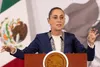


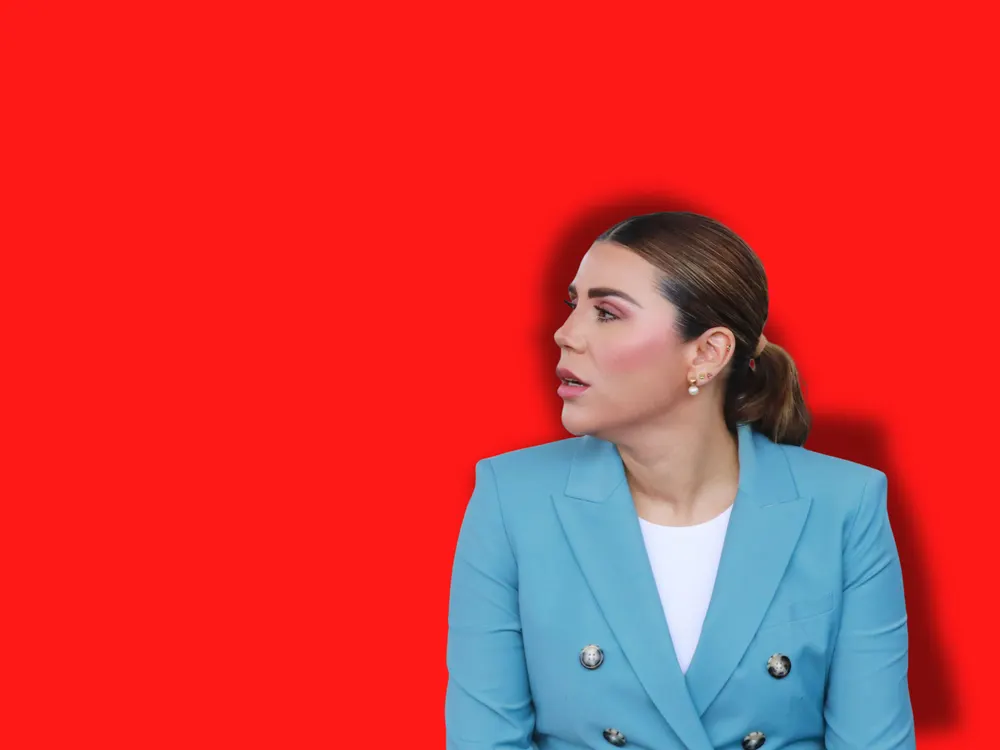
BAJA CALIFORNIA — A slow-drip series of leaked audio recordings has plunged Baja California Governor Marina del Pilar Ávila Olmeda into the most serious political crisis of her career — and Mexico along with it — with each new release suggesting deeper and more specific contact between the governor and U.S. federal agents than she has publicly acknowledged.
How the Scandal Started
The story traces back to May 2025, when the U.S. government revoked the tourist visas of Ávila and her then-husband, Carlos Torres Torres, a former federal deputy who held a special-projects post in her state administration.
At the time, Ávila characterized the revocation as “an administrative decision, not an accusation,” and denied any wrongdoing.
The scandal itself became public more than a year later, on June 21, 2026, when columnist Héctor de Mauleón published the first leaked recording in the newspaper El Universal.
The Leaks
A second, more damaging recording surfaced on July 13, in which Ávila is heard saying she visited “an FBI office” and expressing fear of possible extradition. In that recording, she tells an unidentified American intermediary: “I am willing to talk about everything I might know, how to support, how to cooperate. I can say what I’ve heard in the security meetings” — an apparent reference to Mexico’s internal national security briefings.
Speaking to a man identified as an “external” FBI adviser and another identified as an FBI “special agent,” Ávila indicated she was willing to cooperate with U.S. authorities, apparently as a way to avoid possible criminal charges and extradition.

A third recording, released on July 16, went further still: in it, Ávila is heard coordinating actual meeting logistics with an alleged intermediary for the Department of Homeland Security and FBI, who tells her, “Governor, I want to let you know that the first meeting would be at the end of August, and it would be in Panama.”
A subsequent recording, published on July 27, dealt with the alleged hiring of a former FBI agent as a private consultant. Infobae’s reporting on the scandal noted the recordings suggest Ávila expressed willingness to share confidential information from Mexico’s national security roundtables specifically to avoid extradition — a characterization that, if accurate, would represent a significant breach of protocol for a sitting governor.
The Governor’s Defense
Ávila has offered a consistent counter-narrative: that the recorded conversations were only ever about recovering her canceled visa, not about any broader cooperation arrangement, and that they have been circulated “out of context.”
Her communications office told the magazine Proceso that the second recording reflected fragments of “a private conversation,” and that the participants never formally identified themselves as representatives of U.S. authorities. She has, however, acknowledged the authenticity of the earlier recordings, even while disputing how they’ve been framed.
A Political Feud Behind the Leaks
Ávila has directly accused her predecessor as governor, Jaime Bonilla, of orchestrating the leaks as a deliberate trap.
In an interview, she said Bonilla recommended she speak with a man he described as an external adviser to U.S. agencies — possibly the FBI or Homeland Security Investigations — during a period when she was still in communication with Bonilla and expected the conversation to be about her visa issue.
Instead, she said, “he starts laying out scenarios I hadn’t heard before: charges, penalties, he even talked about extradition, about letters. I felt it as a psychological ambush. It was an ambush. I told him: ‘What are you talking about? I hadn’t heard any of this.’” She said the conversation took place in mid-December 2025, and that when the discussion turned to investigations and possible extradition, her first thought was of her children, since nothing like this had ever been raised with her before.
Ávila has since filed a formal complaint against whoever is responsible for leaking the recordings.
A fourth recording, released roughly a week ago by journalist Gildo Garza, has drawn a different kind of scrutiny: several outlets have raised questions about its authenticity and origin, a departure from the earlier recordings, whose authenticity Ávila had at least partially acknowledged.
Political Fallout
The scandal has produced concrete political consequences. Following the second recording’s release, Mexico’s opposition National Action Party (PAN) formally demanded that Ávila step aside from her post while the matter is investigated.
Separately, in January, Ávila had already confirmed that Mexico’s Attorney General’s Office (FGR) was investigating her ex-husband, Torres, for offenses related to arms trafficking, drug trafficking, and money laundering — an investigation that predates the audio leaks but adds further context to why U.S. agencies may have taken interest in the couple in the first place.
What Remains Unclear
Despite months of escalating leaks, it remains publicly unknown what specific charges, if any, Ávila could actually face in the United States, or whether the “meetings” referenced in the recordings — including the one allegedly planned for Panama — ever took place.
Mexico News Daily’s own reporting on the story noted this ambiguity directly, and neither the FBI nor the Department of Homeland Security has issued public comment confirming or denying the nature of any contact with the governor.
With four separate recordings now public over the span of about five weeks, and Ávila’s own complaint against the leakers still pending, the scandal shows no sign of resolution.
Whether her formal complaint identifies Bonilla or others as responsible, whether the PAN’s calls for her removal gain further traction, and whether U.S. authorities ever clarify what, if any, legal exposure the governor actually faces are likely to determine how much further this story escalates in the weeks ahead.