

MIAMI — A speech about deforestation data turned into the latest flashpoint in a deteriorating U.S.-Brazil relationship this weekend, after President Luiz Inácio Lula da Silva’s attack on Secretary of State Marco Rubio drew a blistering response from a Miami congressman — including a doctored image placing Lula in Nicolás Maduro’s famous captured photo.
What Lula Said
Speaking on Friday, August 7, at Brazil’s National Institute for Space Research (INPE) in São José dos Campos, during an event presenting new Amazon deforestation data, Lula turned his remarks toward Washington.
“There’s a citizen over there who doesn’t like Brazil, doesn’t like Latin America, and is a Bolsonarista: the Secretary of State, Marco Rubio,” Lula said. “He’s an anti-Latin American, or a frustrated Latin American. He’s a descendant of Cubans from Miami, so he hates Cuba, hates Colombia, hates Brazil, and does things differently from what we discussed with Trump.”
Rubio, the son of Cuban immigrants — his parents left Cuba for the United States and settled in Miami — has built much of his political identity around that heritage, consistently taking some of the most hawkish positions in Washington toward Cuba, Venezuela, and Nicaragua throughout his career, first as a senator and now as Secretary of State. Lula’s remark was a direct attempt to use that same heritage against him, suggesting Rubio’s family background has made him hostile not just to Cuba but to Latin America broadly, including Brazil.
Lula’s complaint went beyond personal characterization. He said his government holds weekly phone calls with the Trump administration and has sent documents he says disprove the justifications used for the latest round of U.S. tariffs against Brazil, and that Rubio’s actions have diverged from commitments Lula says he secured directly from Trump in prior conversations, including meetings in Malaysia and Washington.
Separately, Lula has accused Rubio of interfering in Brazil’s election by effectively backing the opposition candidacy of Flávio Bolsonaro, son of imprisoned former President Jair Bolsonaro, ahead of October’s vote.
Giménez’s Response
Representative Carlos A. Giménez, a Cuban-born Republican from Florida and a member of the House Armed Services and Homeland Security committees, responded almost immediately, framing Lula’s hostility toward Rubio as directed from Havana rather than arising from any genuine policy disagreement.
“Lula’s hatred against Marco Rubio has a clear origin — the influence of his bosses from the Castro-communist dictatorship,” Giménez wrote in a post accompanying a video clip of Lula’s remarks, adding that Brazil deserves “a future far from Castro-communist influence.”
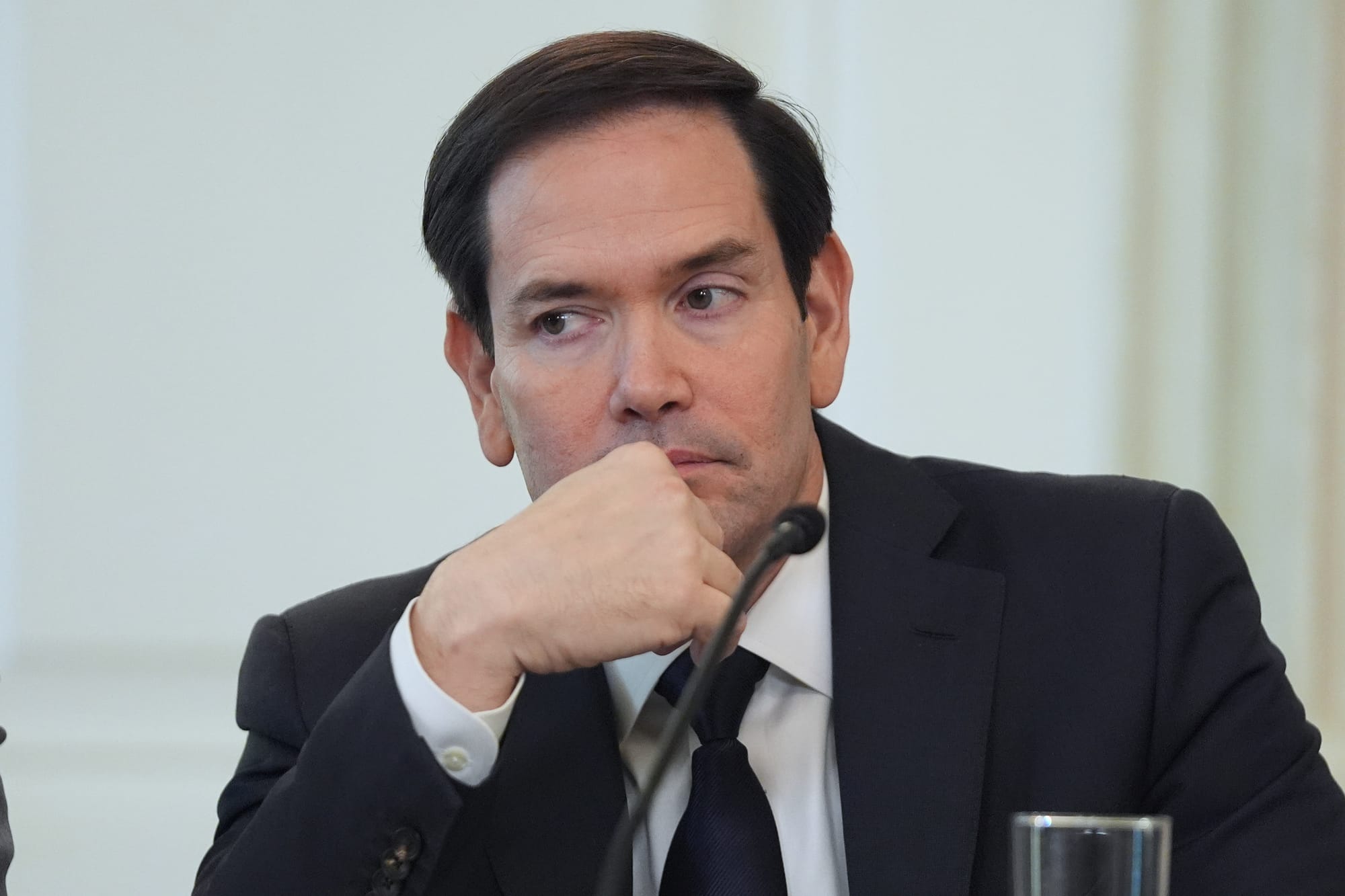
In a separate post, he went further, calling Lula a “corrupt and criminal pig” and accusing him of destroying the historic alliance between Brazil and the United States.
Giménez is no stranger to this kind of rhetoric toward governments he views as aligned with Havana. During the January operation that captured Nicolás Maduro, he publicly thanked President Trump and the U.S. Armed Forces and compared the moment to the fall of the Berlin Wall, describing it as the “beginning of the end” for what he classifies as narco-terrorist regimes across the continent.
He has separately and repeatedly criticized Mexican President Claudia Sheinbaum this year over her government’s humanitarian and oil-related engagement with Cuba, framing nearly every regional dispute involving Havana’s allies in similar terms.
The Image
On Sunday, August 9, Giménez escalated the confrontation to a different register entirely, posting a doctored version of the photograph the White House released following Maduro’s January 3 capture by U.S. forces — the widely circulated image showing the deposed Venezuelan leader blindfolded, wearing ear protection, seated in U.S. military custody.
In Giménez’s version, Maduro’s face was replaced with Lula’s, and the water bottle visible in the original photo was swapped for a bottle of cachaça, Brazil’s national spirit. The caption read simply: “What awaits him... #Brasil.”
🚨O que o espera… #Brasil🇧🇷 pic.twitter.com/lPOgoZeTvq
— Rep. Carlos A. Gimenez (@RepCarlos) August 9, 2026
There is no White House statement, and no official indication whatsoever, that the Trump administration intends any action against Lula or Brazil resembling the operation that captured Maduro. The post reflects Giménez’s own rhetoric and imagery, not a stated U.S. government position, and neither the State Department nor the White House press office has commented on it directly.
Why October’s Election Is the Real Backdrop
None of this weekend’s exchange can be separated from the contest now defining Brazilian politics. Lula, 80, is seeking an unprecedented fourth presidential term in an October 4 election that has tightened into a near-dead heat against Flávio Bolsonaro. The most recent polling, from BTG Pactual/Nexus, showed Lula leading by just a single point, 46% to 45%, after a Datafolha survey in late July had given him a slightly wider 48%-43% edge — a race that has swung repeatedly throughout the year as both campaigns absorb outside shocks.
Lula’s government has repeatedly linked several of those shocks directly to Washington.
This year’s U.S. tariffs on Brazilian goods, along with the Trump administration’s terrorism designation of Brazil’s two dominant criminal organizations, the PCC and Comando Vermelho, have both been cast by Lula’s camp as deliberate interventions timed to benefit Bolsonaro’s campaign.
When the most recent round of tariffs hit Brazilian exports, Rubio responded publicly on social media, accusing Lula’s government of failing to negotiate with the United States in good faith — an exchange that hardened both sides’ positions well before Friday’s INPE remarks.
Polling from Quaest has found that nearly half of Brazilian voters, 47%, already believe this year's U.S. economic pressure on Brazil has been politically motivated rather than purely commercial, meaning the American relationship has become a live and contested issue inside the campaign itself, not merely a diplomatic backdrop to it.
Framed against that backdrop, Lula’s “frustrated Latin American” remark reads less as a spontaneous personal insult and more as the latest move in a running argument over whether the Trump administration, through Rubio specifically, is actively trying to shape the outcome of Brazil's election.
Giménez’s response — invoking Cuba, calling Lula a criminal, and visually placing him in Maduro’s position of capture — extends that argument into starkly personal and symbolically loaded territory just as the campaign enters its final two months before Brazilians vote.
A Pattern Playing Out Across the Region
This is not the first time this year that rhetoric from a Miami-area Republican has intersected with a Latin American election. Giménez has previously used similarly pointed language toward Mexico’s Sheinbaum over her government’s Cuba policy, and other South Florida Republicans have taken active, public roles in regional elections this year, including campaigning support for Colombia’s now-inaugurated Abelardo de la Espriella.
Taken together, the pattern reflects how directly South Florida’s Cuban-American political class — with genuine institutional power in Washington through committee assignments and direct access to the administration — has inserted itself into the internal politics of multiple Latin American countries simultaneously, treating alignment with or against Havana as the organizing lens for the region’s broader elections.
Neither the Brazilian nor U.S. governments have signaled any move to formally de-escalate the exchange, and neither Lula’s office nor the State Department has issued an official response to Giméne’s specific posts as of this writing.
With October’s election increasingly framed by both camps as a referendum on Brazil’s relationship with Washington, exchanges like this one are likely to keep surfacing as the campaign’s final stretch unfolds, each side treating the other’s rhetoric as further confirmation of exactly the interference, or the hostility, it has already accused the other of.
Whether the dispute stays confined to social media and campaign speeches, or spills into more concrete diplomatic consequences in the way Milei’s own recent clash with Brazil did, will likely depend on how much further either side is willing to escalate in the nine weeks remaining before Brazilians go to the polls.


