


MEXICO — In the span of less than 30 days, Mexican federal forces eliminated both of the men identified as the principal leaders of the Cártel de Los Reyes, the criminal organization authorities say has driven much of the extortion campaign against avocado producers in Michoacán — a rapid, back-to-back leadership collapse that leaves the group’s future direction genuinely uncertain.
The Second Blow: “R5” Killed in Tocumbo
Mexico’s Secretariat of National Defense (Sedena) confirmed on Tuesday, September 1, the death of Luis Enrique Barragán Chávez, known as “El Güicho” or “R5,” during a military operation in the municipality of Tocumbo, Michoacán, on the night of Sunday, August 30.
According to Sedena, intelligence work by the Army’s 12th Military Region located Barragán Chávez at a rural property called “Rodeo del Pinal,” which sits adjacent to Los Reyes de Salgado — the town that gave the cartel its name, and the same municipality where his predecessor was captured weeks earlier.
Army and National Guard personnel, coordinated with Michoacán’s Guardia Civil and the Secretariat of Security and Civilian Protection, moved on the location; when troops arrived, Barragán Chávez’s group opened fire, and soldiers returned fire. He and one companion died at the scene. Authorities recovered two automatic rifles, ammunition, magazines of various calibers, and an all-terrain vehicle from the site.
Security Secretary Omar García Harfuch identified Barragán Chávez as the cartel’s leader and, specifically, as the principal coordinator of extortion targeting avocado producers across the region — the same core criminal activity that has repeatedly drawn U.S. attention to Michoacán’s security situation this year.
Barragán Chávez was also wanted by the United States, which had offered a $3 million reward for information leading to his arrest on drug and weapons trafficking charges, and he carried a provisional detention order for eventual extradition to the U.S.
The First Blow: “Poncho la Quiringua’s” Capture
Barragán Chávez had only recently risen to the cartel’s top position. He assumed control following the August 1 capture of Alfonso Fernández Magallón, alias “Poncho la Quiringua,” the organization’s founding leader, who was detained by the Mexican Army in the municipality of Los Reyes on an arrest warrant for kidnapping and rioting.
Fernández Magallón carried a $5 million U.S. bounty tied to accusations of drug and weapons trafficking. His arrest triggered an immediate wave of roadblocks and vehicle burnings across multiple Michoacán municipalities, as cartel members responded to the loss of their leader — a pattern of retaliatory violence that has become familiar in the region following high-profile security operations.
A Cartel Formed to Resist CJNG
The Cártel de Los Reyes operates as part of Cárteles Unidos, an alliance of smaller criminal cells — including the Cártel de Tepalcatepec — originally formed to resist the expansion of the Cartel de Jalisco Nueva Generación (CJNG) into Michoacán’s Tierra Caliente region and its avocado-producing zones.
Barragán Chávez himself was reported to maintain direct ties to Juan José Farías Álvarez, alias “El Abuelo,” the leader of the allied Cártel de Tepalcatepec, underscoring how closely intertwined the various Cárteles Unidos factions remain despite operating under separate names and leadership structures.
A Year-Old Bounty Program, Now Half-Resolved
Tuesday’s confirmation closes a chapter on one piece of a broader U.S. reward effort targeting Cárteles Unidos leadership.
On August 14, 2025, the U.S. State Department announced a combined $26 million in rewards for information leading to the capture of five Cárteles Unidos leaders.
Just over a year later, the tally stands at one leader captured and one killed. Three remain at large, with a combined $18 million still offered for their capture: Juan José Farías Álvarez, “El Abuelo”; Nicolás Sierra Santana, “El Gordo”; and Edgar Orozco Cabadas, “El Kamoni.”
Security Push in Michoacán
The elimination of Los Reyes’s leadership fits within a sustained security operation Mexican authorities have maintained across Michoacán’s avocado region throughout 2026, following an August 5 U.S. decision to suspend agricultural inspection activities in the state after threats against sanitary inspectors overseeing avocado exports.
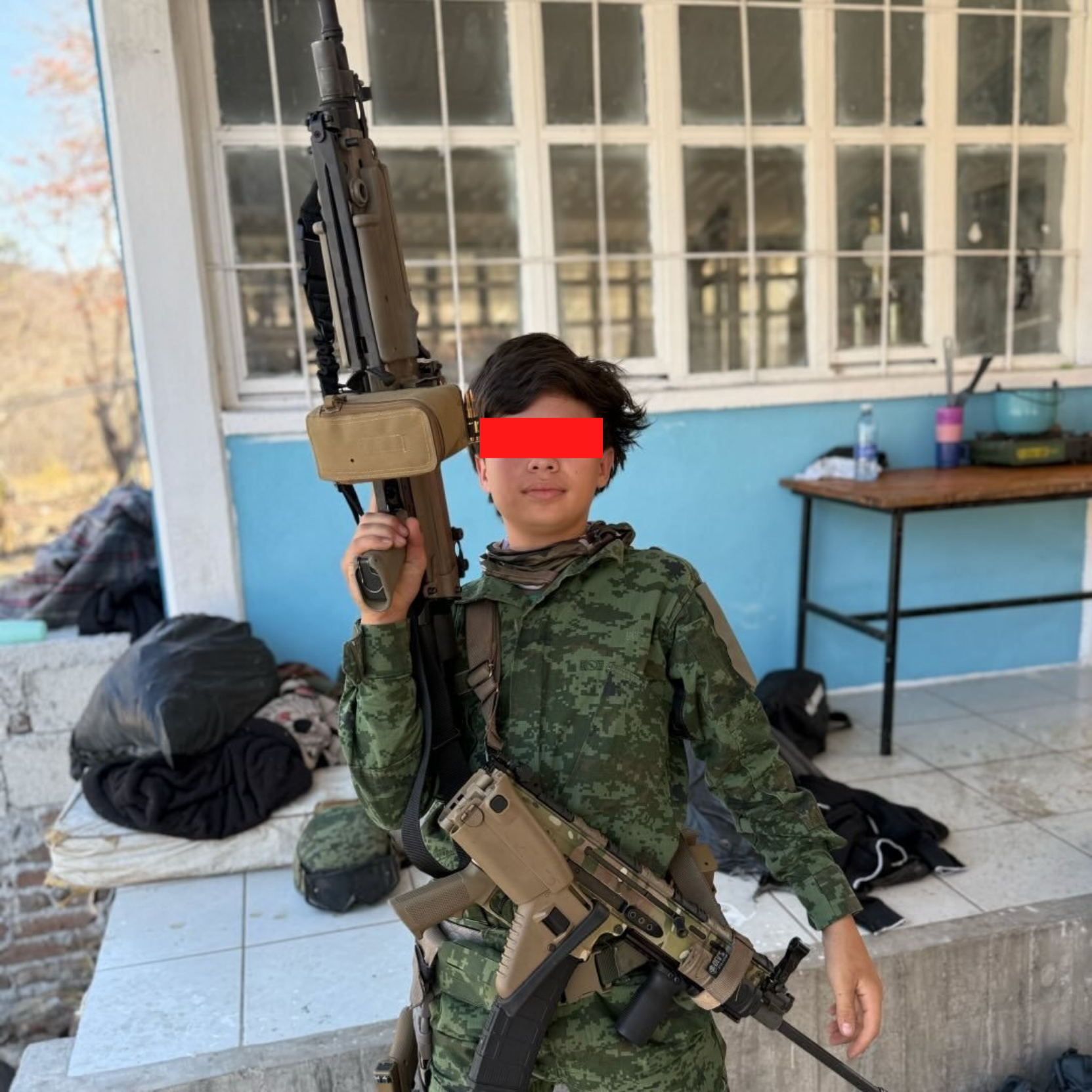
That suspension prompted Mexico to deploy more than 1,500 troops to the region specifically to secure packing plants, transport routes, and export checkpoints, alongside the establishment of a Regional Intelligence Fusion Center in Uruapan coordinating the Army, National Guard, Navy, and state authorities.
Fernández Magallón’s own arrest earlier led to a fresh wave of extortion-related threats against avocado businessmen, even after his capture — underscoring how difficult it has proven to fully disrupt the extortion economy simply by removing individual leaders.
What Remains Unknown
As of this article, Mexican authorities have not publicly identified who has assumed control of the Cártel de Los Reyes following the consecutive losses of both Fernández Magallón and Barragán Chávez.
That leadership vacuum represents a genuinely open question for the security situation in western Michoacán: Barragán Chávez’s own rise to power after Fernández Magallón’s capture suggests the organization retained enough internal structure to quickly identify a successor once before, but whether it can do so again after losing its top two leaders in under a month remains unclear.
Given the pattern of retaliatory roadblocks and vehicle burnings that followed Fernández Magallón’s arrest in early August, similar unrest following Barragán Chávez’s death remains a real possibility local authorities are likely watching closely.
With three of the five originally targeted Cárteles Unidos leaders still at large and a combined $18 million in U.S. rewards still on offer, Mexican and U.S. authorities are likely to continue treating the alliance’s remaining leadership as active priority targets.
Whether removing Los Reyes’s top two leaders in quick succession meaningfully disrupts the extortion campaign against Michoacán’s avocado producers, or simply forces a leadership transition that allows the underlying criminal economy to continue with new figures at the top, will likely become clearer in the weeks ahead as authorities determine who, if anyone, has stepped into the vacancy left behind.