

Nine members of his cell, “Los Guerreros,” were detained instead, including his daughter and partner. In the retaliation that followed, criminal gunmen robbed and burned vehicles belonging to unarmed civilians across multiple municipalities; at least one motorist was killed.
MICHOACÁN — Michoacán residents woke up on Wednesday morning, August 19, to at least 11 roadblocks and multiple burning vehicles across the state, in an apparent retaliatory response to an overnight federal operation targeting the Cartel de Jalisco Nueva Generación (CJNG).
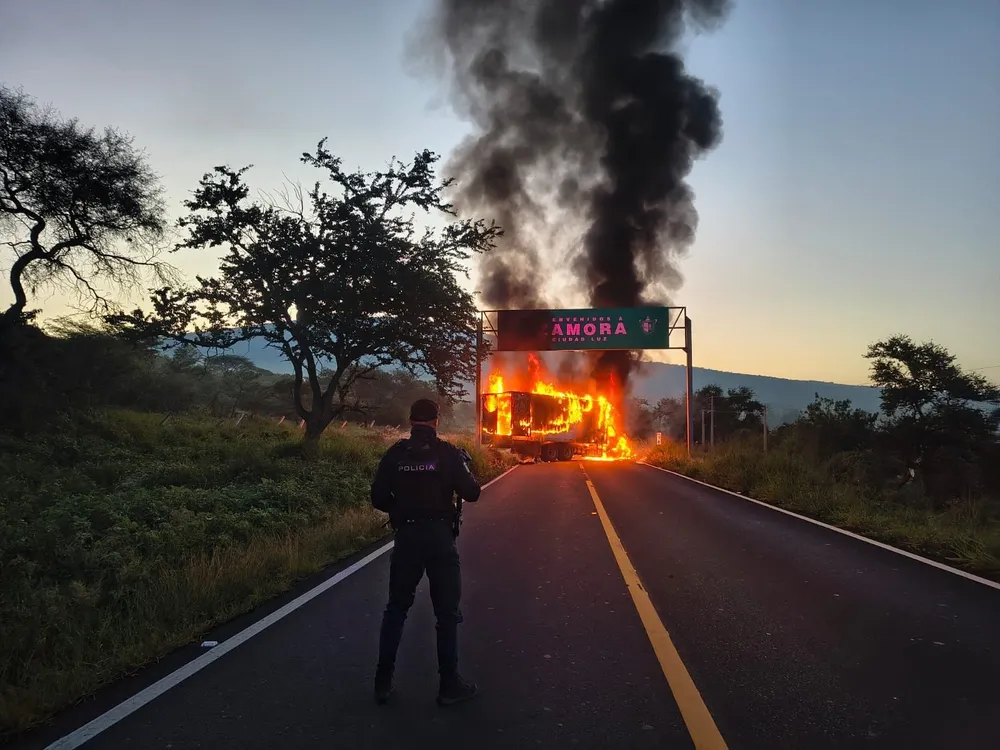
Organized crime groups installed blockades across a broad stretch of western Michoacán, affecting the municipalities of Zamora, Ecuandureo, Purépero, Churintzio, Carapan, Tangancícuaro, and the El Correo area near Morelia, among others.
Vehicles and cargo-haulers were set ablaze on the México-Morelia-Guadalajara highway near Churintzio and Purépero, and in the Chilchota municipality’s Los Nogales and Tanaquillo communities.
Armed assailants forcibly commandeered vehicles to block the Morelia-Quiroga highway near El Correo and El Tigre, while additional trucks were burned along the Tzintzuntzan-Pátzcuaro corridor and near La Piedad.
No deaths or injuries had been reported as of the most recent updates.
An Apparent Trigger
Unofficial reports indicate federal forces carried out an early-morning operation that resulted in the capture of a significant criminal target, though Michoacán Governor Alfredo Ramírez Bedolla and state security agencies had not officially confirmed details as of this writing.
Organized crime groups in the region have consistently responded to high-profile arrests or federal operations with exactly this kind of coordinated roadblock and vehicle-burning campaign.
Apprehension — Then Mayehm
This is not an isolated event. An almost identical wave of blockades struck many of these same municipalities on August 1, following the arrest of Alfonso Fernández Magallón, “Poncho la Quiringua,” leader of the Cártel de Los Reyes — an arrest that separately triggered threats against avocado businessmen and export inspectors in the region, disrupting a $3.7 billion export trade until Mexican and U.S. authorities restored inspection operations days later.
#Nacional 🚨🔥 || Se reporta la quema de vehículos en varios puntos carreteros de #Michoacán. Los incidentes se ubican en zonas de Zamora, Ecuandureo, El Correo, Purépero, Churintzio, Carapan y Tangancícuaro. pic.twitter.com/cuhrI1hPve
— Cinco Radio Oficial (@laredcincoradio) August 19, 2026
Michoacán has recorded similar large-scale blockade waves multiple times in 2026 alone, including a late-February episode that affected 31 municipalities following an operation connected to CJNG founder “El Mencho.”
Security Response
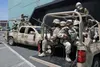
Mexico’s Army, National Guard, and state Guardia Civil forces mobilized to the affected zones, and an armed Mexican Air Force helicopter deployed from Uruapan’s Ignacio López Rayón International Airport to reinforce operations from the air.
The response echoes the broader military posture already in place across Michoacán’s avocado-producing region, where more than 1,500 troops have been stationed since early August specifically to secure packing plants, transport routes, and export checkpoints.
Authorities have not yet confirmed the identity of whoever was detained in the overnight operation, nor released an official account of what prompted Wednesday’s blockades.
Given the pattern established by prior incidents this year, security forces are expected to maintain an elevated forces presence across the affected municipalities in the coming days as the situation is brought under control.
🚨🇲🇽 | ALERTA/MÉXICO: El crimen organizado CJNG instala bloqueos carreteros en Michoacán, Churintzio, Purépero, Chilchota, Pátzcuaro-Tzintzuntzan corridor, La Piedad 🔥🔥🔥 pic.twitter.com/4oJWD92E3I
— Sociedad Media (@sociedadmedia) August 19, 2026