

MEXICO — Mexico’s Defense Ministry began deploying more than 1,500 soldiers and National Guard troops to Michoacán’s rich avocado-growing region on Thursday, after the United States suspended fruit inspections and government operations in the state over an unspecified security threat, freezing a trade worth roughly $3.7 billion a year.
What We Know
The U.S. government halted its operations in Michoacán on Wednesday, citing an unspecified “threat against U.S. interests,” a move that immediately stopped USDA inspections of avocados destined for export — inspections legally required before any shipment can cross the border.
Mexico’s Defense Secretariat (SEDENA) responded Thursday by deploying 1,557 troops, made up of 657 National Guard personnel and 900 Army soldiers, moving by land from various regions of the country to reinforce the 21st Military Zone.
The contingent is concentrating on nine municipalities considered strategic to avocado production and commercialization: Apatzingán, Aguililla, Buenavista, Cotija, Los Reyes, Peribán, Tingüindín, Tocumbo, and Zamora.
According to SEDENA, the troops’ mission includes patrols, ground reconnaissance, and deterrence operations around packing facilities, transport routes, and — critically — the inspection checkpoints operated by Mexico’s National Service of Agri-Food Health, Safety, and Quality (SENASICA), the agency whose personnel now accompany the security detail directly.
A central part of the operation’s stated purpose is curbing extortion against avocado growers, a longstanding problem in the region.
Why This Trade Matters So Much
The stakes for both countries are considerable. Nearly 90% of the avocados Mexico exports abroad go to the United States, making it by far the fruit’s most important foreign market; more than 80% of the avocados consumed in the U.S. come from Mexico. Mexico exports more than a million tons of avocados annually, with 501,824 tons already shipped in just the first four months of 2026 alone, according to Mexico's Agriculture Ministry (Sader).
The suspension currently applies specifically to avocados grown in Michoacán; Jalisco is the only other Mexican state authorized by the USDA to export avocados to the U.S., since 2022, though its export volume is far smaller.
Sheinbaum’s Response
President Claudia Sheinbaum said her government requested an urgent meeting with the U.S. Embassy and the U.S. Department of Agriculture to resolve the suspension as quickly as possible, aiming to avoid economic damage on either side of the border. She also proposed a notable substitution: replacing U.S. inspectors currently unable to work in the region with Mexico’s own SENASICA personnel, allowing certification to continue without requiring American officials to operate directly in Michoacán.
Both governments reportedly remain in active dialogue aimed at restarting exports.
A Region Under Sustained Threat
The suspension and troop deployment reflect a security reality that has defined Michoacán for years. The U.S. State Department maintains the state at its highest travel advisory level, “Do Not Travel,” citing terrorism and crime, and restricts the movement of U.S. government employees within it.
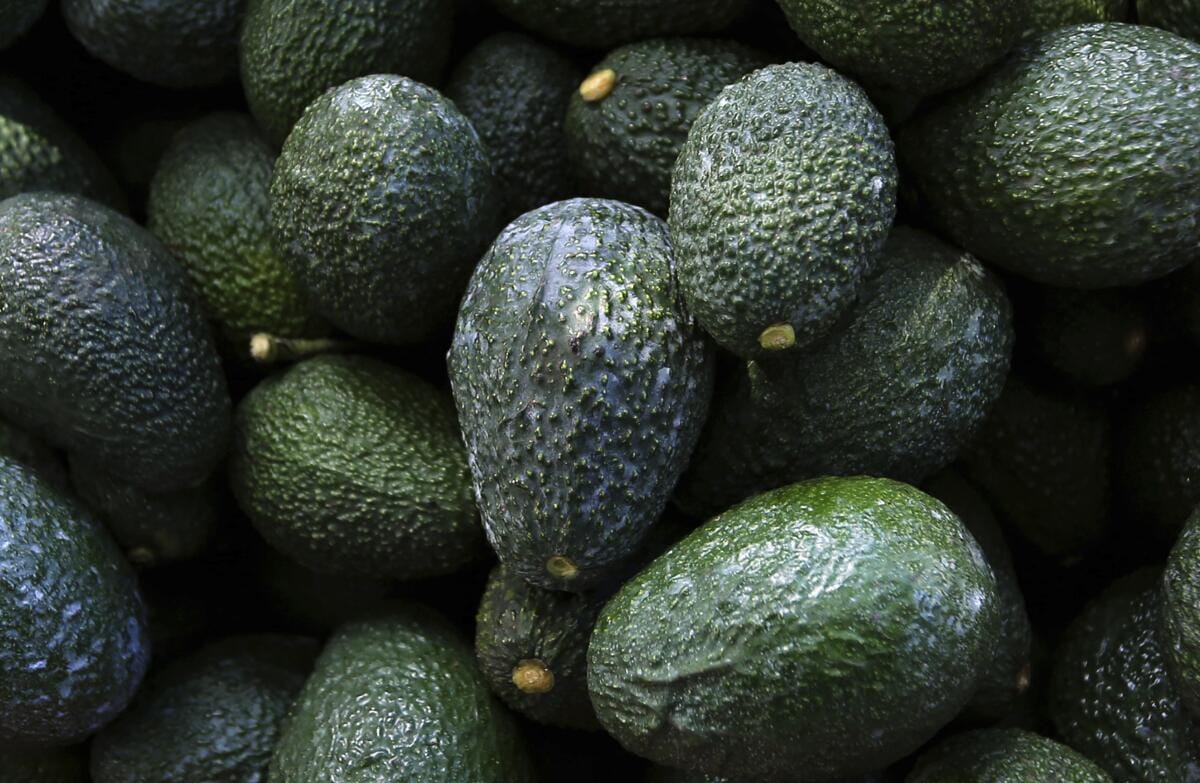
Organized crime groups — including CJNG, La Familia Michoacana, and remnants of Los Zetas — have fought for years over control of illicit activities and extortion targeting Michoacán’s agricultural producers, with avocado growers a particularly frequent target given the crop’s high value and steady export demand.
This is not the first time security concerns have interrupted avocado exports from the state; U.S. inspections have been suspended before over specific threats to American personnel working in the region.
What To Come
SEDENA has framed the deployment as part of its broader National Public Security Strategy and ongoing efforts to consolidate peace in Michoacán, describing the operation as contributing to the dismantling of criminal organizations through coordinated action with municipal, state, and federal authorities. Neither government has specified a timeline for restarting inspections, though both have indicated talks are underway.
Given how central Michoacán’s avocado trade is to Mexico’s agricultural exports and America’s own avocado supply, the resolution of this specific security threat — whatever it ultimately turns out to be — is likely to be watched closely by producers, exporters, and consumers on both sides of the border in the days ahead.


