
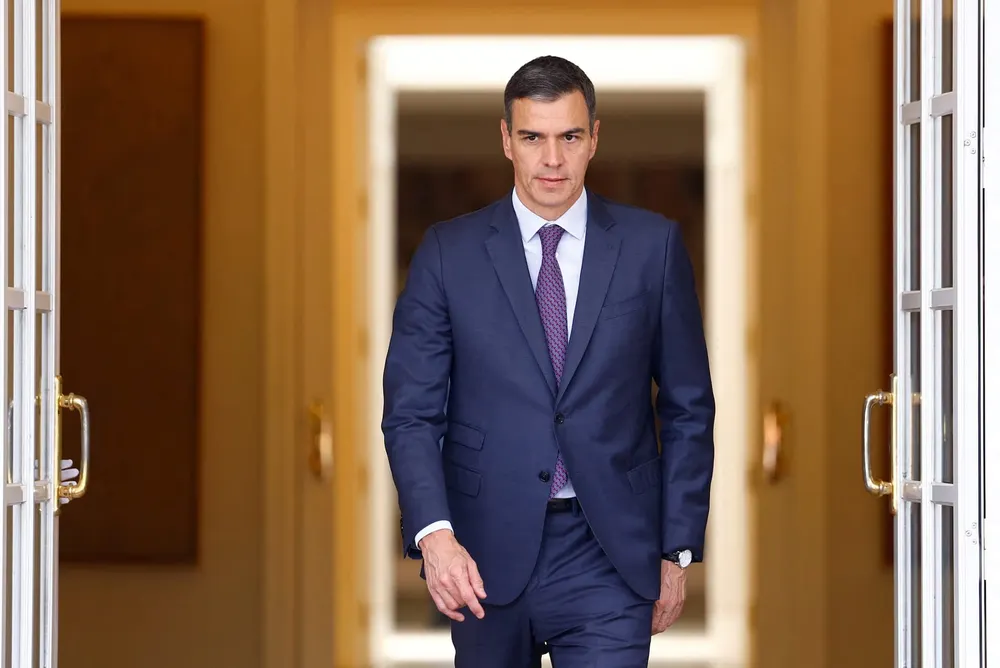
MADRID, SPAIN — Spanish Prime Minister Pedro Sánchez dissolved parliament on Monday and called for a snap general election for November 29, just days after Congress rejected two of his government’s housing decrees.
The move ends a legislature that began in 2023 and was due to run until 2027. It sends Spaniards to the polls less than two months from now.
The Vote That Broke the Legislature
The final straw for the Sánchez government was a defeat on Friday, when congress voted down both housing decrees after the opposition conservative People’s Party (PP), the right-wing Vox and the Catalan separatist party Junts all opposed them.
The measures were meant to respond to Spain's housing crisis, but critics viewed them a radically progressive agenda, arguing it was designed to redistribute housing to renters.
The Sánchez administration, on the other hand, described them as including protections against evictions of vulnerable people, new rules on temporary and room rentals, and steps to expand affordable housing. The program also included proposals to freezing rents nationally, and regulating tourist apartments.
Junts’ votes had been crucial to keeping Sánchez’s minority government afloat, so its opposition exposed how fragile that arrangement had become.
Sánchez spent the weekend consulting Socialist (PSOE) ministers and senior figures. He then chose to call elections rather than govern to the end of the term.
“Many Confuse Negotiating With Betraying”
Announcing the election, Sánchez framed it as a request for a stronger mandate. “To do more we need to renew and broaden the support of the people,” he said, according to El Español. He called for “a broader progressive backing” and said the decision now belongs to voters:
“It’s time you, the Spanish people, decide which future you want for yourselves and for the country,” the prime minister stated.
He also turned on his parliamentary opponents. “Many confuse negotiating with betraying and blocking with winning,∏ he said, and accused Junts of “betrayal.”
Sánchez cast the election as a fight against powerful interests, saying he wanted to “bend the elites” (doblegar a las élites), who he said seek to control Spain without appearing on any ballot. He did acknowledge fault: “We ourselves have made mistakes,” and “there are still many injustices to correct.”
Pressure Beyond Housing
Sánchez’s government had been under strain for months. A failed budget, corruption investigations touching people in his political circle, and a migration crisis in the Spanish enclave of Ceuta, where outlets reported tens of thousands of migrants crossed from Morocco in late July.
The PP and Vox criticized the government’s response as too slow. His critics also point to a legislature in which the government repeatedly lost votes. His defenders point to the economy, describing it as strong with low unemployment.
The Polls Favor the Right
The latest polling cited by The National put the PP at 33.9%, the Socialists at 25.7% and Vox at 18%. A seat projection cited by El Español gave the PP 143 deputies, the PSOE 106, Vox 62 and Sumar, the PSOE's left-wing coalition partner, 6.
A majority in the 350-seat Congress is 176, so the PP would likely need Vox to govern. The two already govern Spain’s largest cities and four regions, including Andalusia.
Opposition Ready, Vox Cautious
PP leader Alberto Núñez Feijóo had challenged Sánchez to call elections ahead of the vote. “We are ready... We can’t continue down the path we’re on,” he said. He framed the choice as “decline or change” and accused the government of corruption and poor management of public services.
Vox leader Santiago Abascal, who had demanded elections, struck a cautious tone. He warned that “the results are not decided” and called the contest “very uncertain.” He pointed to 2023, when polls predicted a PP-Vox majority that never materialized.
Madrid regional president Isabel Díaz Ayuso welcomed the vote and accused Sánchez of trying to “present himself as a victim.”
On the left, Sumar confirmed it will run in a “Frente Amplio” (broad front) alliance with United Left (IU), Comuns and Más Madrid, saying the coalition is essential to defending housing, healthcare and living conditions.
What Comes Next
The dissolution decree is due to be published on October 6. The official campaign runs from November 13 to November 27, followed by a day of reflection on November 28 and voting on November 29.
Sánchez, who held on after the 2023 election that polls said he would lose, is betting that the housing issue and the threat of a PP-Vox government can mobilize the left once again.
The polls say that is an uphill battle.