

When Sociedad Media first reported on Bolivia’s crisis three days ago, miners were marching in plastic sandals and dynamite was going off outside the presidential palace. Since then, the situation has moved in one direction only: the worse one. Read here our original article on the recent unrest in Bolivia.
Two weeks of road closures — spearheaded by the Bolivian Workers’ Central, COB, peasant unions and miners — have emptied markets in La Paz and depleted vital hospital oxygen reserves. The government reported that at least three people have died after emergency vehicles were blocked from reaching medical centers.
Business organizations estimate the ongoing protests and road blockades are draining more than $50 million per day from Bolivia’s economy and have left roughly 5,000 vehicles stranded on the highways.
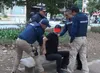
On Monday, the political dimension of the crisis sharpened further. Supporters of former President Evo Morales clashed with police in La Paz as they joined multiple sectors demanding the resignation of President Paz, who lacks both a legislative majority and a robust political party to anchor his administration.
Washington’s Response
The most significant development since our last report did not come from La Paz. It came from Washington.
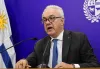
U.S. Deputy Secretary of State Christopher Landau — who attended Laura Fernández’s inauguration in Costa Rica earlier this month as the head of the U.S. delegation — publicly described the situation in Bolivia as an attempt to overthrow a democratically elected government. Landau expressed alarm about the violent protests and stated directly that Washington viewed what was happening as a destabilization campaign against the conservative president, Rodrigo Paz.
The statement matters for several reasons. It is the first time a senior U.S. official has formally characterized the Bolivian unrest in coup terms — language the Paz government itself had used but that Washington had not yet endorsed.
It also signals that the Trump administration is watching Bolivia closely and that Morales-aligned movements can expect no sympathy from Washington. The response clearly coincides with the broader pattern of the Trump administration’s hemispheric posture: backing centrist and right-leaning governments against left-aligned destabilization efforts, as it did — more dramatically — in Venezuela.
The Humanitarian Toll
The numbers that have emerged since our first report are the ones that cut through the political noise.
Three people are now dead as a result of the chaos— not from clashes with police, but because ambulances could not reach the sick and infirm. The roadblocks that Morales-aligned movements have used as their primary tool of pressure have physically prevented emergency medical care from reaching patients in a country where hospital infrastructure was already critically strained before the protests began.
The Defensoría del Pueblo, which had previously called for humanitarian corridors, has now documented specific fatalities as a direct consequence of blockade activity.
La Paz’s markets are emptying and hospital oxygen reserves are depleted. With 5,000 vehicles stranded on highways and $50 million per day draining from an economy that was already under severe pressure, the human cost of the political confrontation is being paid by the people least responsible for it — the residents of La Paz who had no vote in Morales’s decision to push the protests past the point of negotiation.
Paz’s Position — and His Vulnerabilities
Presidential spokesperson José Luis Gálvez described the unrest as the work of “dark forces seeking to destabilize our democracy” — a direct reference to Morales. Paz himself has reiterated that he inherited a “bankrupt state,” pushing back against critics who blame him for the crisis’s intensity.
Paz did inherit an economy in severe distress — the product of two decades of socialist-oriented MAS governance that burned through Bolivia’s natural gas revenues without diversifying the industrial base. His December decision to cut fuel subsidies, doubling gas prices overnight, was economically defensible but politically disastrous, handing Morales precisely the grievance he needed to mobilize his base.
Paz lacks both a legislative majority and a robust political party to anchor his administration — a structural vulnerability that his opponents have exploited from day one and that the current crisis has exposed in full. He has no legislative tools to pass emergency measures. He has no party infrastructure to counter Morales’s mobilization capacity in Bolivia’s rural departments.
What he has is the presidency, a government that insists it will not resign, and — as of this week — Washington’s explicit backing.
Whether that is enough to survive a crisis that is killing people and costing $50 million per day is the question Bolivia is now living with.
The Morales Calculation
Morales’s strategy throughout this crisis has followed a consistent logic: maximize pressure, refuse dialogue, and frame every government concession as evidence of weakness rather than responsiveness. When Paz repealed Ley 1720 — the land mortgage law that nominally triggered the protests — the roadblocks continued. When Paz invited miners to the presidential palace for dialogue, the marches did not stop. When the government offered to address fuel subsidy concerns, the COB added more demands to its list.
The pattern is not the behavior of a movement that wants its stated demands met. It is the behavior of a movement that wants a government to fall. Morales is not shy about that goal — he has called publicly for Paz’s resignation and framed the president’s departure as the only acceptable outcome.
A man who faces criminal contempt proceedings and is barred from running for office again has one remaining path to political relevance: a government collapse that creates the constitutional and political chaos in which his networks can reassert control. Everything happening on Bolivia’s streets right now serves that objective. Nothing that has happened — not the dead, not the empty markets, not the stranded vehicles — has given Morales any visible reason to change course.
What Comes Next
Bolivia has been at this precipice before. In 2003, the Gas War protests toppled President Gonzalo Sánchez de Lozada. In 2005, protests ended the presidency of Carlos Mesa. Both times, the immediate political crisis gave way to a longer-term power consolidation — and both times, the beneficiary was ultimately the movement Morales led.
Whether 2026 follows that pattern depends on variables that are genuinely uncertain: whether Paz can hold his government together without a legislative majority or a party base; whether Washington’s backing translates into anything concrete; whether the Bolivian military — which has stayed out of the confrontation so far — continues to do so; and whether the human cost of the blockades eventually turns the public against the protesters rather than the president.
None of those questions have answers yet. What is clear is that Bolivia’s crisis has passed the point where it can be resolved by dialogue alone. Three people are dead. The capital is under siege. And the man driving it has made clear he will not stop until Rodrigo Paz is gone.
Sociedad Media will continue to cover Bolivia’s political crisis as it develops. Tips, sources, and feedback welcome at info@sociedadmedia.com