

TEGUCIGALPA — Honduras formally designated Hamas and Iran’s Islamic Revolutionary Guard Corps as terrorist organizations on May 15, joining a growing bloc of Latin American governments that have aligned their counterterrorism frameworks with Washington and Israel in the opening months of 2026.
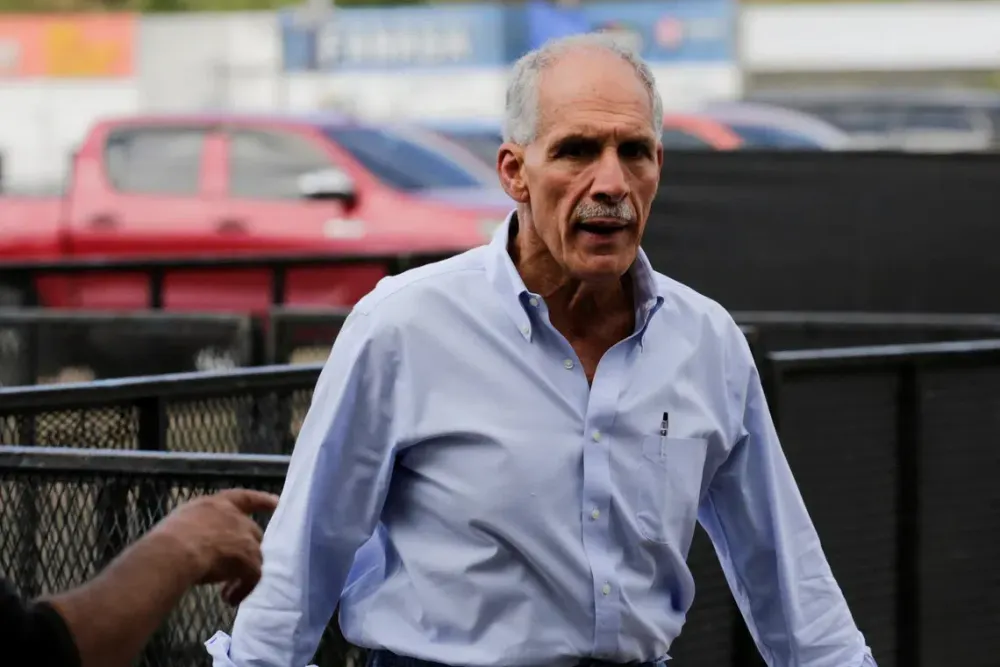
The decision was announced by Honduras’s Foreign Ministry under the instruction of President Nasry “Tito” Asfura, who framed it as part of the strategic axes of Honduran foreign policy and the country’s rejection of “terrorism and its financing in all its forms and manifestations.” The announcement was made through official government channels and immediately drew praise from Jerusalem.
Israeli Foreign Minister Gideon Sa’ar commended Asfura publicly on X, writing: “I commend the President of Honduras, Nasry Asfura — a strong leader with values and principles — for his decision to designate Hamas and Iran’s Revolutionary Guards as terrorist organizations. This is another important reinforcement in the global campaign against terrorism, which endangers security throughout the world, including in Latin America.”
The Israeli ambassador to Honduras, Nadav Goren, also praised the decision, describing it as an “important step in the fight against terrorist organizations and in the strengthening of security.”
Who Made the Decision — and Why It Matters
The Honduran president is of Palestinian Christian descent — a background that makes his designation of Hamas as a terrorist organization a deliberate and symbolically significant choice, rather than a reflexive alignment with Washington.
Earlier this year, Asfura visited Jerusalem and expressed hope for a “new era” in bilateral relations with Israel. Honduras recognized Israeli statehood in 1948 — among the first countries in the world to do so — and has historically stood as one of Israel’s most reliable allies in Latin America at the United Nations. Over the decades, Israel has been a major supplier of arms and cybersecurity technology to Honduras, and has provided assistance in agriculture, water technology, health, and innovation to a country that faces persistent poverty and security challenges.
The designation of Hamas and the IRGC formalizes what has been, in practice, a close alignment between Asfura’s government and Washington’s counterterrorism priorities since he took office in January 2026.
Honduras and the United States reached agreements on migration, trade, investment, and security earlier this year — and Asfura has positioned Honduras as a cooperative partner in the Trump administration’s hemispheric security framework, including accepting deportation flights as part of Washington’s immigration enforcement operations.
Honduras Is Not Alone
Honduras’s designation makes it the 46th country worldwide to label the IRGC a terrorist group in the past year, according to the Israeli Foreign Ministry.
In Latin America specifically, the trend is accelerating.
Argentina under President Javier Milei designated the IRGC as a terrorist organization — a move that made Argentina a pioneer in South America on this front and that reflected Milei’s broader alignment with Israel and the United States on security and foreign policy.
The Dominican Republic, under President Luis Abinader, designated both the IRGC and Hezbollah as terrorist organizations earlier this year. Abinader — who has described Cuba as “obviously not a democratic state” and was among the region’s most consistent critics of Maduro’s election theft in 2024 — has positioned the Dominican Republic as Washington’s closest Caribbean ally
The pattern across Argentina, Ecuador, Honduras, and the Dominican Republic is consistent: conservative governments with close ties to the Trump administration are making formal counterterrorism designations that align their legal frameworks with those of the United States, Israel, and Western Europe. The designations carry practical consequences — they restrict financial flows, complicate diplomatic relationships with governments that maintain ties to designated organizations, and signal a foreign policy orientation that distinguishes these governments sharply from the Latin American left.
What It Means in the Regional Context
The Honduras designation arrives at a moment when Latin America’s foreign policy landscape is fracturing more sharply along ideological lines than at any point in recent memory.
On one side: Argentina, Honduras, the Dominican Republic, Ecuador under Noboa, and increasingly Chile under newly inaugurated President José Antonio Kast — governments that have aligned with Washington on counterterrorism, security cooperation, and the designation of Iran-linked organizations as threats.
On the other: Mexico under Sheinbaum, Brazil under Lula, Colombia under Petro, and Bolivia under its new government — each of which has maintained diplomatic relationships with Iran, opposed U.S. unilateral military operations in the hemisphere, and declined to make Hamas or IRGC designations.
The Trump administration’s 2026 National Counterterrorism Strategy, which identified Iranian and Russian intelligence infrastructure in Latin America as a direct threat to U.S. national security, provides the doctrinal framework within which Honduras’s decision makes strategic sense.
Cuba — which the administration has accused of hosting Iranian and Russian intelligence operations — is the most direct target of that concern in the hemisphere. Honduras, which shares a maritime boundary with Cuba in the Caribbean, is not a distant observer of that dynamic.
A Relationship Built Over Decades
Honduras and Israel’s relationship predates the current political moment by nearly eight decades. Honduras recognized Israeli independence in 1948 and has consistently supported the Jewish state at the United Nations across multiple decades and multiple governments of different political orientations. That continuity — through left-wing governments, right-wing governments, and everything in between — makes Honduras an outlier in a region where Israel-Latin America relations have often been volatile and ideologically contingent.
What Asfura has done is not a break with Honduran tradition. It is an acceleration of it — formalizing in legal counterterrorism terms a political alignment that has existed, in practice, since 1948.