


MIAMI — At approximately 9:00 p.m. on Saturday, a U.S.-registered Gulfstream aircraft touched down at Opa-locka Executive Airport in Miami-Dade County. On board, escorted by DEA federal agents, was none other than the infamous Alex Saab — the Colombian businessman who for years operated as one of Nicolás Maduro’s most trusted financiers, ultimately receiving a pardon by President Biden in 2023. On Monday morning, Saab appeared in a Miami federal courtroom handcuffed, wearing a khaki prison uniform, and his distinctive ponytail intact.
The U.S. Department of Justice unsealed charges against Saab the same day: money laundering, conspiracy to conduct financial transactions, and concealment of the origin of funds — specifically, his alleged exploitation of Venezuela’s CLAP food welfare program, which was designed to provide subsidized food to Venezuela’s poorest households.
According to federal prosecutors, Saab and his associates used shell companies, fraudulent invoices, and falsified shipping records to siphon hundreds of millions of dollars that were meant to feed Venezuelans.
“Alex Saab allegedly used American banks to launder hundreds of millions of dollars stolen from a Venezuelan food program meant for the poor and proceeds from the illegal sale of Venezuelan oil,” said Assistant Attorney General Tysen Duva of the Justice Department's Criminal Division.
The man accused of stealing food from Venezuela’s poor and disenfranchised appeared in handcuffs in Miami — the city where hundreds of thousands of Venezuelan exiles now live, whose families back home were the intended beneficiaries of that program.
The Deportation That Chavismo Had to Explain
Venezuela’s government said Saturday it had deported a close ally of Nicolás Maduro to face judicial proceedings in the U.S., less than three years after the businessman was pardoned by President Joe Biden as part of an international prisoner swap.
The Venezuelan immigration authority’s statement was careful with its language — referring to Saab only as “a Colombian citizen,” a framing that would soon become central to everything Chavismo said next, designed to carefully placate the wrath of the Chavista hardliners in the transition government.
The deportation was described as being carried out “in compliance with the regulatory provisions of Venezuelan immigration law,” with the statement clearly noting that Saab “is implicated in the commission of various crimes in the United States.”
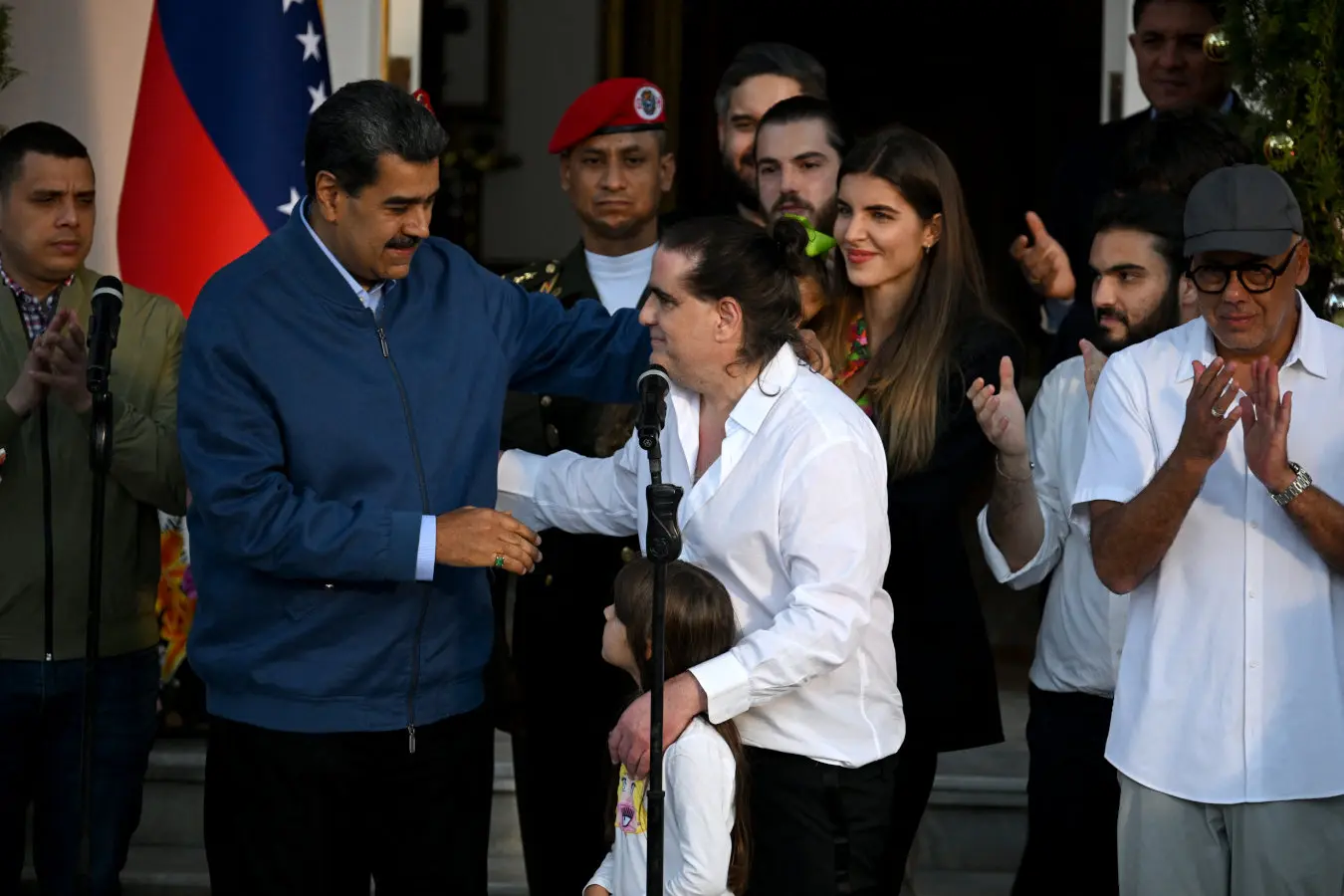
For Saab, the move marked a stark reversal — Maduro had fought tooth and nail to bring him home after his previous international arrest in 2020, when his plane made a technical stop in Cape Verde and he was detained at U.S. request while traveling to Iran. That arrest triggered a fierce Venezuelan government response at the time, with Chavismo presenting Saab as a diplomat persecuted for political reasons.
President Biden’s 2023 prisoner swap returned him to Caracas. And now, Saab was back in U.S. custody — this time delivered by Maduro’s own successor, interim president Delcy Rodríguez.
The deportation signals a new level of cooperation between U.S. authorities and Venezuela’s interim government. According to the New York Times, Rodríguez’s government detained Saab in February at Washington’s request, months before his formal deportation. Following Maduro’s capture on January 3, Rodríguez had stripped Saab of his cabinet position and his role as the main conduit for foreign companies looking to invest in Venezuela.
What followed soon after appeared to be calculated negotiations between Caracas and Washington over what the Rodríguez government could receive in return for giving up Saab to U.S. authorities. When nothing was left to gain — if anything — from the sacrifice, the deportation of Saab went into effect.
Cabello’s Explanation — and Its Contradictions
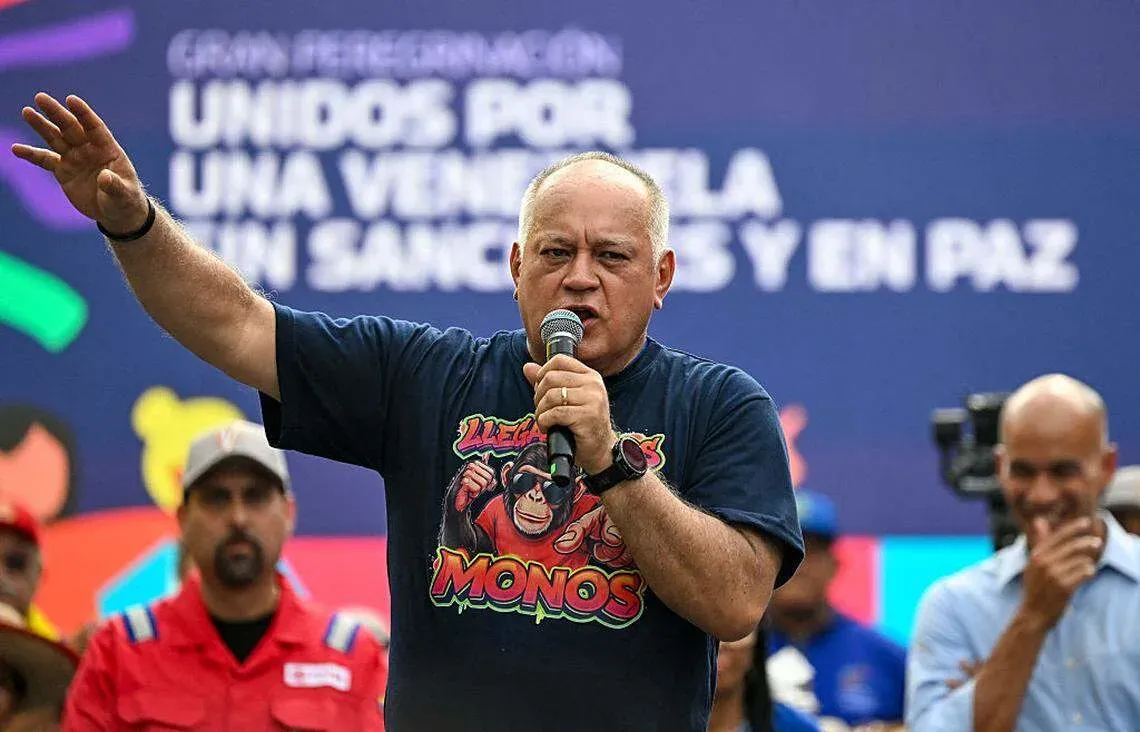
On Monday morning, hours after Saab’s court appearance, Venezuela’s Interior Minister Diosdado Cabello — the most powerful figure in the post-Maduro Chavista hierarchy — held the PSUV’s weekly press conference and offered a legal justification for the deportation.
“Alex Saab is not Venezuelan — he is a citizen of Colombian origin. He always presented a Venezuelan ID card that is not a legal ID card. It has no backing whatsoever within SAIME, which is the agency that issues Venezuelan identity documents,” Cabello said.
His argument was straightforward: Saab had been using a fraudulent Venezuelan identity document since 2004. A detailed investigation by SAIME — the Venezuelan immigration and identity authority — found no record certifying his Venezuelan nationality.
Cabello invoked Article 271 of the Venezuelan constitution, which establishes that extradition of foreigners responsible for money laundering, drug trafficking, and crimes against the public patrimony of other states cannot be denied. Legally, Cabello argued, the deportation was not only permissible but required.
The problem with that explanation is the two decades that preceded it.
If Saab had been carrying a fraudulent Venezuelan identity document since 2004, the question that the Venezuelan opposition — and many Chavista loyalists — are now asking is how he managed to become a minister of the republic, participate in international negotiations on behalf of the Venezuelan state, and be defended by Chavismo for years as a “Venezuelan diplomat” persecuted by the Washington and the “North American imperialists.”
Several pro-government social media accounts began deleting old posts, images, and campaigns related to Saab in the hours after Cabello’s statement, attempting to distance themselves from someone who for years was presented as a key figure in the regime’s economic apparatus. The speed of the revision was itself a signal of how uncomfortable the Cabello explanation had made Chavismo’s own base.
Venezuelan opposition figure Andrés Velásquez captured the dynamic succinctly: “The accusations go back and forth from one side to the other.”
What Saab Knows
The strategic significance of Saab’s arrival in U.S. custody is not primarily about the money laundering charges, significant as they are. It is about what he knows.
Federal prosecutors believe the businessman possesses privileged information about the Venezuelan government’s finances, the mechanisms used to evade international sanctions, and the alleged corruption networks that operated for years around Maduro. Saab was present at, and in many cases the architect of, deals involving oil, gold, food contracts, and international agreements that sustained the Maduro government through its most sanctioned years. He negotiated with Iran. He structured the CLAP food contracts. He knew where the money went.
Court hearings have previously revealed that Saab held secret meetings with the DEA for years, helping them identify corruption within Maduro’s camp. Whether those conversations translate into formal cooperation in the Maduro prosecution — which is proceeding in Manhattan on drug trafficking charges — is now the central legal question in the Venezuela case.
Saab could provide U.S. authorities with information to strengthen their criminal case against Maduro, Reuters previously reported.
Maduro’s trial, and the parallel case against his wife Cilia Flores, represents the most significant prosecution of a sitting or former head of state in recent U.S. legal history. Saab is the most knowledgeable witness Washington has obtained so far.
The Biden Pardon — and the Reversal
The timing of Saab’s reappearance in U.S. custody carries political weight that extends beyond Venezuela. His deportation comes less than three years after President Biden pardoned and released Saab in a controversial 2023 prisoner swap. That swap returned Saab to Caracas in exchange for 10 U.S. citizens, a U.S.-wanted fugitive, and several Venezuelan political prisoners.
Biden’s pardon applied specifically to a 2019 indictment over unbuilt low-income housing contracts. Saab still faces active federal investigations over alleged bribery conspiracies involving Venezuelan food import contracts. It is those separate charges — never extinguished by the Biden pardon — that now form the basis of the Monday indictment in Miami’s Southern District.
“Diosdado Is Next”
The Miami political response to Saab’s arrival was immediate and pointed.
Republican Congressman Carlos Giménez — a Cuban-American representing a Miami district — posted on X:
“Thanks to President Trump and Secretary Rubio, interim dictator Delcy Rodríguez has turned over narcoterrorist criminal Alex Saab to face justice in the United States. Diosdado Cabello should be next!”
Giménez accompanied his post with the official State Department and DEA reward poster offering $25 million for information leading to the arrest of Cabello — who faces a formal indictment in the Southern District of New York on charges of conspiracy to commit narco-terrorism and conspiracy to import cocaine.
The irony of Cabello appearing on Monday morning to explain Saab’s deportation — while himself being the subject of a $25 million U.S. reward — is not lost on Miami’s Venezuelan community, which has followed this case across three administrations and two of Saab’s arrests.
What Now
Saab’s initial court appearance on Monday in Miami was procedural. Detention is confirmed pending further proceedings. His legal team’s next move — whether to cooperate, contest the charges, or pursue some combination — will determine how significant a figure he becomes in the broader Venezuela prosecution.
For Rodríguez’s government in Caracas, Saab’s deportation is simultaneously a demonstration of cooperation with Washington and a risk. Every piece of information Saab provides to U.S. prosecutors potentially implicates people still inside the Venezuelan power structure — people who, unlike Saab, have not yet been stripped of their institutional roles or their Venezuelan citizenship.
Cabello said Monday: “Let justice take care of it. We did what we had to do here.”
That may prove more complicated than it sounds.
Sociedad Media will continue to cover the Alex Saab case and the Venezuela prosecution as they develop. Tips, sources, and feedback welcome at info@sociedadmedia.com