

MIAMI — On the afternoon of Tuesday, May 19, the Jaime Martínez front of the FARC dissident organization known as the Estado Mayor Central launched what Colombian security analysts are now describing as a coordinated multi-target offensive across northern Cauca — the most conflict-ridden department in Colombia and a region that has become synonymous with the failure of the Petro government’s total peace strategy.
Within the space of a few hours, armed men ambushed the security convoy of Senator Alexander López on the Pan-American Highway between Popayán and Cali, firing rifle bursts at his armored vehicle and stealing it.
The mayor of Santander de Quilichao, Luis Eduardo Grijalba Muñoz, was also intercepted at an illegal checkpoint in the same sector, his vehicle stolen, and left abandoned on the roadside by guerrilla fighters. The coordinator of the indigenous guard of the Regional Indigenous Council of Cauca — the CRIC — was targeted at the same bridge over the El Cofre river. And in Suárez, further north in the same department, a drone loaded with explosives killed Sub-Lieutenant Ronald Darío Bedoya Rivero of the Colombian Army and wounded six soldiers.
Four separate attacks. Same department. Same afternoon. Same group.
Senator López survived because he had switched vehicles at the start of his journey for security reasons. The driver of his regular armored vehicle attempted to escape and is reported to be out of danger. Three vehicles belonging to state protective units were stolen in total. Neither the Colombian Police nor the Armed Forces had issued an official detailed account of events as of late Tuesday night.
What Was Happening Before the Attacks
Senator López had not been traveling at random. He had spent the day accompanying presidential candidate Iván Cepeda — the Pacto Histórico frontrunner and current polling leader — at a campaign rally in Popayán, the capital of Cauca. López is the principal coordinator of the Pacto Histórico campaign in southwestern Colombia and he was returning to Cali when the convoy was hit.
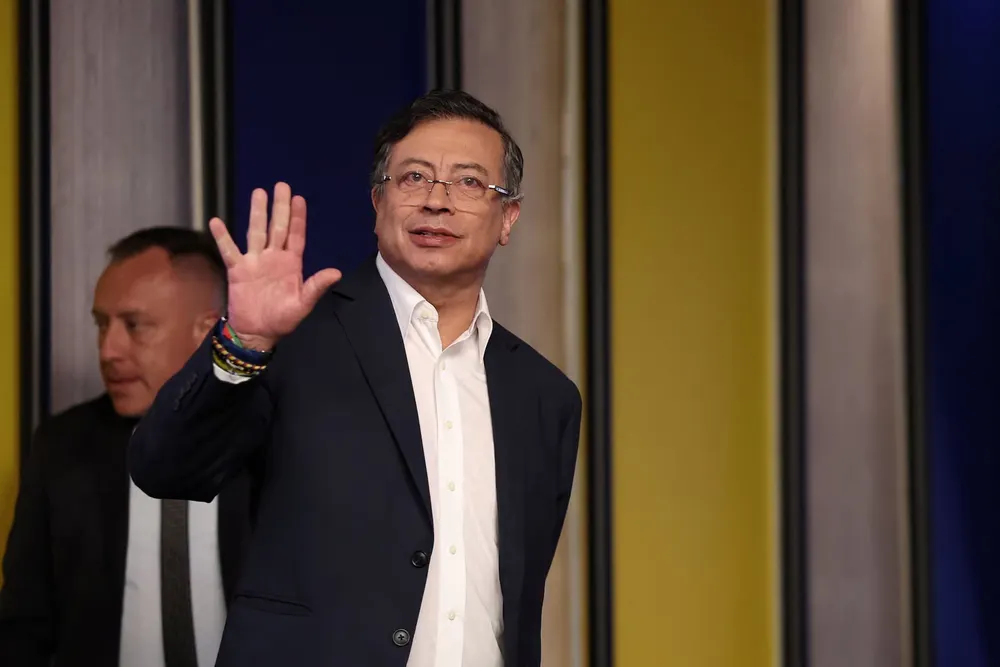
President Gustavo Petro, who was addressing a youth event in Bogotá when the attacks occurred, confirmed the identity of the attackers without equivocation.
“The armored car of Senator Alexander López was riddled with rifle fire by the armed narco-trafficking group directed by Iván Mordisco and Marlon,” Petro wrote on X.
He added that the attack occurred one kilometer from the site where the same group detonated a bomb that killed 21 civilians on the Pan-American Highway on April 25 — the deadliest single act of political violence during the campaign period.
Read here for our coverage of the April 25 attack on a passenger bus convoy.
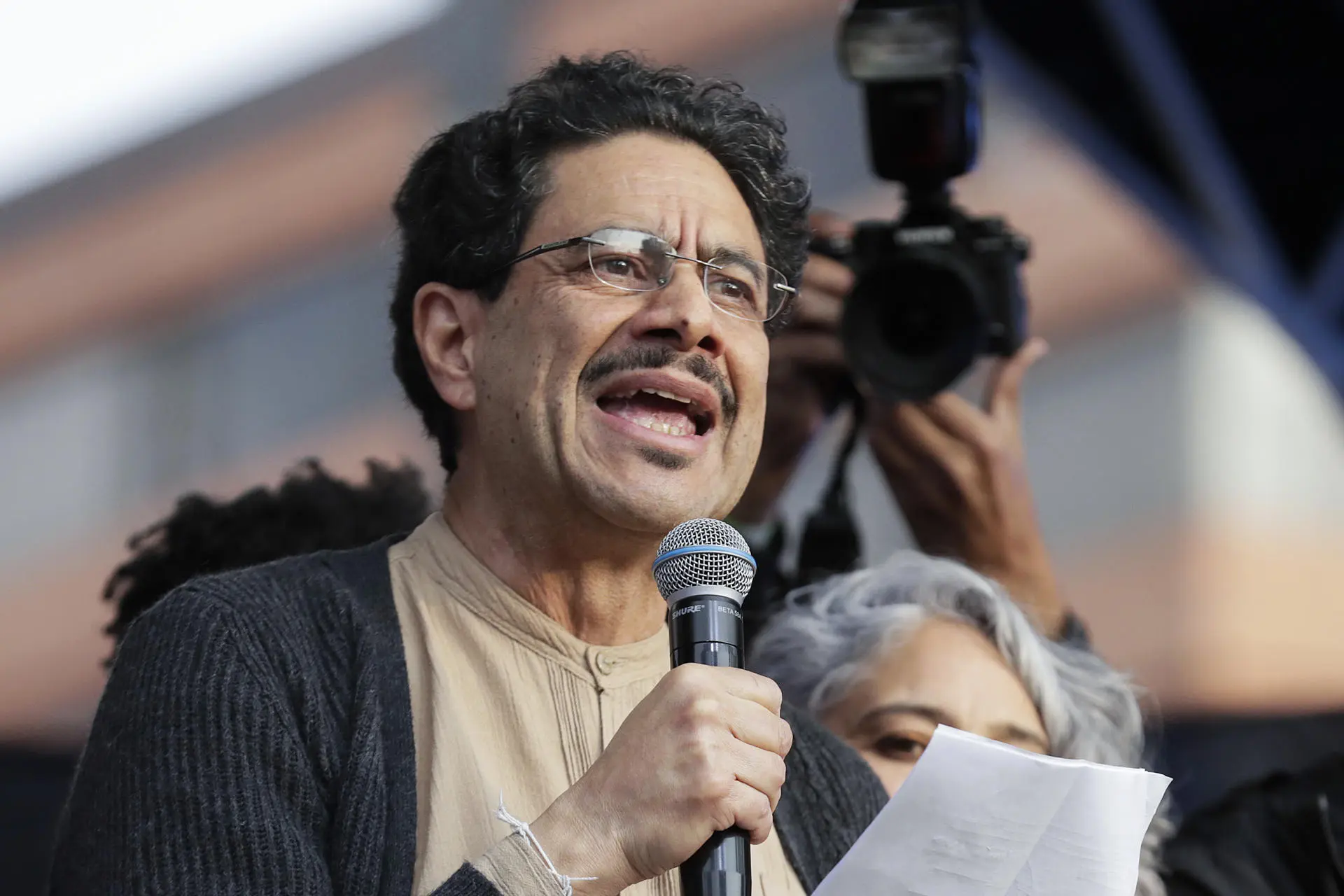
Petro also pointed out that the mayor of Santander de Quilichao and the senator had departed from the same point. “Why does a point that is permanently attacked by the armed group not have armed forces surveillance around the clock? The Pan-American Highway must be monitored permanently and with drone response capacity,” the president demanded.
Left-wing presidential candidate Cepeda, condemned the attacks from Popayán. “My most vigorous rejection of the attempted kidnapping just perpetrated against Senator and colleague Alexander López. Preliminary information indicates this macabre action is the work of a dissident group. I request that authorities carry out an effective investigation and the capture of the perpetrators,” Cepeda wrote on X.
Drone Attack
The attack on López’s convoy was the most politically visible of the day’s events.
The most militarily significant was the drone strike in Suárez.
A drone loaded with explosives — attributed to FARC dissident groups operating in the area — struck Colombian Army forces in the rural zone of Suárez, Cauca, killing Sub-Lieutenant Ronald Darío Bedoya Rivero and wounding six soldiers.
The Colombian Army confirmed the attack through official channels, posting a tribute to Bedoya Rivero with the caption “Hero Forever.”
The use of explosive-laden drones against military targets in Cauca is not new, but it is accelerating. In the first registered swarm drone attack, at least 15 explosive-laden drones targeted soldiers in Valle del Cauca on April 11. The FARC dissidents are now deploying drone warfare against Colombian security forces with enough regularity that the Army is tracking it as a distinct and escalating threat category — precisely the capacity Petro warned the Pan-American Highway had no ability to counter.
A Campaign Defined by Violence
Tuesday’s attacks are the latest chapter in a campaign season that has been marked by political violence at a scale Colombia has not seen since the darkest years of the 1980s and 1990s.
Senator Miguel Uribe Turbay, 39, a conservative presidential pre-candidate and son of journalist Diana Turbay — killed during a botched rescue from Pablo Escobar’s cartel in 1991 — was also shot in the head by a 15-year-old sicario during a campaign rally in Bogotá on June 7, 2025. He died from his injuries two months later.
Two presidential campaign staffers were also killed in Colombia’s Meta department last week — Rogers Mauricio Devia Escoba, a former mayor of Cubarral, and his adviser Eder Fabián Cardona López. The citizens’ rights ombudsman warned that the killings could affect the exercise of political rights ahead of the May 31 vote.
At least three presidential candidates have reported receiving death threats. All frontrunners travel with heavy security and are encouraged by security entourage to wear bullet-proof vests during campaign speeches.
Cepeda’s vice presidential running mate, Indigenous senator Aida Quilcue, was briefly kidnapped by a FARC dissident faction during the campaign period.
According to Indepaz, 35 massacres were recorded in the first quarter of 2026 — the highest number in this timeframe in a decade, leaving 133 dead.
The pattern is not random. The Colombian ombudsman, the United Nations, the OAS, and multiple human rights organizations have all documented what they describe as a systematic campaign of pre-electoral violence concentrated in the departments where armed groups exercise territorial control — Cauca, Valle del Cauca, Meta, Nariño, and La Guajira — and designed, in the assessment of most analysts, to suppress voter participation, intimidate candidates, and establish leverage over whoever wins the presidency on May 31.
What Tuesday’s Offensive Signals
The significance of Tuesday’s coordinated offensive in Cauca goes beyond its immediate victims. Senator López was not targeted randomly — he was the senior Pacto Histórico political figure in the region and had just left a Cepeda campaign event. The mayor of Santander de Quilichao was a local government official traveling the same road from the same departure point. The CRIC indigenous guard coordinator represented one of the civic organizations that has been most vocal about FARC dissident control of territory in Cauca. The soldier killed in Suárez was part of the military operation that the Army says has been escalating against the Jaime Martínez front in the area.
Political risk analyst Sergio Guzmán, based in Bogotá, has described the EMC’s strategy as establishing leverage toward the future: “Part of what they are doing is establishing leverage towards the future” — positioning themselves for negotiations with whichever government takes power on August 7.
That framing is consistent with the timing. With 11 days until the first round, every act of violence in Cauca is simultaneously a military operation and a political one — a demonstration that the Jaime Martínez front controls this corridor, can reach political figures and military officers alike, and cannot be ignored by any future government that wants to govern southwestern Colombia.
What Washington Has Said
The United States has not commented specifically on Tuesday’s attacks. But the Trump administration’s position on Colombia’s election is not a mystery. Both Paloma Valencia and Abelardo De la Espriella — the two conservative candidates competing for second place behind Cepeda — have pledged to join Washington’s Americas Counter Cartel Coalition and to abandon the total peace framework that Petro, and Cepeda after him, has pursued.
Secretary of State Marco Rubio has previously described the violence in Colombia as “the direct result of the violent leftist rhetoric coming from the highest levels of the Colombian government.” That framing — attributing pre-electoral violence to government rhetoric rather than to armed group strategy — reflects how deeply the U.S. reads Colombia’s security situation through a right vs. left lens, and how different Washington’s posture toward Colombia will be depending on who wins the election on May 31.
Eleven Days
Colombia has held presidential elections under conditions of political violence before. It has also had elections stolen, distorted, and shadowed by the threat of organized crime before.
What makes 2026 different is the combination: the most significant cartel and FARC dissident offensive in years is underway simultaneously in the final stretch of a presidential election in which security is the defining voter concern, and in which the candidates are offering diametrically opposed visions of how to address it.
Voters in Cauca, and in the dozens of municipalities across southwestern Colombia where armed groups control daily life, will decide on May 31 whether they can reach a polling station at all. The state’s ability to guarantee their safety in the next eleven days — on roads that, as Petro himself acknowledged, have no permanent armed forces presence despite being attacked repeatedly — is the most urgent question in Colombian democracy right now.
Sub-Lieutenant Ronald Darío Bedoya Rivero, killed by a drone in Suárez on Tuesday, was 24 years old.
Sociedad Media will continue to cover Colombia’s presidential election and the security situation in Cauca through the May 31 first round and the June 21 runoff. Tips, sources, and feedback welcome at info@sociedadmedia.com