

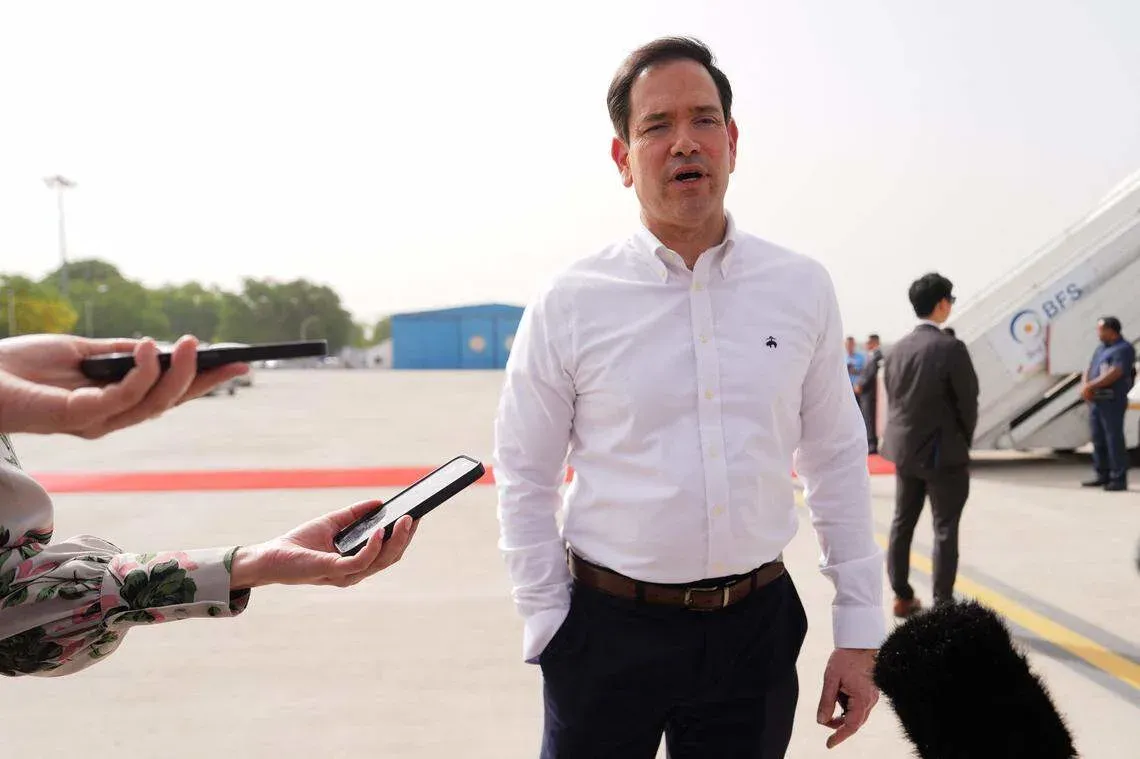
On April 18, Secretary of State Marco Rubio sanctioned Luis Roberto Cañas Novoa — Nicaragua’s Vice Minister of the Interior — under Section 7031(c) of U.S. law, a State Department authority reserved for foreign officials found responsible for gross human rights violations. Rubio said the designation was made for Cañas Novoa’s role in “gross violations of human rights” under the government of President Daniel Ortega and Vice President Rosario Murillo.
The sanction bars him and his immediate family from entering the United States.
The date was not random. The sanction was timed to coincide with the anniversary of Nicaragua’s April 2018 protests — one of the most violent chapters in the country’s recent history, when Ortega’s security forces killed more than 300 civilians in response to demonstrations against proposed social security reforms.
“The Trump administration continues to hold the Murillo-Ortega dictatorship accountable for brutal human rights violations against Nicaraguans,” Rubio said.
Who Is Cañas Novoa
Cañas Novoa oversees national police, prisons, internal security, and much of the regime’s repressive apparatus. He has been an essential part of the Ortega-Murillo government for at least a decade. United Nations documents suggest he “relayed orders affecting the release of opponents, nonprofit organizations and freedom of movement“ and link him to the reported discriminatory treatment of political prisoners and expulsions carried out with police coordination.
He is not a peripheral figure. The Interior Ministry he helps run is the primary instrument through which the Ortega-Murillo government has detained opposition leaders, expelled Catholic bishops, stripped citizenship from dissidents, and closed civil society organizations.
Sanctioning its vice minister is a direct strike at the core of the regime’s repressive infrastructure.
Washington Pressure Strikes Again in Latin America
The Trump administration has been quietly ramping up pressure on the Ortega-Murillo regime throughout 2026, dropping numerous sanctions in just the first four months of the year alone. The April 16 designation of Nicaragua’s gold sector — announced two days before the Cañas Novoa sanction — targeted one of the regime’s primary revenue streams.
Nicaragua is the second-largest gold producer in Central America, and the sector has been used to generate hard currency outside the reach of existing U.S. financial restrictions.
That framing places Nicaragua as the third country in what analysts describe as a tightening U.S. posture toward governments seen as hostile or resistant to Washington’s influence — after Venezuela, where Maduro was captured in January, and Cuba, which is now under the most intensive U.S. pressure campaign since the Cold War.
The sequencing is not lost on regional analysts. Venezuela fell first. Cuba is under military surveillance, facing an indicted former president and a carrier strike group in the Caribbean.
Nicaragua, which shares with both countries a model of authoritarian governance, a history of U.S. antagonism, and a leadership structure built around a single family’s grip on power, is watching what happens to its neighbors and drawing its own conclusions.
Managua’s Response
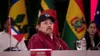
Daniel Ortega has not responded quietly to Washington’s pressure. The Nicaraguan president — who has governed the country since 2007 and whose wife Rosario Murillo serves as vice president in what critics describe as a dynastic consolidation of power — has publicly called Trump “unhinged” in remarks broadcast on Nicaraguan state media.
The characterization echoes Ortega’s broader rhetorical posture: dismissing U.S. pressure as imperialism while continuing to govern a country from which an estimated 700,000 people have emigrated in the past five years, many of them through the same Darién Gap migration corridor.
Ortega’s defiance has a structural basis. Nicaragua has no oil — removing the economic lever that Washington used to accelerate Venezuela’s transition. It has no Delcy Rodríguez equivalent — no internal figure willing to negotiate with Washington while preserving enough regime continuity to manage a transition. And it has the Ortega-Murillo family, which has survived U.S. pressure for four decades by combining repression with just enough economic management to prevent the kind of complete collapse that forces a population to the breaking point.
The “Forgotten Dictatorship”
Nicaragua is often called the “forgotten dictatorship” because it does not receive the media attention that Venezuela and Cuba do — even though its conditions are frequently compared to North Korea in terms of information restrictions, political prisoner treatment, and the elimination of civil society.
The Catholic Church, which has historically served as an institutional check on authoritarian power across Latin America, has been systematically dismantled inside Nicaragua. Bishops have been expelled. Priests have been imprisoned. The papal nuncio was forced to leave the country. Even Vatican diplomacy — which has navigated relationships with authoritarian governments across the 20th century — has been unable to find a working arrangement with Managua.
For the Nicaraguan diaspora in Miami — smaller than the Venezuelan or Cuban community but growing rapidly — Washington’s turn of attention toward Ortega carries the same weight that early Cuba sanctions carried for Miami’s Cuban exiles decades ago.
The question they are asking is not whether the pressure will intensify. It is whether it will arrive in time to mean something.
Sociedad Media will continue to cover Nicaragua and Washington’s posture toward Latin America’s authoritarian governments. Tips, sources, and feedback welcome at info@sociedadmedia.com