

MIAMI – He spent nearly a decade as Venezuela’s chief prosecutor—jailing opposition figures, defending the Maduro regime before international bodies, and earning a place on U.S., EU, Canadian, and Colombian sanctions lists for alleged human rights abuses.
On Wednesday, Tarek William Saab resigned as Venezuela’s Fiscal General, the country’s top criminal prosecutor, as acting President Delcy Rodríguez continues dismantling the institutional architecture of the government she inherited.
Saab resigned after nearly nine years heading the Public Ministry—a tenure critics consistently linked to the politically motivated prosecution of opposition figures and government opponents.
He did not publicly disclose the reasons behind his departure.
The timing is unmistakable. Since Maduro’s removal in January, Rodríguez has moved systematically to replace the most visible faces of the Maduro era across Venezuela’s military, cabinet, and now its justice institutions. Saab’s exit is the most symbolically significant of those moves—and the most contested.
Who Was Tarek William Saab?
Known as “the Poet of the Revolution”—a title bestowed by Hugo Chávez himself—Saab was one of the Bolivarian movement’s original architects. He served as governor of his home state of Anzoátegui from 2004 to 2012, then as Venezuela’s Ombudsman from 2014 until 2017, when the National Constituent Assembly—the Maduro-era parallel parliament that effectively bypassed the opposition-controlled legislature—appointed him as Fiscal General after removing the previous prosecutor, Luisa Ortega Díaz, who had publicly broken with the regime.
From that moment, Saab became one of the most powerful and most criticized figures in Venezuelan public life. He presided over the government’s response to several corruption scandals and oversaw the arrests of opposition figures and protesters that human rights organizations say were unjustly detained.
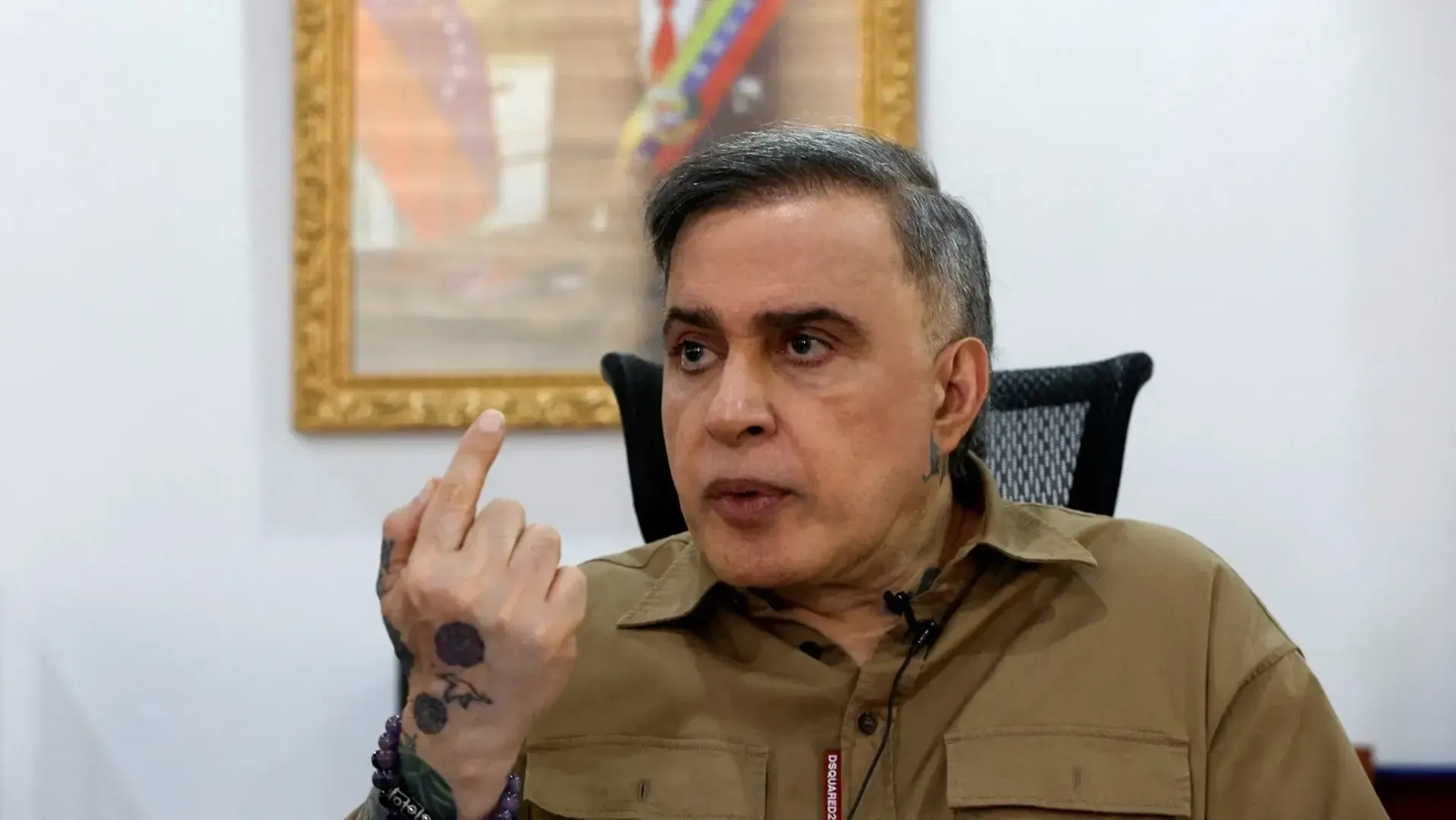
The international reckoning was significant. In July 2017, the U.S. Treasury Department sanctioned Saab among 13 Venezuelan officials for their roles in undermining democracy and human rights. The European Union, Canada, Mexico, and Panama followed with their own sanctions. Colombia placed him on a list of over 200 Venezuelan nationals barred from entering the country for alleged ties to the Maduro government.
Human Rights Watch said Saab played a “leading role” in the systematic persecution of critics and opponents throughout his tenure. The United Nations’ Independent Fact-Finding Mission on Venezuela accused his office of omitting investigations into torture and human rights abuses committed against Venezuelan citizens.
The Resignation—and the Immediate Controversy
Saab’s exit lands in the middle of a sweeping political realignment that accelerated after U.S. forces captured Nicolás Maduro on January 3. Acting President Delcy Rodríguez's inner circle has been moving to consolidate control over agencies that handle prosecutions and oversight, raising the stakes over who runs the prosecutor’s office next.
To fill the vacancy on an interim basis, the National Assembly named Larry Daniel Devoe Márquez as acting Fiscal General, while a nominations committee begins the process of selecting a permanent replacement.
But it was Saab’s next move that drew the sharpest criticism. In the same session, the National Assembly appointed him as acting Ombudsman—the official constitutionally responsible for safeguarding citizens’ rights and investigating abuses—after that officeholder also resigned simultaneously. Human Rights Watch called the appointment “a slap in the face of victims,” arguing that a man who played a leading role in persecuting critics and opponents has no place overseeing the protection of the very rights he allegedly helped violate.
What it Means for Venezuela’s Transition
Saab’s resignation is part of a broader pattern. Venezuela’s justice institutions—the Fiscal General, the Procurador General, the Ombudsman—have all turned over within weeks of each other, a sweeping institutional reset that reflects the depth of the Rodríguez government’s effort to present a new face to Washington and the international community while preserving the underlying machinery of Chavismo.
Former U.S. Ambassador to Venezuela James Story has described Rodríguez's approach as doing “just enough to make it look as if they’re complying” while waiting to see whether U.S. political pressure fades.
Replacing Saab—one of the regime’s most internationally sanctioned faces—fits that pattern. Whether his successor operates independently or simply continues business under a different name is the question Venezuela’s opposition, diaspora community, and international observers are now watching closely.
For Miami’s Venezuelan community—one of the largest outside Venezuela itself—the answer to that question will determine whether the country they left is truly changing, or simply changing its letterhead.
Sociedad Media will continue to monitor Venezuela’s institutional transition and its implications for the Venezuelan diaspora in South Florida. Have a tip or a story connected to Venezuela’s ongoing transformation? Reach out to our team at info@sociedadmedia.com—we want to hear from you.


