


Here is our weekly Sunday newsletter Venezuela & Cuba Now for our Miami readers.
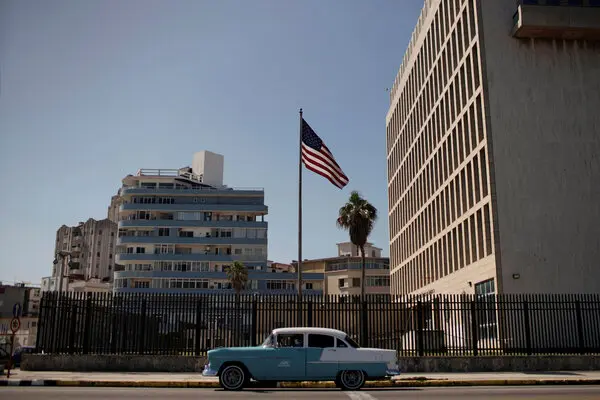
The CIA Operative Who Helped Capture Maduro Was in the Room in Havana
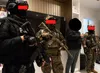
MIAMI — CIA Director John Ratcliffe traveled to Havana last week accompanied by an operative directly linked to the capture of Venezuelan President Nicolás Maduro and the killing of Cuban personnel during that operation, CBS News reported Friday, citing several anonymous insiders familiar with the discussions.
Cuba’s intelligence services — among the most capable in the Western Hemisphere by the assessment of multiple U.S. intelligence agencies — almost certainly identified the operative. Washington was not simply sending a diplomat to offer an aid package and a warning. It was sending a message in the form of a person: the same operational capacity that removed Maduro from the Palacio de Miraflores in minutes, and its representative just sat across the table from your Interior Minister.
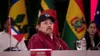
The Cuban government’s response has been to organize street rallies, invoke sovereignty, and warn that its airspace is not available to foreign military aircraft. President Díaz-Canel attended a government rally called by Cuban authorities to protest U.S. policies toward the island, including the indictment of former President Raúl Castro.
The nationalist mobilization is directed at the domestic audience — the population that the regime needs to hold together as fuel runs out, blackouts extend, and the economic pressure of the oil blockade deepens.
Whether the rallies reflect genuine popular sentiment or regime-organized obligation is a question that independent reporting from inside Cuba cannot fully answer. What is observable is that the Cuban government is responding to the most intensive U.S. pressure campaign in decades with the same tools it has used for 65 years: defiance, nationalism, and the invocation of sovereignty.
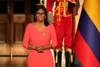
Analysts have noted that Cuba is structurally different from Venezuela in ways that complicate Washington’s Venezuela playbook. In Venezuela, then-Vice President Delcy Rodríguez took over as U.S. forces seized Maduro and has served as acting president since. There is no similar deputy to Díaz-Canel — no obvious figure within the Cuban power structure who could serve as a transition interlocutor in the way Rodríguez has served Washington’s purposes in Caracas.
That structural difference does not mean Cuba is immune to pressure. It means the pressure produces different outcomes — and that whoever designed the Havana visit understood that sending the Maduro operative into the room was a message that required no translation.
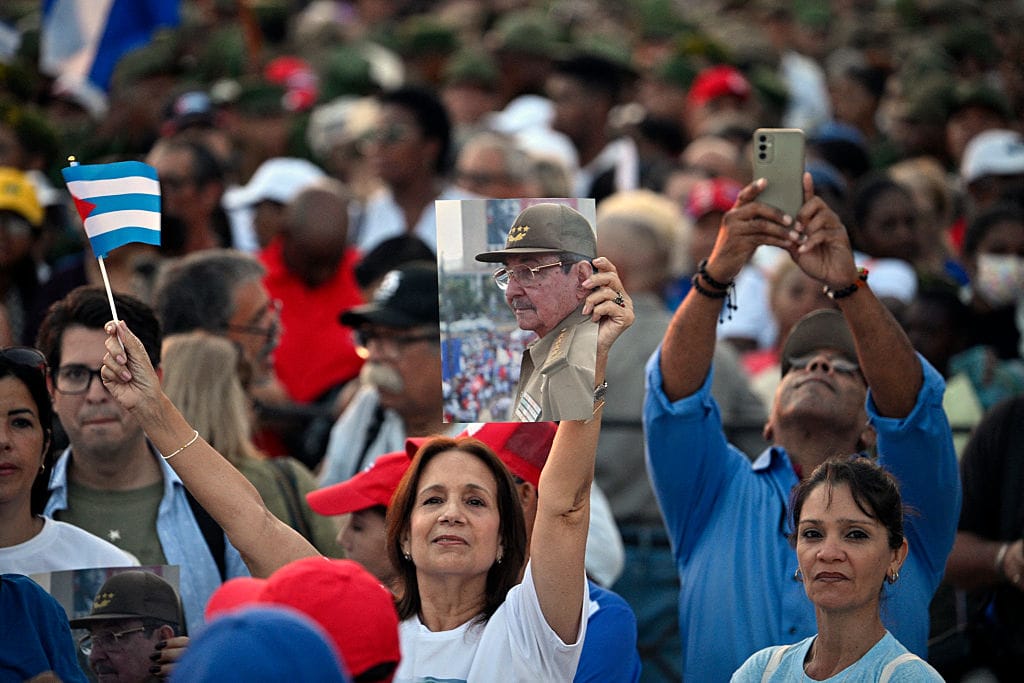
Díaz-Canel Takes to the Streets. Cuba’s Government Turns U.S. Indictment on Castro Into Nationalist Rally
MIAMI — Cuba’s President Miguel Díaz-Canel attended a government rally in Havana on Thursday called by Cuban authorities to protest U.S. policies toward the island — including the indictment this week of former President Raúl Castro on charges related to the 1996 Brothers to the Rescue shootdown.
The rally was the regime’s most visible domestic response to a week that included the Castro indictment, the arrival of a CIA director in Havana accompanied by the operative who helped capture Nicolás Maduro, and the continued presence of the USS Nimitz carrier strike group in Caribbean waters. Díaz-Canel’s government converted all of it into a single nationalist frame: Cuba under siege, sovereignty under threat, the revolution under attack.
It is a frame the Cuban government has used, with variations, since 1959. What is different in 2026 is the specificity of the threat. The Castro indictment is not abstract diplomatic pressure — it is a federal criminal charge filed in Miami, in the city where the families of the four Brothers to the Rescue victims have been waiting 30 years for accountability. The CIA operative in Havana is not a symbolic gesture — it is the same person who was present when Maduro was removed from power in 90 minutes.
The Cuban government’s ability to sustain nationalist mobilization under these conditions depends on whether ordinary Cubans — facing blackouts that run 12 to 20 hours per day, fuel shortages that have emptied gas stations, and food prices that consume multiple days of state wages — still respond to the sovereignty argument with conviction rather than exhaustion. That question cannot be answered from outside the island. Independent journalism inside Cuba operates under conditions that make honest reporting on public sentiment functionally impossible.
What the rally in Havana demonstrated is that Díaz-Canel’s government intends to fight on the political terrain it knows — and that, for now, it has the organizational capacity to put people in the streets when it needs to.
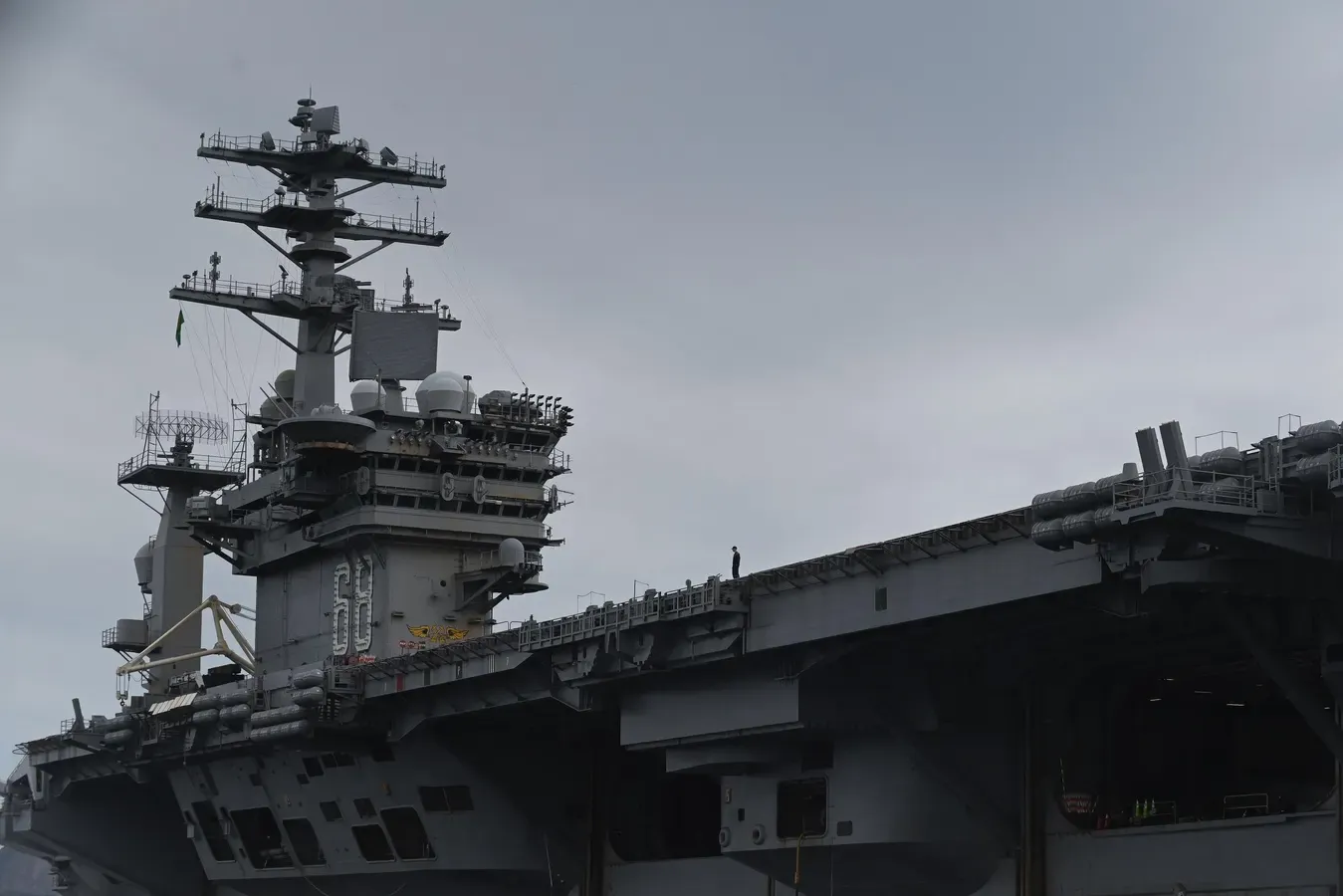
USS Nimitz Roles Into Caribbean With Eyes On Cuba
The USS Nimitz carrier strike group is now operating in the Caribbean as Washington continues to signal that military options against Cuba remain on the table. Cuba’s government responded with a formal statement warning that it retains “full and exclusive sovereignty’ over its airspace — language that is both a legal assertion and a pointed reference to the 25 surveillance flights the U.S. has conducted near the island since February.
The Nimitz’s presence in the Caribbean is the most visible element of a military posture that U.S. defense analysts describe as the most significant concentration of American naval power near Cuba since the Cuban Missile Crisis of 1962. Combined with the P-8A Poseidon maritime patrol aircraft, RC-135V Rivet Joint signal intelligence planes, and MQ-4C Triton reconnaissance drones that have been operating off Cuba’s coastline for months, the carrier strike group adds a force projection dimension that goes beyond surveillance.
A carrier strike group is not a surveillance platform. It is a combat formation — an aircraft carrier, guided missile cruisers, destroyers, submarines, and support vessels capable of projecting air power across a 500-mile radius. Its presence in the Caribbean sends a message that the intelligence flights and the indictments and the sanctions alone could not: that Washington has the hardware nearby if the political decision is made to use it.
Cuba’s sovereignty warning is the expected diplomatic response. The Cuban military, weakened by years of economic crisis and fuel shortages, is not in a position to challenge U.S. naval power directly. What it has — and what has defined the Castro government’s survival strategy for 65 years — is the political cost of any U.S. military action against a sovereign state 90 miles from Florida.
That cost, in terms of regional reaction, international condemnation, and domestic U.S. political debate, is what has restrained every administration before this one.
Whether it restrains this one remains the open question over the Caribbean this weekend.
Alex Saab Is Talking. What He Knows Could Define the Maduro Trial
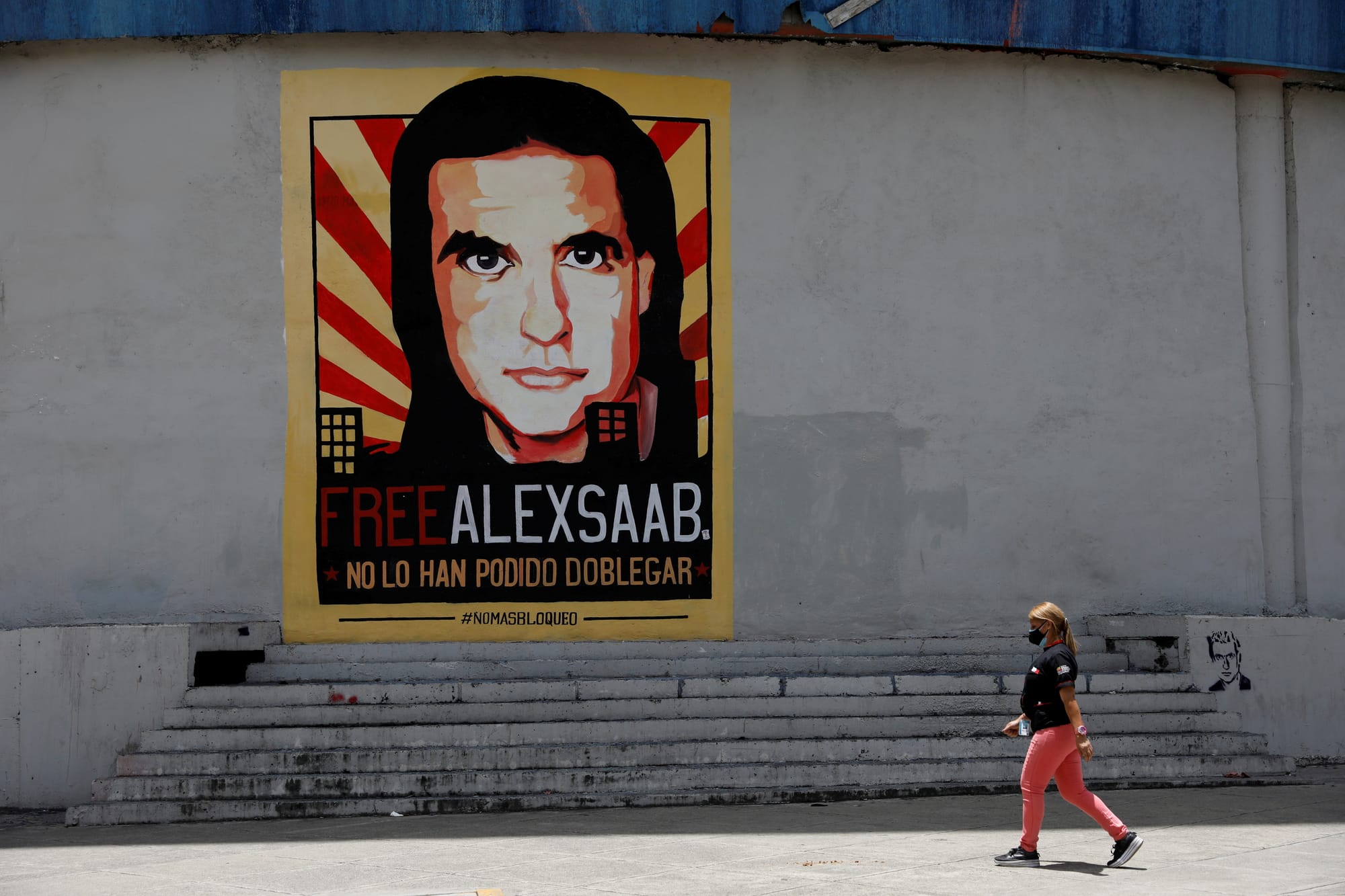
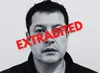
Alex Saab appeared in a Miami federal courtroom on Monday facing money laundering charges. He has been in U.S. custody since landing at Opa-locka Executive Airport Saturday night, escorted by DEA agents. His legal team has not yet indicated whether he will cooperate with prosecutors. The prosecutors, for their part, are not waiting.
Sources familiar with the case tell Reuters that Saab holds information that could materially strengthen Washington’s criminal case against Nicolás Maduro, who is awaiting trial in Manhattan on narcoterrorism and drug trafficking charges following his capture in Caracas on January 3.
Saab was present at — and in many cases the architect of — the financial arrangements that sustained the Maduro government through its most heavily sanctioned years. He structured the CLAP food contracts through which hundreds of millions of dollars were allegedly diverted. He negotiated with Iran. He managed the currency flows that kept the regime solvent when international banks had cut it off.
He also, according to court records previously revealed during earlier hearings, held secret meetings with the DEA for years — providing information about corruption within Maduro’s inner circle while simultaneously serving as one of that circle’s most trusted financial operators. That history of prior cooperation is both an asset for prosecutors and a complication: a witness who was simultaneously informing and participating is a witness whose credibility will be tested vigorously by any defense team.
The Maduro trial in Manhattan is the end game. A conviction of a former head of state on narcoterrorism charges — unprecedented in U.S. legal history — requires evidence that reaches inside the decision-making structure of a government, not just its operational periphery. Saab sat inside that structure for years. What he tells federal prosecutors in the coming weeks will determine whether the Manhattan case becomes a historic prosecution or a complicated near-miss.
Diosdado Cabello, who appeared on Venezuelan state television Monday to explain Saab’s deportation as a simple immigration matter involving a fraudulent Venezuelan ID card, faces his own $25 million U.S. reward and a standing indictment in the Southern District of New York. Whether Saab’s cooperation eventually reaches Cabello is the question Washington's Venezuela watchers are now asking.
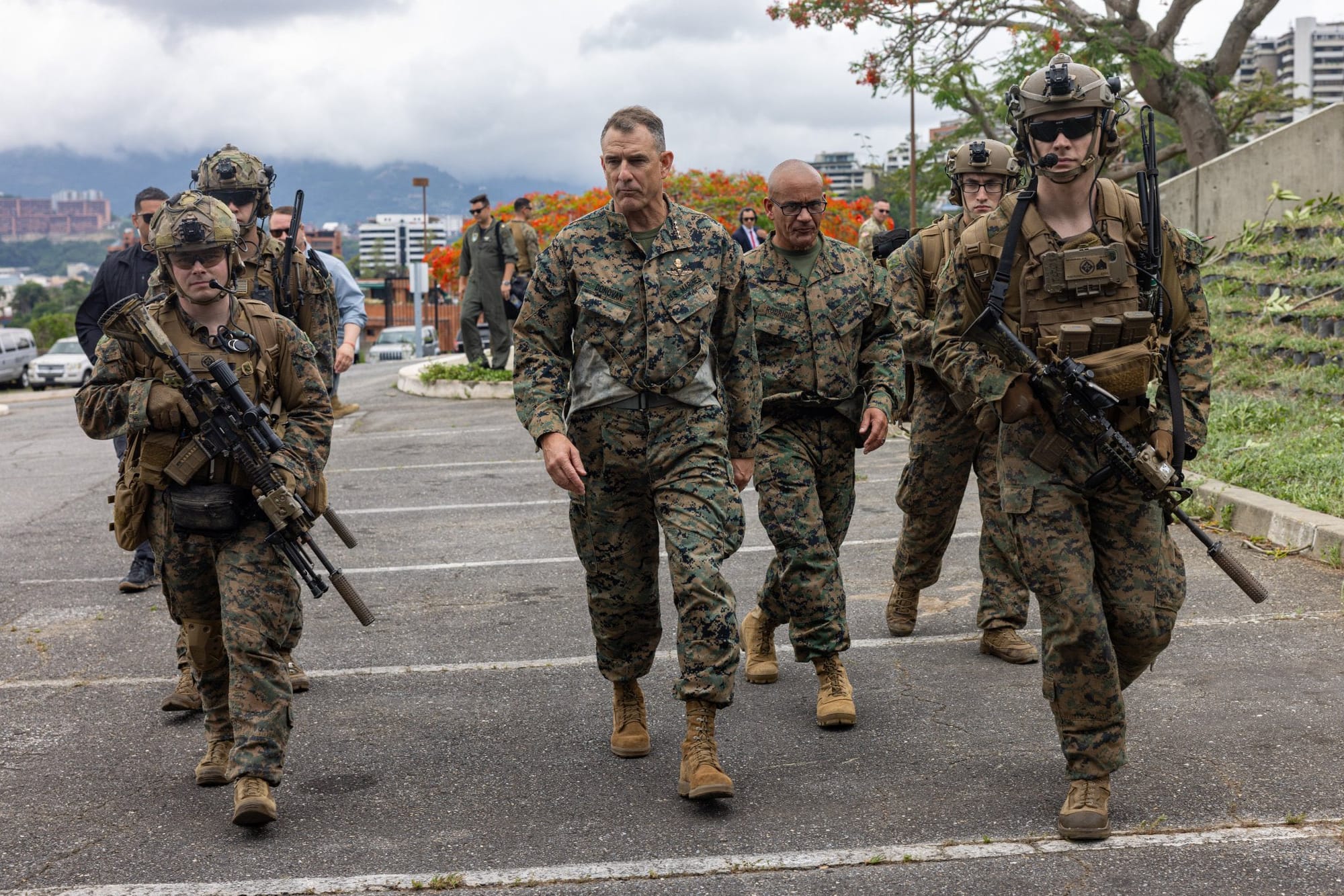
U.S. Marines Conduct Military Exercise in the Middle of Caracas?
CARACAS — The U.S. military conducted a rapid response exercise involving Marines and military aircraft at the recently reopened U.S. Embassy in Caracas on Saturday — more than four months after the ouster of Nicolás Maduro.
Two Marine Corps MV-22B Osprey aircraft flew over the embassy and landed in its parking lot, their downdraft blowing tree branches as forces descended from the aircraft.
The Osprey is a distinctive aircraft. It takes off like a helicopter and flies like a fixed-wing plane. It can carry 24 combat-equipped Marines, land in confined spaces, and operate at night. It is the platform of choice for special operations extraction and rapid response missions in urban environments.
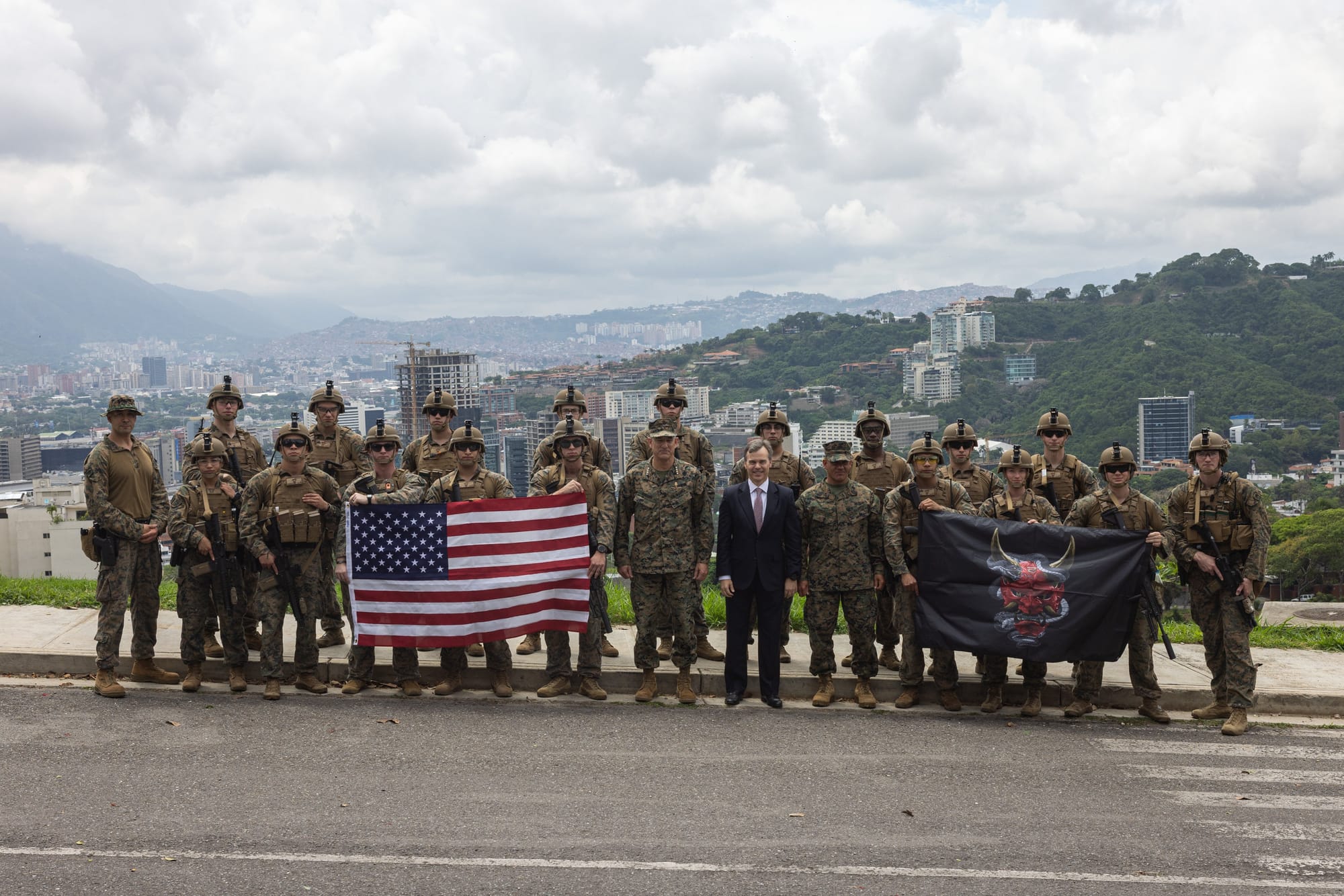
U.S. military aircraft last flew over Caracas on January 3, when elite forces rappelled down from helicopters and captured Maduro and his wife, Cilia Flores. The aircraft that landed in the embassy parking lot on Saturday belong to Marine Medium Tiltrotor Squadron 263 — the same squadron currently deployed aboard the amphibious assault ship USS Iwo Jima in the Caribbean Ocean.
Was It Approved?
Yes — and that is as significant as the exercise itself.
Venezuela’s government announced the drill earlier this week. Foreign Minister Yván Gil said the United States would conduct the exercise to prepare ‘in the event of medical emergencies or catastrophic emergencies.” The Rodríguez government did not just permit the exercise — it announced it publicly, framing it in the most benign terms available.
That framing tells you everything about the political calculation Rodríguez is making. A Venezuelan government that four months ago would have described U.S. military aircraft over Caracas as an act of war is now pre-announcing their arrival and characterizing them as emergency preparedness infrastructure. The distance between that posture and the Maduro government’s position — which responded to U.S. military presence in the Caribbean with street rallies, nationalist declarations, and accusations of imminent invasion — is the distance Rodríguez has traveled in the months since January 3.
WATCH U.S. MARINES LAND HERE ⬇⬇
The head of U.S. military operations in Latin America observed the exercise firsthand. Marine Gen. Francis Donovan, head of U.S. Southern Command, arrived in one of the Ospreys for his second official visit to Caracas this year. During a visit in February, Donovan met with Venezuela’s defense and interior ministers. The Southern Command commander landing in a tiltrotor aircraft at the U.S. Embassy in Caracas is not routine embassy security activity. It is a demonstration of operational access — a signal to Venezuelan military commanders watching from across the city that the U.S. military relationship with the Rodríguez government now extends to joint exercises on Venezuelan soil.
The Location
The choice of the embassy parking lot as the landing zone is worth examining on its own terms.
Some Caracas residents gathered near the embassy to watch the aircraft. A few dozen others gathered elsewhere in the city to protest, holding a Venezuelan flag with the message “No to the Yankee drill” written over it.
The protests were small. The crowd of spectators was larger.
The parking lot where the Ospreys landed is not the same location where Maduro was captured — that was the Palacio de Miraflores and surrounding grounds. But the visual language of U.S. military aircraft landing in Caracas, four months after U.S. military aircraft last landed in Caracas to remove its president, is not accidental. Every Venezuelan watching the footage on Saturday understood the reference.
The embassy’s Instagram statement — “Ensuring the military’s rapid response capability is a key component of mission readiness, both here in Venezuela and around the world” — was technically accurate and completely beside the point. The message was not in the words. It was in the aircraft, the squadron markings, the parking lot, and the four-month anniversary.
For the Venezuelan diaspora watching from Miami, the footage of U.S. Ospreys landing in Caracas on a Saturday morning — announced in advance, approved by the government, observed by the Southern Command commander — is a measure of how completely the post-Maduro landscape has shifted in four months. Whether that shift endures, deepens, or produces its own backlash is the question the Rodríguez government is navigating in real time.
Sociedad Media will continue to monitor ongoing developments in both Venezuela & Cuba and to deliver our weekly Venezuela & Cuba Now newsletter featuring the top news stories from the region.