

MIAMI — Luana Lopes Lara grew up in Brazil, studied mathematics at MIT, co-founded a financial technology platform in New York, and became the youngest self-made female billionaire in the world. She had been planning to bring Kalshi — the prediction markets platform she built with MIT classmate Tarek Mansour into a $22 billion company, back to the country she came from.
But on Friday, Brazil’s government blocked it.
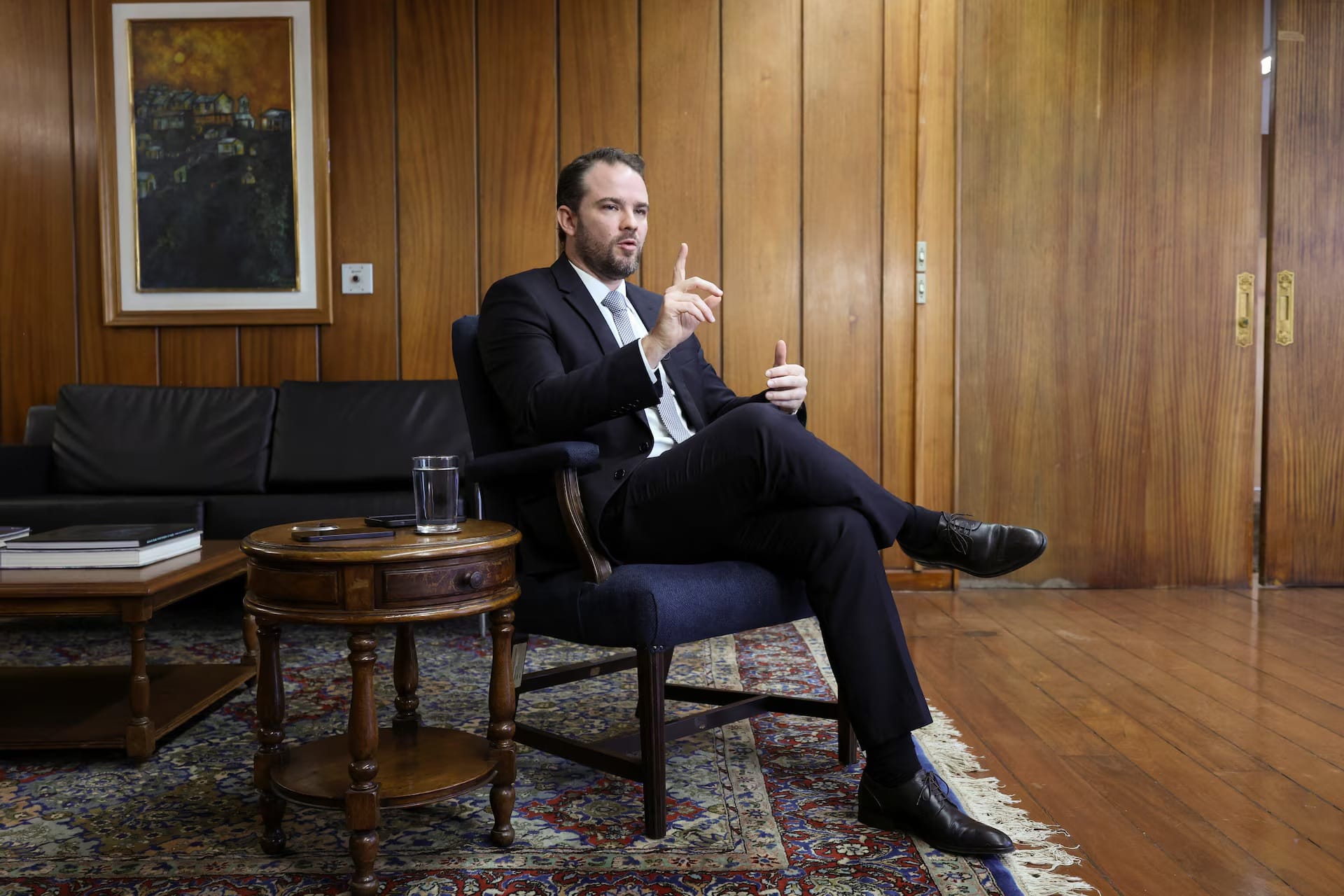
Finance Minister Dario Durigan announced Friday that telecom regulator Anatel had shut down 27 prediction market platforms after the government concluded they breached betting rules approved by Congress.
The sites of Kalshi and Polymarket were offline in Brazil by early Friday afternoon.
The National Monetary Council issued Resolution No. 5,298, prohibiting derivative contracts based on non-economic events — sports, political elections, and cultural outcomes. Derivative contracts are now limited to pre-defined economic and financial benchmarks, including price indices, interest rates, and exchange rates.
The official framing was straightforward. The actual story involves a $22 billion platform, a Brazilian co-founder who had publicly declared her intention to launch in her home country, a lobbying campaign by licensed competitors who paid tens of millions for their operating rights, and a government simultaneously going head-to-head with one of the world’s newest prediction platforms expected to make a major splash in the Brazilian market.
What Kalshi is — and Why it Matters
Kalshi was founded in 2018 by Lopes Lara and Tarek Mansour as MIT classmates. The platform allows users to trade contracts tied to real-world outcomes across weather, sports, pop culture, economics, and politics. Users buy yes or no contracts tied to whether an event will occur, and prices reflect the probability of that outcome.
The concept is not new — prediction markets have existed in academic and niche financial contexts for decades. What Kalshi did was bring them to retail scale, fight a years-long regulatory battle with the U.S. Commodity Futures Trading Commission to get them formally recognized as a regulated financial product, and expand aggressively into the contracts that generate the most engagement — and the most controversy: sports outcomes and political elections.
As of March 2026, Kalshi is valued at $22 billion with partnerships with CNN and CNBC. It processed billions in trading volume during the 2024 U.S. presidential election cycle, has become, in a remarkably short period of time, one of the most consequential financial technology companies to emerge from the current cycle of innovation — and one of the most legally embattled.
The road was not smooth. Kalshi spent years navigating the regulatory process before receiving approval from the CFTC. When regulators raised concerns, the founders repeatedly returned with legal research and data analysis to defend their case. Ultimately, Lopes Lara made the call to sue the U.S. government over election markets when discussions with regulators stalled — a move that defined both the company and its founder’s willingness to fight for the product.
Failed Homecoming
The Brazilian block lands with particular irony, given what Lopes Lara had said publicly about her intentions.
“Brazil means a lot to me. I really want us to operate there,” Lopes Lara told Brazilian outlet Valor in late 2025, describing her home country as a primary international expansion target. “We’re still studying how to do it, but I hope we can announce something in early 2026.”
By March 2026, Kalshi had moved beyond studying — it had partnered with Brazilian brokerage XP International to formalize a local launch pathway. The XP partnership was the clearest signal yet that Kalshi was serious about Brazil, and that it had identified the right local infrastructure partner to navigate the country’s complex regulatory environment.
The block, announced on Friday, puts that partnership in direct jeopardy. Kalshi said it was reviewing the resolution. XP has not commented publicly on the status of the partnership.
The Government’s Case
Brazil’s official rationale for the block centers on consumer protection and household debt — a genuinely serious policy concern in a country where unregulated online gambling has contributed to measurable financial distress among low-income households.
Finance Minister Durigan framed the move as part of a broader effort to protect the savings of Brazilians and address rising levels of household debt, a problem President Luiz Inácio Lula da Silva has attributed in part to online gambling.
“We have advocated for stricter enforcement and very rigorous regulation, which will continue to advance, so that we can curb the negative externalities and social harm that unregulated gambling causes,” Durigan said.
The argument has merit on its face. Brazil’s regulated online betting market only launched in January 2025, and the regulatory infrastructure for oversight is still being built. Platforms that accept international payments, route transactions through cryptocurrency and foreign remittances, and operate without Brazilian headquarters or local licenses are genuinely outside the framework that Congress approved.
Brazil’s betting regulation requires companies operating in the market to be headquartered in Brazil, maintain local legal representation, pay a 30 million Brazilian real operating license fee valid for five years, implement facial recognition verification for users, and process all transactions through Pix, Brazil’s domestic instant payment system.
Polymarket accepts cryptocurrency and international card payments. Kalshi routes through international remittances. Neither company has a Brazilian headquarters or an operating license.
From a purely technical legal standpoint, the government’s position is not complicated. Kalshi and Polymarket were operating in Brazil without meeting the requirements that every licensed Brazilian betting operator had to meet.
The block has a defensible regulatory basis.
The Lobbying Dimension
What the official framing omits is the industry pressure that preceded it — and that pressure is documented.
Licensed bookmakers operating in Brazil had been lobbying the Finance Ministry to block prediction platforms since early 2026, specifically after the Brazilian user base of both Kalshi and Polymarket grew sharply following Forbes magazine’s coverage of Lopes Lara as the youngest self-made female billionaire in the world.
Companies that had each paid the equivalent of $6 million for their operating licenses were not interested in competing against platforms that had paid nothing and were capturing market share through international payment workarounds.
The president of the Brazilian Institute of Responsible Gaming attended meetings with the Secretary of Prizes and Betting to press the case for blocking prediction platforms, framing the argument in regulatory terms while representing an industry with direct financial interests in the outcome.
The consumer protection rationale and the incumbent protection rationale are not mutually exclusive. Governments routinely find regulatory justifications for actions that also happen to serve the interests of licensed domestic operators.
Brazil’s block may be both genuinely motivated by consumer protection concerns and structurally convenient for the betting companies that spent years and tens of millions of dollars complying with regulations that Kalshi and Polymarket simply bypassed.
A Global Warning Shot
Brazil is not alone in grappling with how to classify prediction markets — and Friday’s block will be read carefully in regulatory bodies from Paris to Manila.
Countries including France, Hungary, and Portugal have banned locals from trading on Polymarket in recent years, with regulators stating that its wagers fall under gambling rules and the company was thus operating without appropriate licensing.
The harder question for both Kalshi and Polymarket is whether Brazil signals a broader regulatory shift. The block does not make the platforms inaccessible through VPNs, and cryptocurrency users can route around the Pix restriction — but those workarounds reduce the mainstream user base to a technically sophisticated minority.
In the United States, Kalshi has faced its own cascade of legal challenges at the state level even as it maintains federal CFTC authorization. A Massachusetts Superior Court issued a preliminary injunction against Kalshi, banning sports-based betting within the state. An Ohio federal judge ruled that Kalshi’s products amounted to gambling under Ohio law. A proposed class action lawsuit was filed in New York alleging illegal deceptive activity.
The company has navigated each challenge aggressively — but the cumulative picture is of a platform whose regulatory status remains genuinely contested in multiple jurisdictions simultaneously.
The Brazil ban is a case study in what happens when a technology product scales faster than its regulatory framework. Kalshi and Polymarket built genuine utility — liquid, real-time probability assessments on consequential events that often outperform institutional forecasters. The product works. The compliance infrastructure to operate it across diverse jurisdictions has not kept pace. That gap, not the product itself, is what governments are targeting.
Founder in Waiting...
For Luana Lopes Lara personally, the block carries a dimension that the regulatory debate alone cannot fully capture.
She built Kalshi in part with Brazil in mind — as a market, yes, but also as a validation. When she and Mansour first started on the project, many people told them it would not work. “It was many, many years of it looking like it was going nowhere,” she told CNBC. She sued the U.S. government to get election markets approved and built a $22 billion company from an idea that her own board was skeptical of.
The country she came from has now decided, officially, that her product is illegal.
That is not the end of the story. Regulatory landscapes change — Brazil’s betting framework is barely a year old, and the question of how prediction markets should be classified is genuinely unresolved globally. The XP partnership may yet find a pathway to compliance. Kalshi has navigated more hostile regulatory environments than this and emerged operating.
But for now, the youngest self-made female billionaire in the world cannot legally bring her company home.
Sociedad Media covers Latin American business, politics, and technology from Miami. For tips and reporting, contact info@sociedadmedia.com


