


D.R. — The Dominican Republic’s Foreign Ministry has formally ordered nine members of Cuba’s diplomatic mission in Santo Domingo, along with their families, to leave the country by Sunday, August 16 — a sudden diplomatic rupture that Dominican authorities have declined to publicly explain.
According to a statement from the Dominican Ministry of Foreign Affairs (MIREX), the government formally requested the withdrawal of nine members of Cuba’s diplomatic mission and their families, giving them a seven-day window from the notification to leave the country.
Local outlet Listín Diario reported the total number of Cuban nationals affected, including diplomats’ spouses and children, at approximately 21 people.
MIREX’s statement was brief, grounding the decision in “the powers international law recognizes for the receiving state” and “the pertinent provisions of the Vienna Convention on Diplomatic Relations,” of which the Dominican Republic is a signatory state.
Dominican officials have been explicit that they do not intend to disclose further details. “The Dominican government is adhering to current regulations and will continue to handle this matter with due discretion and through established diplomatic channels, in the interest of preserving relations between both countries,” the ministry’s statement read. “As this involves diplomatic communications, we inform that no additional details will be offered on this matter.” The names of the specific diplomats being expelled had not been made public as of this writing.
Cuba’s current ambassador to the Dominican Republic is Ángel Arzuaga Reyes.
A Notable Shift in Tone From Abinader
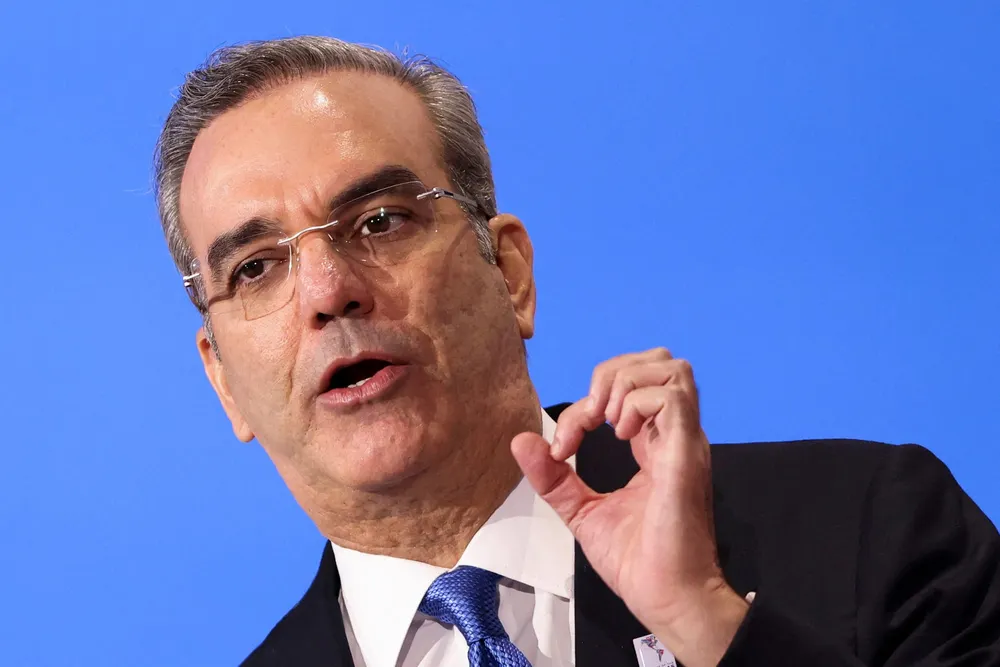
While Dominican authorities have not stated a cause for the expulsion, President Luis Abinader has signaled a hardening view of Cuba’s government in recent months.
In a May 2026 interview with Infobae, Abinader said plainly that Cuba “obviously is not a democratic state,” adding: “They have a system, a revolution, and I believe they themselves are realizing they need to make a change, and they’re moving in that direction.” That comment marked a notable departure from the more neutral diplomatic posture the Dominican Republic had generally maintained toward Havana.
A Long & Complicated Bilateral History
Formal diplomatic relations between the Dominican Republic and Cuba date to 1902, but were severed following the 1959 Cuban Revolution, a period marked by ideological and military hostility between the government of Cuban leader Fidel Castro and the Dominican regime of Rafael Leónidas Trujillo.
Relations were not definitively restored until 1998, and have continued since without major incident until now.
The expulsion echoes a strikingly similar episode earlier this year in Ecuador. On March 4, 2026, President Daniel Noboa’s government declared Cuba’s ambassador in Quito, Basilio Antonio Gutiérrez García, along with the entirety of Cuba’s diplomatic staff, persona non grata, giving them just 48 hours to leave the country.
Ecuador’s Foreign Ministry likewise invoked Article 9 of the Vienna Convention without publicly stating a specific cause. Cuba’s government called that decision “arbitrary and unjustified” and closed its embassy in Quito on March 6 in response.
This week’s development in the Dominican Republic adds to a broader pattern of rising diplomatic isolation for Havana across the region this year — a pattern we’ve tracked closely, including Colombia’s pending rupture of relations with Cuba under President Abelardo de la Espriella, a 100-page U.S. State Department report characterizing Cuba as a decades-long sponsor of far-left influence across the hemisphere, and an escalating campaign of U.S. sanctions targeting Cuban officials and state entities.
Sent Packing
Cuba’s government had not issued a public response to the Dominican expulsion as of this writing. With the August 16 deadline approaching, attention now turns to whether Havana responds with reciprocal measures against Dominican diplomatic personnel, as it has in past disputes with other countries, or whether — as MIREX has signaled it prefers — the matter is handled quietly through established diplomatic channels without further public escalation.