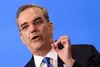



Dominican President Luis Abinader said on Tuesday that his government is supporting Salvadoran President Nayib Bukele’s military operations in Haiti with logistics and intelligence, and that the Dominican Republic will keep doing so. The statement came as the Salvadoran deployment faces scrutiny over its coordination with the UN-backed Gang Suppression Force (GSF), and as officials at the U.S. State Department have reportedly raised objections of their own.
Speaking to reporters at the National Palace, Abinader said, “We must decisively support the Salvadoran army and the attitude of President Bukele.” He added that “we are collaborating with President Bukele and we support him in all the logistics and intelligence, and we will continue to support him for the work they are doing.”
Abinader noted that El Salvador’s defense minister speaks almost daily with his Dominican counterpart. A spokesperson for Abinader declined to detail the type of assistance the Dominican Republic has provided.
Abinader also called for coordination, urging that Salvadoran troops and the GSF should establish coordination mechanisms to carry out their operations without interference. The Caribbean president also said his government’s priority is protecting the border and preventing Haiti’s violence from spilling into the Dominican Republic, which keeps armored vehicles, drones and personnel ready.
The Backdrop
El Salvador already contributed personnel to the GSF. After four Salvadoran aviation technicians attached to the force disappeared in an October 18 gang ambush, Bukele sent roughly 2,500 troops with armored vehicles and attack helicopters. Most of those troops operate outside the GSF’s command, while Haitian Prime Minister Alix Didier Fils-Aimé insists that Haiti directs the operations.
Haitian Prime Minister Fils-Aimé is scheduled to visit El Salvador next week to discuss the future of the Salvadoran troops.
The latest action came this week when Bukele celebrated an attack by Haitian police and Salvadoran troops that destroyed the home and headquarters of Wilson Joseph, leader of the 400 Mawozo gang. He was not killed in Sunday’s attack.
“We kept our promise,” Bukele wrote on X, alluding to a prior post on the social media platform in which he asked one user the precise geolocation of the structure after a photo of the compound was shared publicly.
Scrutiny & The U.S.
Dominican outlet El Día reported that Abinader’s remarks came as tensions between the U.S. State Department and El Salvador over the Haiti offensive became public. Axios reported Tuesday that State Department officials raised objections to the Salvadoran operations, even as President Donald Trump has offered public support.
Analysts describe a crowded and complicated security landscape. Sophie Rutenbar of the Global Initiative Against Transnational Organized Crime said Haiti is “extremely crowded” with security forces from “such different points of view.” She said Haitian sentiment toward the Salvadoran troops is “largely positive.”
Another expert said it would have been better for the Haitian government to steer the Salvadoran soldiers within an existing structure, calling that “hard to pull back.”