


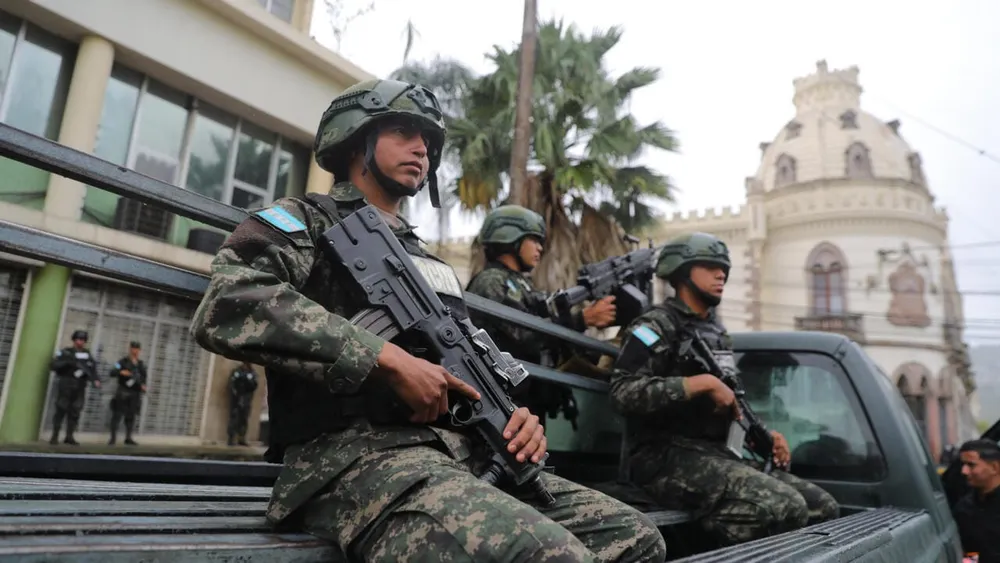
HONDURAS — Two coordinated attacks in northern Honduras killed at least 19 people on Wednesday night and Thursday morning — a massacre at an African palm farm in the Bajo Aguán region and a targeted ambush of police officers near the Guatemalan border — in one of the deadliest 24-hour periods Honduras has experienced in years.
The attacks came days after the Honduran National Congress approved a sweeping package of security reforms authorizing the military to participate in public security operations and opening the legal pathway to designate criminal gangs and drug cartels as terrorist organizations.
Whether the timing was coincidental or represented a deliberate show of force by criminal groups operating in the region is a question Honduran authorities have not publicly answered.
The Palm Farm Massacre
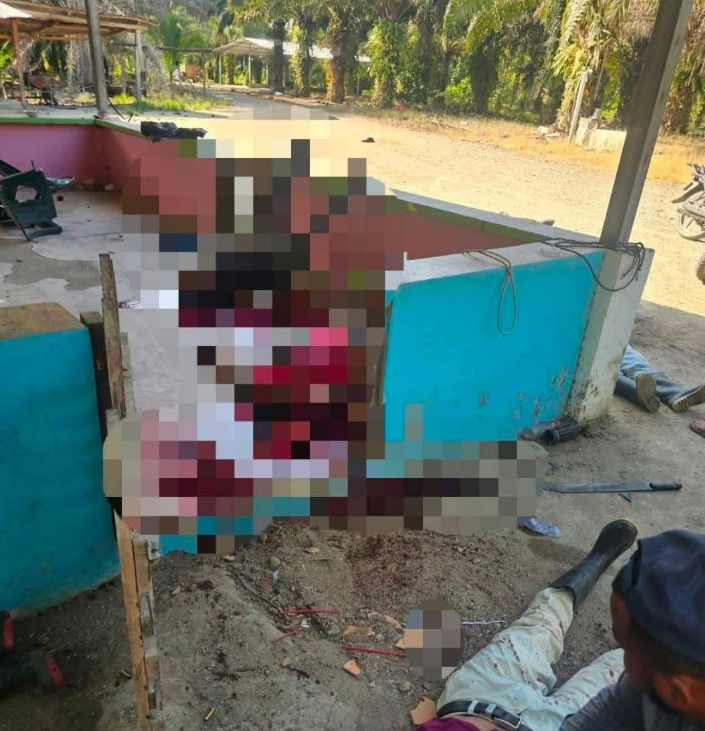
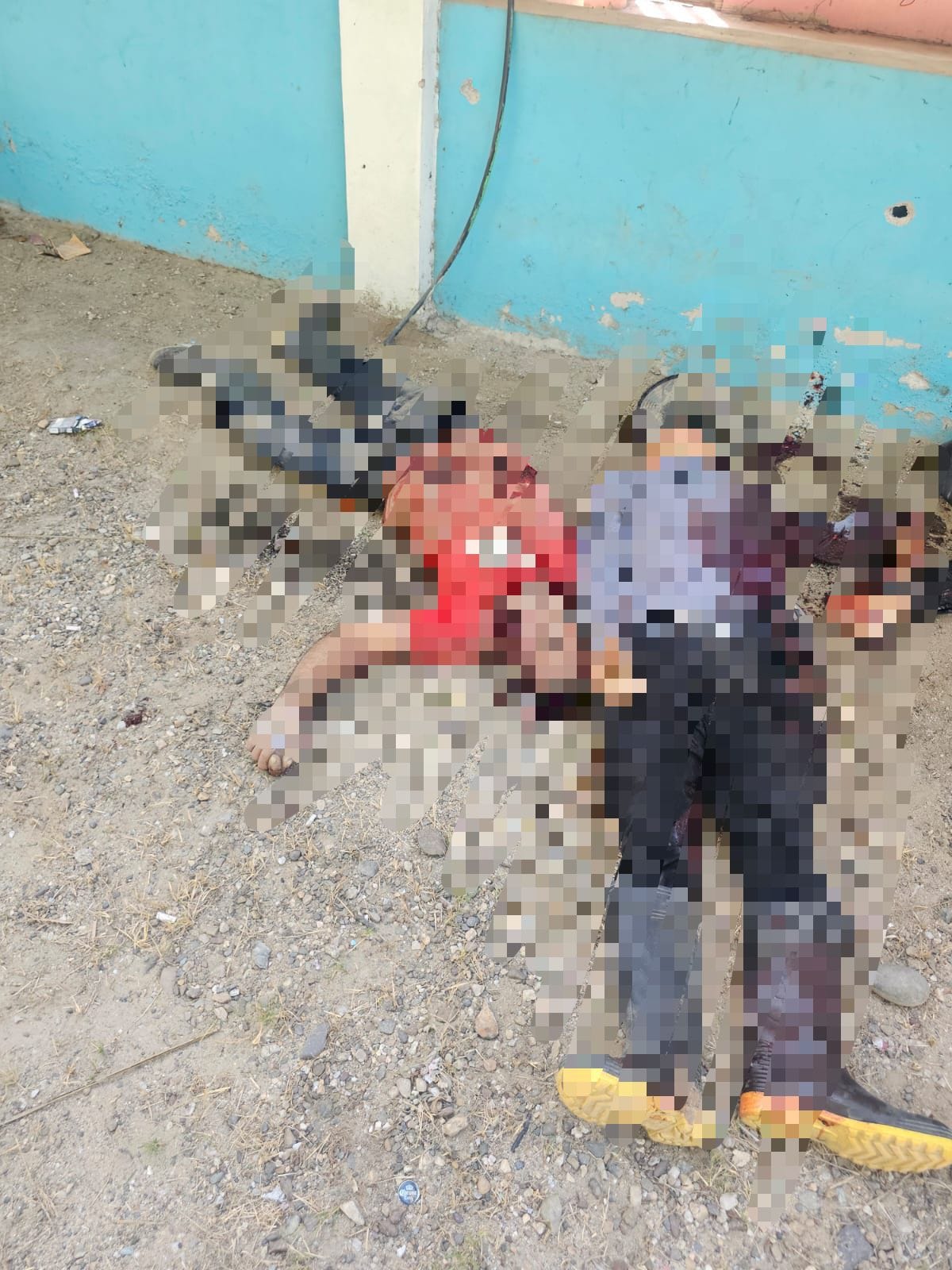
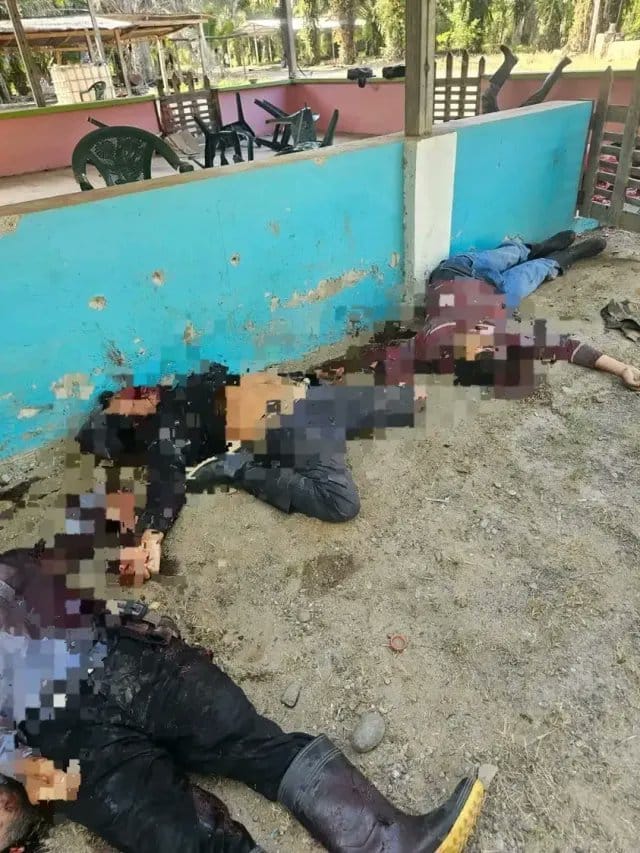
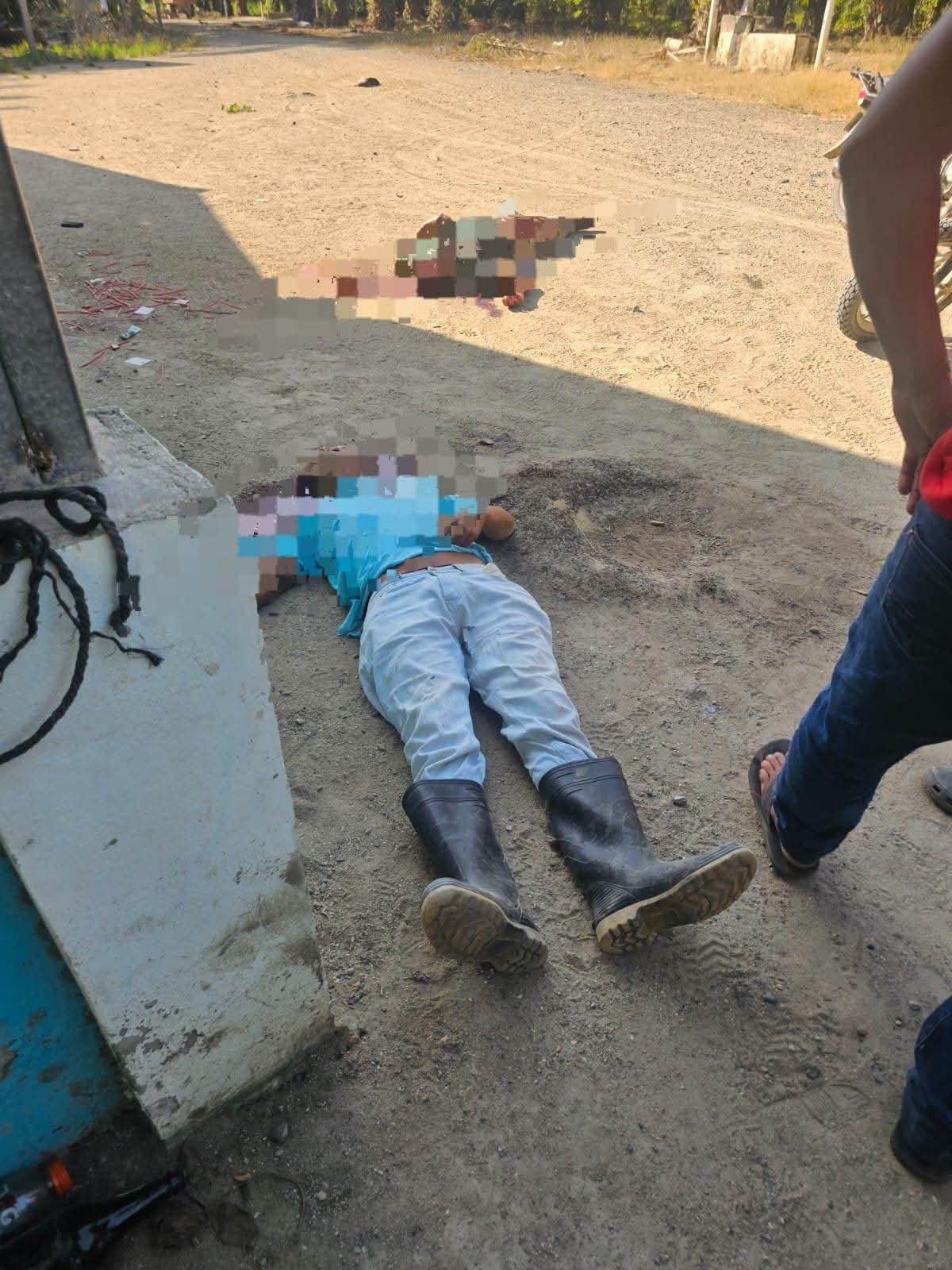
The first attack occurred in the early hours of Thursday at an African palm farm in the Rigores community, part of the municipality of Trujillo in the department of Colón. Armed individuals opened fire on workers who had gathered for their morning roll call — a routine that brought them into the open at a predictable time and place. Some of those killed had gathered at a local church near the farm.
Photos from the scene showed bodies on the ground outside, some still wearing the thick rubber boots workers use in the palm fields. Three sisters were among the dead.
The exact death toll remained unclear Thursday as authorities worked to secure the scene. Some distraught family members arrived before investigators could establish a perimeter and removed bodies before they could be officially counted — a factor that has complicated the official count, which stood at 10 in initial police statements but rose to 19 in subsequent reporting by Honduran media and AFP.
National Police spokesman Edgardo Barahona confirmed the killings and described the area as affected by “endemic violence” caused by criminal groups, creating “panic and fear among residents.” A senior government investigator, speaking to AFP on condition of anonymity, was more direct: “This has to do with drug trafficking.”
He dismissed the suggestion that the attack was connected to the Bajo Aguán’s long-running agrarian land disputes.
The Bajo Aguán region, where the massacre occurred, has been the site of decades of conflict between rival criminal organizations fighting over control of palm plantations and drug trafficking routes. It is one of Honduras’s most consistently violent territories and has generated repeated cycles of massacre and reprisal that successive governments have failed to resolve.
The Police Ambush
Hours after the farm massacre, assailants opened fire on police officers in the municipality of Omoa, in the department of Cortés near the Guatemalan border, killing six officers including a senior officer. The officers were members of DIPAMPCO — Honduras’s specialized anti-gang police division — and were traveling to Omoa from the capital Tegucigalpa on an anti-gang mission when they were attacked.
One of the dead officers was identified as subcommissioner Lester Amador, described in local reports as a senior investigator for the unit in Tegucigalpa. Three other people were also reported killed in the exchange of gunfire at the scene.
The targeting of DIPAMPCO officers — a unit specifically created to combat organized crime — on an active anti-gang operation is a direct challenge to the Honduran state’s security apparatus. The combination of a civilian massacre and a coordinated police ambush on the same night suggests operational coordination between criminal groups, though authorities have not publicly established a connection between the two attacks.
Controversial Legislation
The attacks came shortly after the Honduran National Congress approved a series of reforms to confront criminal violence. The new measures authorize the military to participate in public security tasks and create a new anti-organized crime unit.
The legislation also opens the possibility of categorizing gangs and drug cartels as terrorist organizations — a designation that would expand the legal tools available to prosecutors and align Honduras’s framework with the Trump administration’s designation of Tren de Aragua and MS-13 as foreign terrorist organizations.
President Nasry Asfura’s government has positioned Honduras as a cooperative security partner with Washington and has moved aggressively to expand the legal and operational framework for confronting organized crime since taking office in January.
The timing of Wednesday night’s attacks — days after the legislature passed the new security measures — has led some Honduran security analysts to suggest that criminal organizations may be signaling their capacity to operate regardless of new legislative frameworks.
Honduras & Regional Security
The Honduran attacks are the latest episode in a pattern of criminal violence that has intensified across Central America as U.S.-led maritime interdiction operations have disrupted traditional Caribbean drug trafficking routes and pushed criminal organizations toward overland corridors through Honduras, Guatemala, and Mexico.
As Sociedad Media reported in May, U.S. security operations have contributed to a more than 90% reduction in maritime drug smuggling — a figure the Trump administration cites as evidence of the strategy’s success. But the displacement effect has been significant: criminal organizations competing for overland routes have escalated territorial violence in the countries those routes pass through.
The Bajo Aguán corridor is one of the most contested of those routes, connecting Colombian cocaine supply chains to Mexican cartel distribution networks through Honduran territory.
The National Police issued a statement following the attacks, saying it “will proceed immediately with a direct intervention in the affected areas.”
Honduras’s homicide rate currently stands at 24 killings per 100,000 inhabitants — among the highest in Central America, though significantly lower than the peaks of the early 2010s when Honduras briefly held the world's highest murder rate.