
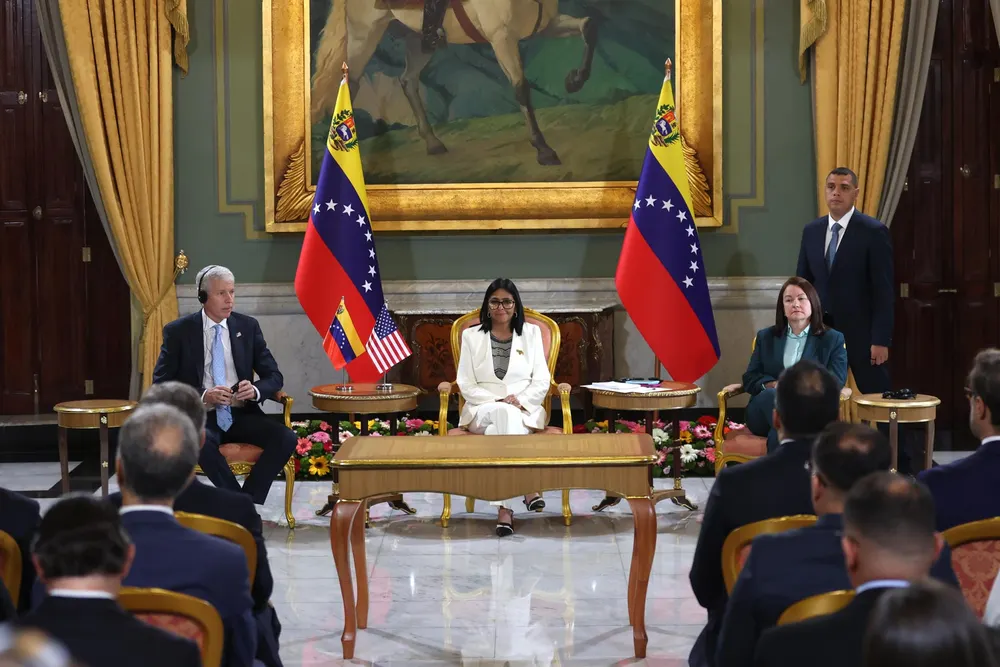
CARACAS — Venezuela formally signs new round of oil agreements with Chevron and Italy’s Eni on Wednesday, September 2, cementing into concrete contracts the sweeping $65 billion-barrel framework President Trump announced just days earlier, in a ceremony at the Miraflores Presidential Palace attended by acting President Delcy Rodríguez and U.S. Energy Secretary Chris Wright.
Chevron announced it will expand its Venezuelan operations with an investment exceeding $7 billion over the next five years, aiming to double its production in the country.
In a statement, the company said it had reached agreements with Venezuela that improve the fiscal, commercial, and legal conditions governing its joint ventures, underpinning that five-year investment commitment.
Separately, Eni signed a production participation contract with state oil company PDVSA to develop the Junín 5 block, located in the Orinoco Oil Belt. PDVSA also signed a production participation contract for the eastern Budare-Elotes block with Primavera, a Venezuelan company — notably the first time this type of contract structure, known as a CPP (Contrato de Participación Productiva), has been used with a domestic Venezuelan operator rather than a foreign major.
Rodríguez specifically highlighted that Primavera had continued producing in Venezuela even through the harshest period of U.S. sanctions.
Beyond oil, PDVSA signed a strategic alliance with GE Vernova to restore electrical installations used by the oil industry, and reached a separate agreement with state utility Corpoelec aimed at strengthening Venezuela’s national electrical grid.
The Framework Behind the Signings
Wednesday’s agreements formalize the broader arrangement Trump announced on August 28, under which the United States secured control of 65 billion barrels of Venezuela’s proven oil reserves across 17 fields.
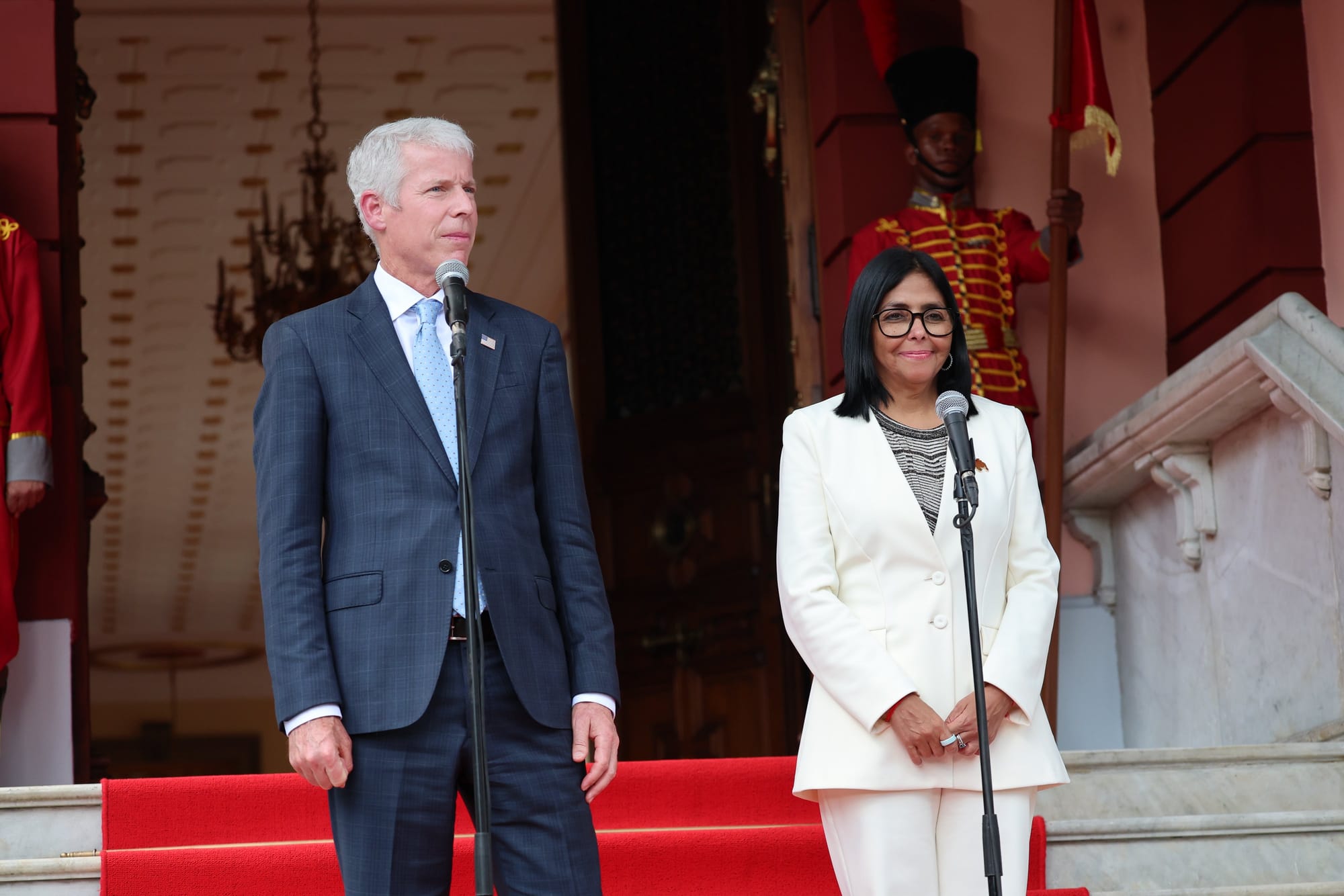
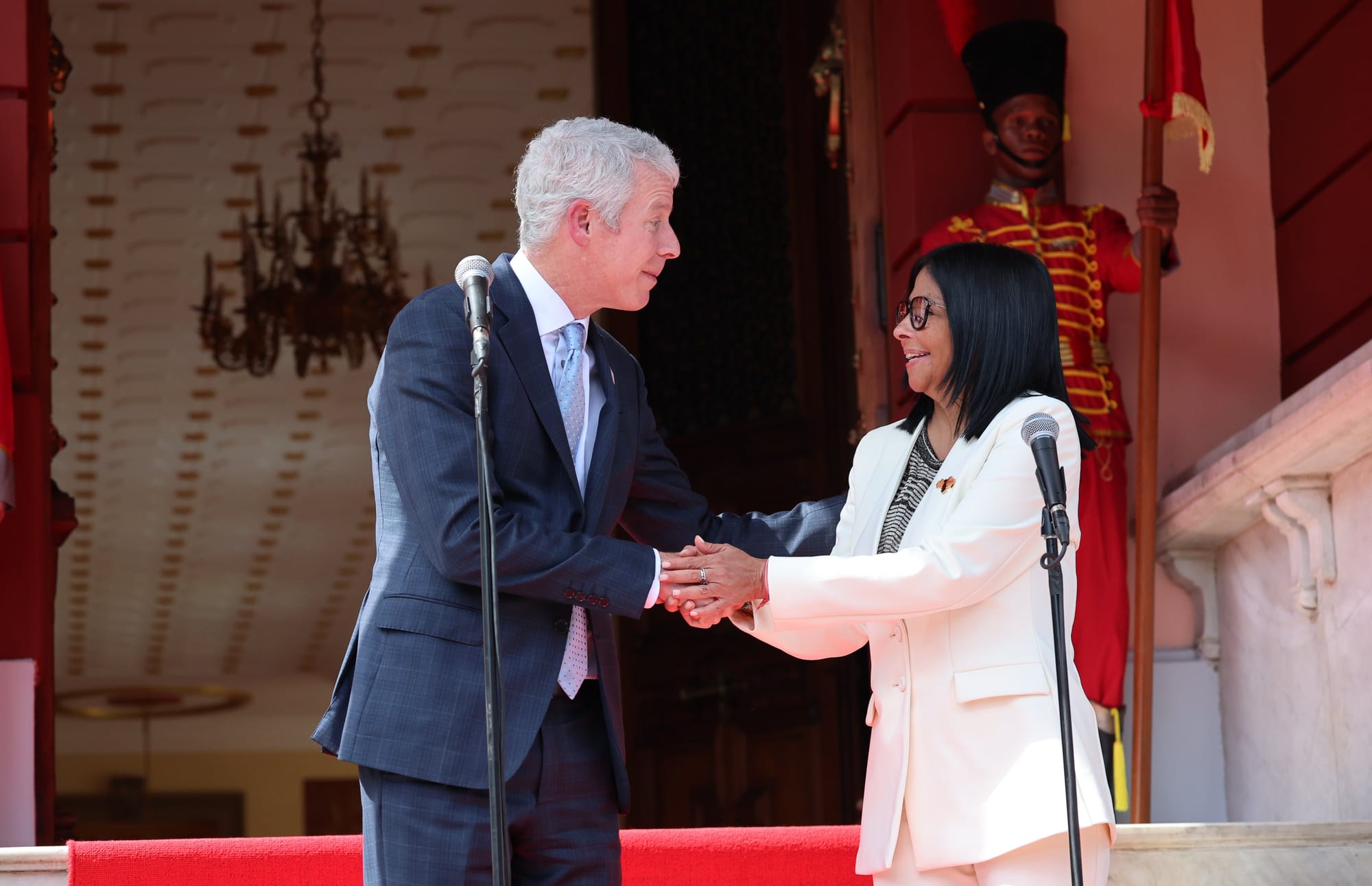
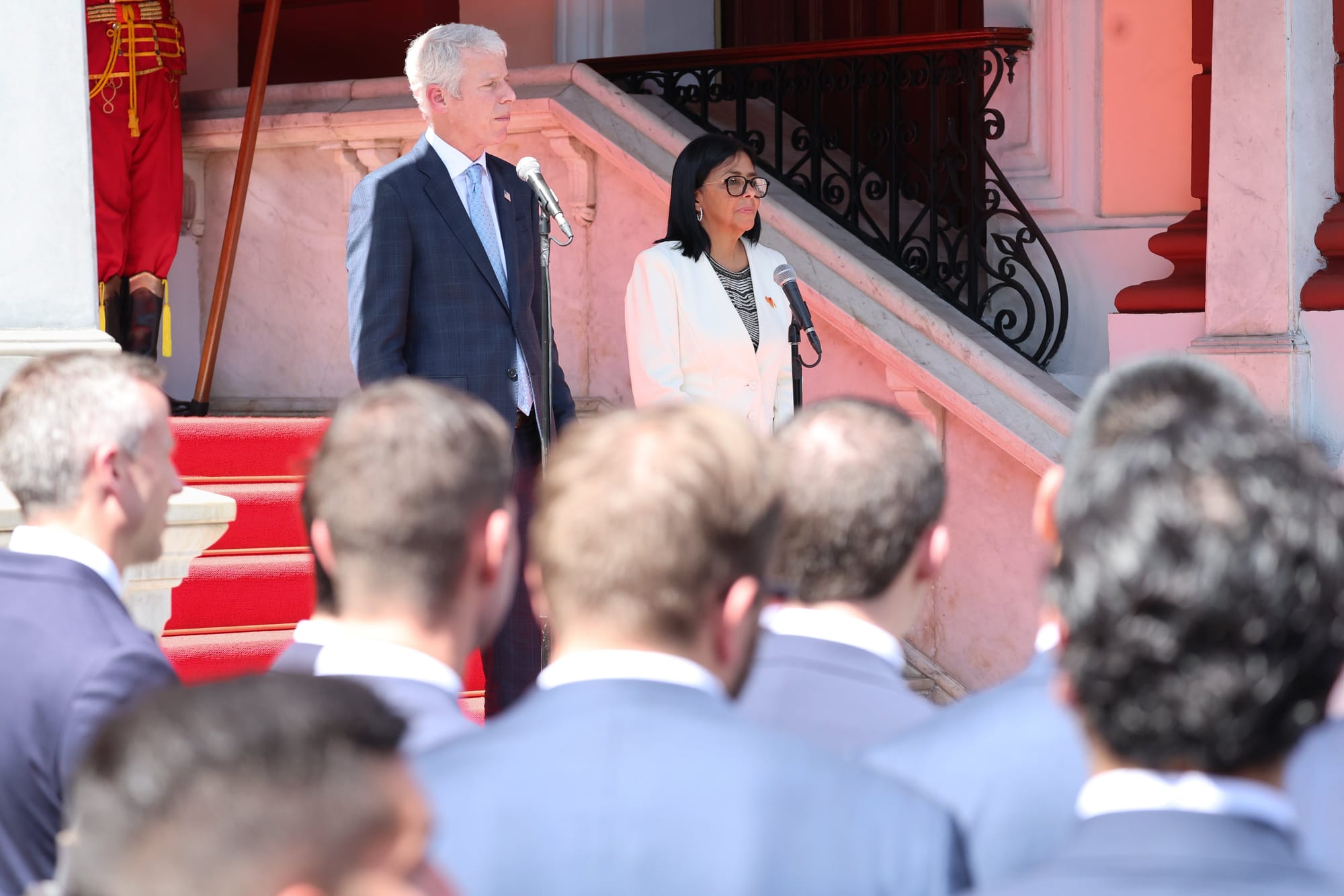
Rodríguez tied the day’s signings directly to that framework, describing the energy agreements as something that will “bring wellbeing to the country.”
“When I talk about increasing production, I’m talking about the wellbeing of the Venezuelan people,” Rodríguez said at the signing ceremony, adding that the increase would translate into “more wages, public services, hospitals, schools, food.”
Washington’s Framing
Energy Secretary Wright, making his first visit to Caracas, called the day “historic" and described Venezuela’s transformation and the expanded opportunities for its people in similarly sweeping terms, characterizing the agreements as essential to the country’s peace and progress.
Separately, Wright stated that China would not hold rights to Venezuela’s oil deposits under the new arrangement — a pointed remark given China’s role as one of the primary buyers of Venezuelan crude throughout the sanctions period.
Rodríguez, dressed in white for the occasion, thanked Trump directly for what she called his government’s “joint effort” in reaching what she described as “win-win” agreements, and said Venezuela was entering “a new stage of exploration of new fields and new opportunities.”
A Question About Elections
Rodríguez was also asked about the possibility of calling elections in Venezuela, telling reporters: “There will be an electoral process, don’t doubt it” — though she did not provide a specific date or timeline, leaving the country’s central unresolved political question unanswered even as its economic engagement with Washington deepens.
Rodríguez was also asked about the involvement of Venezuelan businessman Alejandro Betancourt in the new oil framework, given past scrutiny of his business dealings. Venezuela’s then-Attorney General Tarek William Saab had previously named Betancourt among businessmen investigated over alleged overpricing in contracts with PDVSA, an investigation that led to the removal and prosecution of more than 100 officials.
Betancourt was also detained in the United Kingdom in 2025, and Switzerland’s Zurich prosecutor’s office opened a separate criminal proceeding against him over alleged money laundering.
Rodríguez rejected the idea that any active legal case against Betancourt currently exists in either Venezuela or the United States, saying his case in Venezuela “was dismissed years ago.”
The Numbers
Venezuela’s government says oil production has grown nearly 30% since Nicolás Maduro’s removal in January, and its crude exports closed August at 1.17 million barrels per day.
Wednesday’s agreements arrive on top of that growth trajectory, with Chevron’s five-year, $7 billion-plus investment specifically aimed at doubling the company’s Venezuelan output beyond current levels.
Part of a Broader Pattern This Year
The formal signings continue a rapid sequence of developments in Venezuela’s oil sector throughout 2026: February’s overhaul of the country’s Organic Hydrocarbons Law, which opened the door to greater private and foreign operational control; the smaller independent contracts signed by Hunt Oil and oilfield services firm SLB in August; and now this direct, major-company formalization involving Chevron and Eni just nine months after Maduro’s January 3 capture by U.S. forces.
Wednesday’s visit also marks a shift from the earlier pattern in which major companies like Chevron had remained comparatively cautious, held back by roughly $170 billion in unresolved legacy creditor claims and expropriation arbitration awards against Venezuela — a gap the new fiscal, commercial, and legal terms Chevron cited appear designed, at least in part, to address.
With Chevron and Eni’s agreements now formally signed and PDVSA’s new domestic CPP structure with Primavera in place as a potential model for future contracts, attention now turns to how quickly the promised production increases materialize, and whether Rodríguez’s vague commitment to “an electoral process” produces any concrete timeline in the months ahead.
For now, Venezuela’s economic engagement with Washington continues to advance considerably faster than its political transition.