

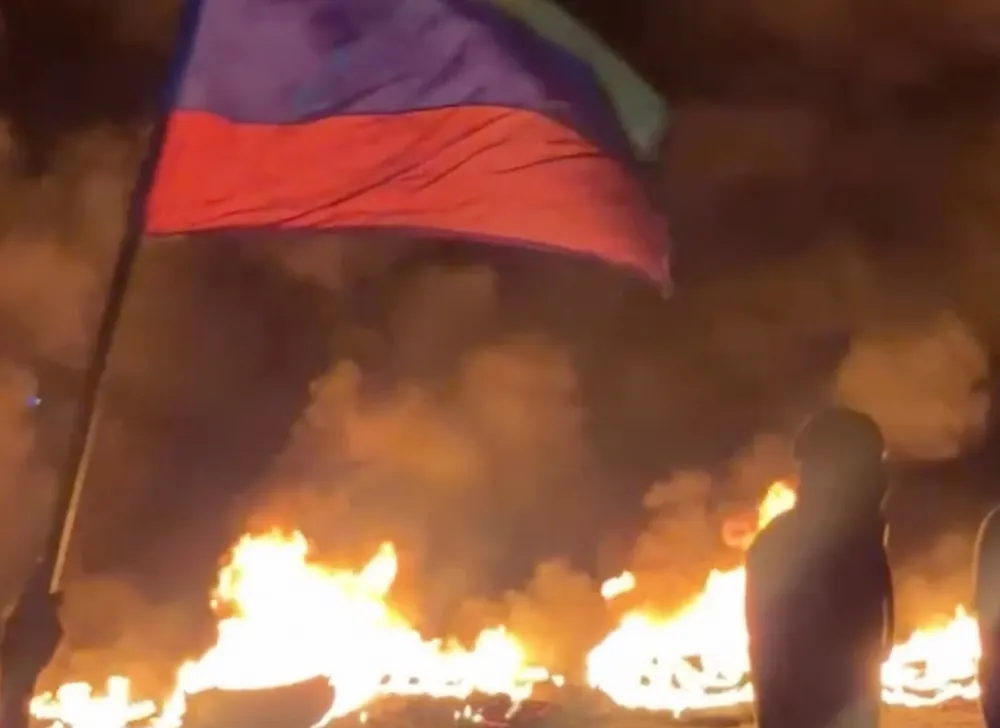
VENEZUELA — Residents across at least nine Venezuelan states took to the streets overnight into Thursday in a new wave of protests over worsening electricity blackouts.
Demonstrations were reported in Mérida, Zulia, Guárico, Anzoátegui, Portuguesa, Cojedes, Aragua, Lara, and Monagas, with residents staging cacerolazos — the pot-and-pan banging protests long associated with Latin American political unrest — alongside tire burning and, in some areas, road blockades.
In Guárico state, towns including Tucupido, Calabozo, and Chaguaramas saw their third consecutive night of protests.
¡PROTESTAS MASIVAS EN VENEZUELA! pic.twitter.com/49I6BzDWvh
— Guillo (@codiguillos) September 24, 2026
Power cuts in many of the affected zones are now running 10 to 16 hours a day. In San Carlos, outages have exceeded 15 continuous hours. Analysts describe the current crisis as one of the most severe and unstable stretches for Venezuela’s electrical grid since the catastrophic national blackouts of 2019, with conditions deteriorating sharply through August and September of this year.
Venezuelan officials have pointed to a June 24 earthquake and rising electricity demand tied to economic recovery as recent aggravating factors. But independent analysts attribute the collapse more broadly to more than 15 years of inadequate maintenance, chronic underinvestment, and corruption tied to unfinished infrastructure projects within the national grid.
Watch as a GNB (Bolivarian Nation Guard of Venezuela) official cites “climate change” as the cause of recent power outages in various regions of the country, Wednesday, September 30, 2026. But residents are not buying it. Source: @Gbastidas/X
The Government’s Response
Interim President Delcy Rodríguez — who assumed power earlier this year following the capture of Nicolás Maduro by U.S. forces — has asked citizens to conserve electricity and water, attributing part of the strain to the “Super Niño” climate pattern currently affecting the region.
Separately, Energy Minister Rolando Alcalá announced plans to add 1,300 megawatts to the national grid during the fourth quarter of 2026, pointing to new supply partnerships with international firms including Impsa, General Electric, and Siemens, along with planned transmission line expansions and new equipment at the Planta Centro substation.
Corpoelec president Juan Fernández said the state utility now has direct access to original spare parts from major manufacturers, which he described as a shift from prior supply shortages.
No injuries or arrests have been confirmed in connection with Wednesday night’s protests specifically, though Bolivarian National Guard units were reported at a demonstration site in Zulia during an earlier night of unrest on September 26.
With blackouts showing no sign of easing and frustration mounting in multiple states simultaneously, the protests mark a test of how much public patience remains for a crisis now stretching into its third consecutive week of intensified disruption.