

CARACAS — Six months after U.S. forces captured Nicolás Maduro, the outline of a Venezuelan political transition is finally taking shape — and Washington has made clear it does not intend to watch from the sidelines. This week’s announcement of a joint reconciliation agenda between Venezuela’s two rival National Assemblies has drawn explicit U.S. backing, the latest sign that the Trump administration views itself not as a facilitator of Venezuela’s transition, but as one of its principal architects.
A New Joint Agenda
On July 14, Venezuela’s Chavista-controlled National Assembly, led by Jorge Rodríguez, and the U.S.-recognized 2015 National Assembly, led by Dinorah Figuera, jointly announced a work agenda set to begin on August 1, aimed at advancing what both sides described as stability, democracy, and national recovery.
The announcement built on an earlier June 18 meeting between representatives of the two bodies.
The U.S. Embassy in Caracas responded within hours, issuing a statement welcoming the announcement as “an important next step in the political reconciliation process” and applauding the commitment to strengthen democratic institutions, improve the electoral system, and restore guarantees for political participation.
The embassy statement also tied the effort explicitly to the aftermath of Venezuela’s devastating June 24 earthquakes, arguing the disaster had underscored the urgency of unity, responsible leadership, and capable institutions.
Rubio’s Three-Phase Framework
The State Department’s involvement follows a structure Secretary of State Marco Rubio has articulated repeatedly since Maduro’s capture: a three-phase progression from stabilization, to recovery, to transition. Testifying before the Senate Foreign Relations Committee in January, Rubio described the eventual goal as reaching “a phase of transition where we are left with a friendly, stable, prosperous Venezuela, and democratic, in which all elements of society are represented in free and fair elections” — while cautioning that meaningful elections require opposition access to media and the ballot, not simply the holding of a vote.
He has been explicit that the U.S. intends to use its leverage, including control over Venezuela’s ability to export oil, to push the process forward on Washington’s terms rather than Caracas’s.
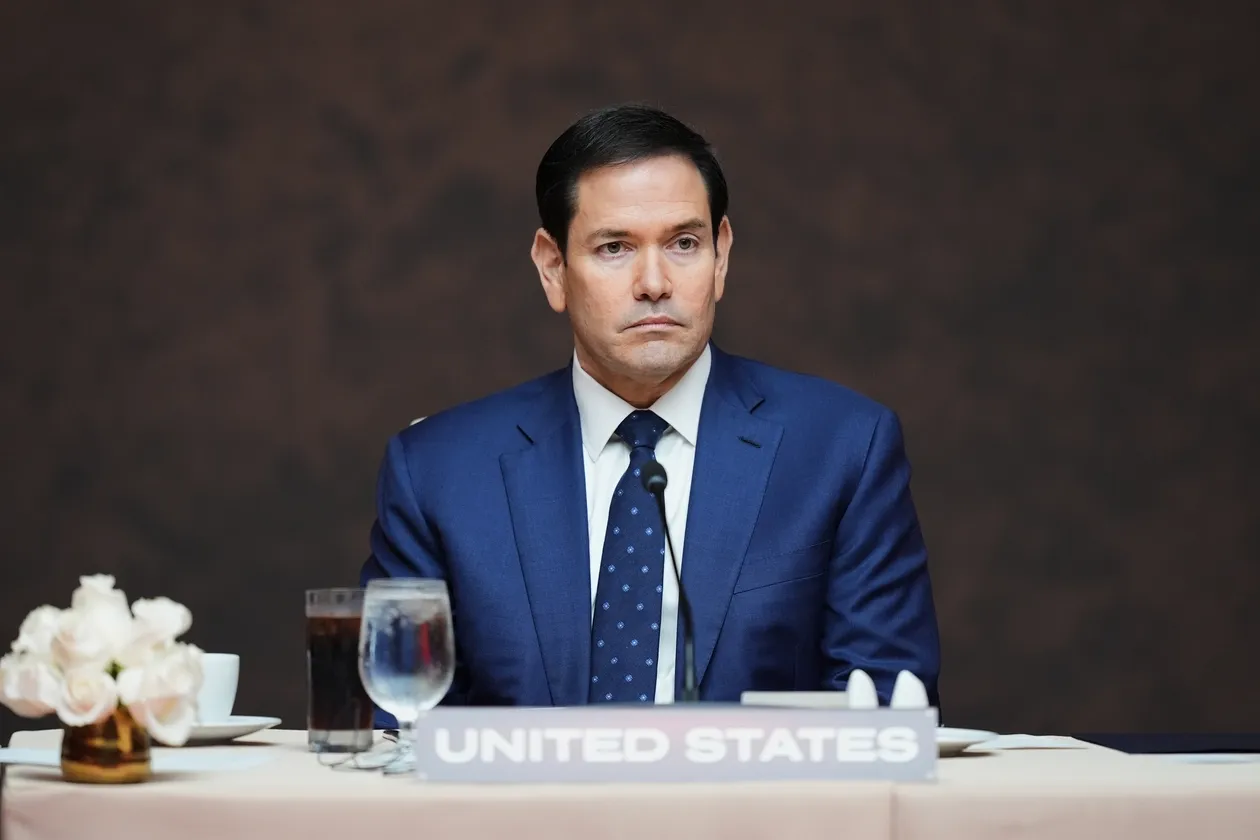
Asked directly on NBC’s Meet the Press whether he was personally involved in managing the transition, Rubio didn’t equivocate: “Obviously I’m very involved in this,” he said, describing it as “a team effort” spanning the State Department, the Department of War, and the Department of Justice, with the military supporting Coast Guard sanctions-enforcement operations he called “tremendous leverage.”
A More Active Role Than Publicly Acknowledged
Reporting from major U.S. outlets like the New York Times has described Rubio’s actual role in far more expansive terms than the State Department has publicly confirmed — with the Treasury Department receiving revenue from most of Venezuela’s oil exports and disbursing it gradually back to the country through its private banks, and Rubio remaining in frequent direct contact with acting Venezuelan leader Delcy Rodríguez, who assumed authority after Maduro’s capture.
Some critics have likened the arrangement to Paul Bremer’s role administering Iraq after the 2003 U.S. invasion. A State Department spokesperson, asked about the comparison, said only that Venezuela can reemerge as a stable partner “with renewed cooperation and sound economic stewardship.”
Rubio himself has largely avoided public discussion of the extent of his personal role and declined interview requests on the subject.
This active U.S. posture extends beyond diplomacy and finance. A separate, still-preliminary proposal under discussion in Washington would send roughly 3,000 U.S. civilian personnel — largely drawn from the Army Corps of Engineers — to help administer post-earthquake reconstruction and stand up interim governing structures, at an estimated initial cost of $3 billion. That plan, sourced to Spanish daily ABC, has not been approved by the White House, but reflects the same underlying posture: that Venezuela’s path forward runs substantially through Washington's direct involvement, not just its encouragement from afar.
The Opposition Question
The joint reconciliation agenda has not been universally welcomed within Venezuela’s own opposition. María Corina Machado, the opposition’s most prominent electoral leader, and President-elect Edmundo González Urrutia were both left out of the Figuera-Rodríguez talks.
Their spokesperson’s office announced an urgent meeting with parties from the Democratic Unitary Platform and signatories of the Panama Manifesto to discuss a response to the roadmap. Figuera, who has led the 2015 National Assembly since leaving Venezuela in 2018 amid political persecution, retains Washington’s formal recognition and control over certain Venezuelan assets abroad — but her negotiating position with Chavista officials, without Machado and González at the table, has drawn concern that the process risks producing a negotiated arrangement between elites rather than the broader democratic opening the opposition’s own electoral mandate was built on.
Critics including the Center for American Progress have argued more broadly that Rubio’s approach has traded a swifter democratic transition for oil-sector access and a manageable, negotiated outcome, while leaving much of the security and political apparatus built under Maduro intact under new leadership.
What Comes Next
For now, Washington’s posture is unambiguous: the administration intends to remain an active, hands-on party to whatever comes next in Venezuela, not a distant observer of a Venezuelan-led process. Whether that translates into the “free, fair, prosperous, and friendly Venezuela” Rubio has described as the end state — or into an arrangement that sidelines the opposition figures who built the most credible democratic mandate against Chavismo — is likely to be shaped as much by decisions made in Washington over the coming weeks as by anything negotiated in Caracas.
🚨🇻🇪🇺🇸 | NOW/VENEZUELA: Marco Rubio announces during a Monday, July 20, press conference that an agreement has been reached with representatives of the 2015 National Assembly in Venezuela that a transition to democracy will take place in August 2026.
— Sociedad Media (@sociedadmedia) July 20, 2026
The transition is tied to a…


