

HAVANA, CUBA — Cuba’s national electric grid collapsed midday on Monday, leaving all 10 million of the island’s inhabitants without power. Cuba’s grid operator UNE announced the total system failure on X, saying it was investigating the cause. Cuba’s energy ministry confirmed the outage and said recovery work was underway.
Cuba’s aging electrical infrastructure has been deteriorating for decades as the island has been critically short on fuel since the beginning of 2026, and Monday’s collapse is the fourth total grid failure of the year.
A Grid That Was Already Broken
Cuba’s electrical crisis predates the current U.S. sanctions escalation. Decades of underinvestment, deferred maintenance, and the deterioration of Soviet-era generating infrastructure have left the island’s electrical grid structurally fragile.
Cuba’s economy is dependent on foreign oil, with most oil historically imported from Venezuela and Mexico. The collapse of Venezuela as a reliable supplier — which predates the U.S. intervention in January — removed the primary pillar of Cuba’s energy architecture long before Washington imposed its current blockade.
The grid has been in progressive failure since at least 2024. Cuba’s aging power infrastructure has eroded in recent years as it faces a prolonged economic crisis. Generating capacity has fallen below demand as plants have broken down faster than they can be repaired, spare parts have become impossible to obtain, and the fuel needed to run the plants that remain operational has grown scarcer with each passing month.
Monday’s collapse is the worst single episode of a crisis that has been building for years — but it did not come from nowhere.
Where U.S.-Cuba Tensions Stand
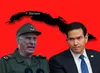
The Trump administration’s Cuba policy has escalated dramatically since January 2026. Executive Order 14404, signed May 1, imposed sweeping new sanctions targeting Cuba’s energy sector, military conglomerate GAESA, and ultimately Cuba’s state oil company CUPET — designated on June 11. The orders authorize secondary sanctions against foreign financial institutions that process transactions with designated entities, effectively deterring third-country suppliers from selling fuel to Cuba.
Since early January, the Trump administration has shut off the flow of oil to Cuba in an attempt to pressure the Communist-run island into making significant political and economic concessions.
Washington’s demands are documented: the release of political prisoners, movement toward political and economic liberalization, and concrete steps away from the one-party system that has governed Cuba since 1959.
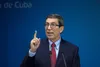
The Cuban government has rejected those terms. The government here doesn’t appear to be wanting to make major concessions. Such as move would be a betrayal of the revolution.
The result is a standoff in which Washington holds the leverage and Havana holds its position — while 10 million ordinary Cubans live without consistent electricity, refrigeration, running water, or reliable hospital services.
The Trump administration knows they have the Cubans exactly where they want them. It’s a waiting game. The longer they wait, the worse it gets, and they feel one way or another the Cuban government will come to them and agree to the terms they’ve set. And if not, they’ve threatened a military option.
The 176 Reforms — and What They Mean Without Power
The timing of Monday’s collapse carries a particular irony. Two weeks ago, Cuba’s National Assembly unanimously approved 176 economic reform measures in 24 hours — the most sweeping structural changes since the 1959 revolution, including private banks, market-based pricing, and the elimination of the libreta ration system. Prime Minister Manuel Marrero Cruz described the package as a “transformative window.”
But any real transformative window requires electricity to open. The private businesses the reforms authorize cannot operate without power. The banks cannot process transactions. The market pricing mechanisms cannot function in an economy where the fundamental inputs — fuel, electricity, refrigeration — are unavailable.
The 176 measures represent the Cuban government’s most significant acknowledgment that its economic model has failed. Monday's blackout represents the material reality within which any reform must actually operate.
What Next
Cuba has for months suffered from hours-long, and more recently, days-long power outages linked in part to a decrepit grid and a U.S.-imposed oil blockade that has cut off the island’s fuel supply. Previous total grid collapses in March took between 72 hours and several days to partially restore. There is no indication Monday's restoration will be faster.
The UN High Commissioner for Human Rights has called on Washington to lift the fuel blockade, stating that children are dying because doctors lack access to essential medical supplies. The Trump administration has disputed those claims.
The island’s 10 million residents are living in the space between those two positions — in the dark, in the summer heat, with no clear timeline for when the lights come back on.
Have a tip or story lead? Contact us at info@sociedadmedia.com
Sociedad Media is an independent digital publication covering Latin American politics, business, and security. Our reporting follows strict impartiality standards.