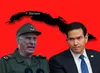
MIAMI — The Trump administration designated ten Cuban entities on Monday — targeting the paramilitary groups that physically suppress dissent on Cuba’s streets, the state entities that fund the regime’s operations, and a company that exports Cuban forced labor to Angola — in the sixth round of Cuba sanctions since May 1 and the most direct targeting yet of the regime’s domestic repression apparatus.
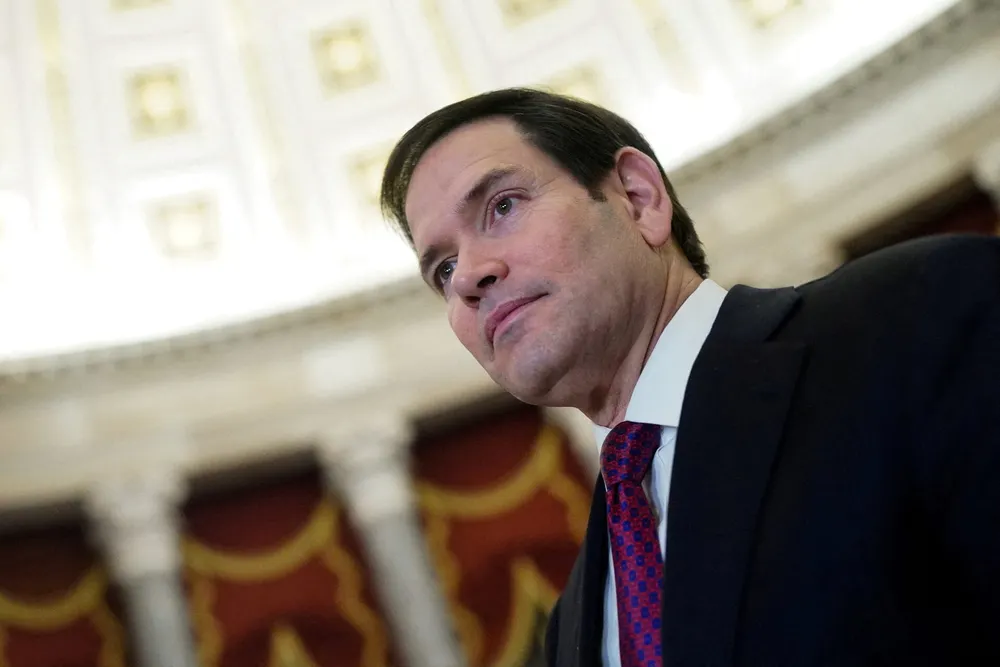
Secretary of State Marco Rubio announced the designations under Executive Order 14404, signed by President Trump on May 1.
“The United States will continue to use every tool at our disposal to both address the national security threats posed by the Cuban Communist regime, and to drive the economic and political reforms to give Cuba a better future,” Rubio said in a statement marking the fifth anniversary of the July 11, 2021 protests — the largest popular uprising in Cuba since the 1959 revolution, which the regime suppressed with mass arrests, beatings, and prosecutions that left between 1,281 and 1,306 political prisoners still behind bars.
The Repression Apparatus
Four of Monday’s ten designations target the organizations that carry out physical repression against Cuban civilians.
- The Milicias de Tropas Territoriales — a part-time civilian paramilitary force under the command of Cuba’s already-designated Ministry of the Revolutionary Armed Forces — was designated for its role in the regime's security apparatus. The Rapid Response Brigades — the armed civilian para-police groups organized and trained by the Cuban government that have been deployed against protesters throughout Cuba’s recent protest cycles, including the 11J demonstrations in 2021 — were formally designated for the first time.
- The Association of Combatants of the Cuban Revolution — a social and paramilitary organization that conducts surveillance on dissidents at the direction of Cuba’s Ministry of the Interior — was also designated. The three organizations together constitute the civilian enforcement arm of Cuba’s repression system: the groups that show up at protesters’ homes, beat demonstrators in the streets, and report on the activities of civil society to the security services.
The Revenue Network
The remaining six designations target the financial and logistical infrastructure through which the Cuban regime generates and moves money.
- Enetec S.A. and Coreydan S.A. — both designated for operating in Cuba’s energy sector — handle the import and export of fuels and lubricants, directly relevant to the island's catastrophic ongoing fuel crisis. Cuba’s fourth islandwide blackout of 2026 struck on July 7. Both companies were involved in fuel logistics at a moment when Cuba's grid has collapsed entirely four times in a single year.
- Grupo Empresarial de Comercio Exterior (GECOMEX) — which manages Cuba’s foreign trade, handling a significant share of the island’s imports and exports — was designated alongside Caudal S.A., a state-owned insurance and financial services entity, and Grupo Empresarial de Transporte Marítimo Portuario (GEMAR), a state maritime transport company with a strong presence in Cuba's port sector.
- Cuba’s Ministry of Tourism (MINTUR) — the largest single player in the tourism sector outside of GAESA — was designated for the first time, a move that significantly expands sanctions risk for foreign hotel operators, airlines, and travel companies with active Cuban tourism business. Any foreign entity that continues providing services to MINTUR now faces potential U.S. secondary sanctions exposure.
- The most unusual designation is Corporación Antillana Exportadora (ANTEX S.A.) — a GAESA subsidiary that manages the export of Cuban forced labor to Angola. The designation puts on record, for the first time in this sanctions campaign, Washington’s explicit characterization of Cuba’s overseas labor export system as a component of the regime’s malign international activities rather than a conventional labor arrangement.
The Broader Picture
Monday’s designations are the sixth round of Cuba sanctions since May 1, when Trump signed Executive Order 14404 establishing the current legal framework.
The cumulative target list now includes GAESA and its principal subsidiaries, Díaz-Canel and Castro family members, Cuba’s oil company CUPET, the Ministry of the Interior, the Ministry of the Revolutionary Armed Forces, the Ministry of Tourism, the Rapid Response Brigades, and now the island’s foreign labor export operation.
The regime formally accepted $100 million in U.S. humanitarian aid distributed through the Catholic Church and independent NGOs on July 3 — a narrow opening in an otherwise fully adversarial relationship.
Rubio’s July 11 statement simultaneously announced that Washington had extended an offer of broader economic aid and reconstruction assistance in exchange for genuine political reforms — terms the Cuban government has so far declined to accept.
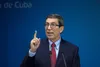
Cuba’s Foreign Affairs Minister Bruno Rodríguez has called Rubio “dishonest and mendacious” and rejected the sanctions as collective punishment of the Cuban people. The government has maintained that no genuine reform process can begin under coercion.
Have a tip or story lead? Contact the outlet at info@sociedadmedia.com
Sociedad Media is an independent digital news publication covering the latest news & developments across Latin America for Miami’s English-speaking Latino community.