

CARACAS, VENEZUELA — Venezuela’s telecommunications regulator ordered internet providers on Thursday, to restore access to a number of previously blocked national and international news websites — a move independent monitors confirmed applies to at least 10 specific outlets, even as most of the country’s broader web-blocking regime reportedly remains in place.
The National Telecommunications Commission (Conatel) said in a statement that it had notified internet service providers operating in Venezuela to technically enable domains for “various national and international news portals” whose access had been restricted.
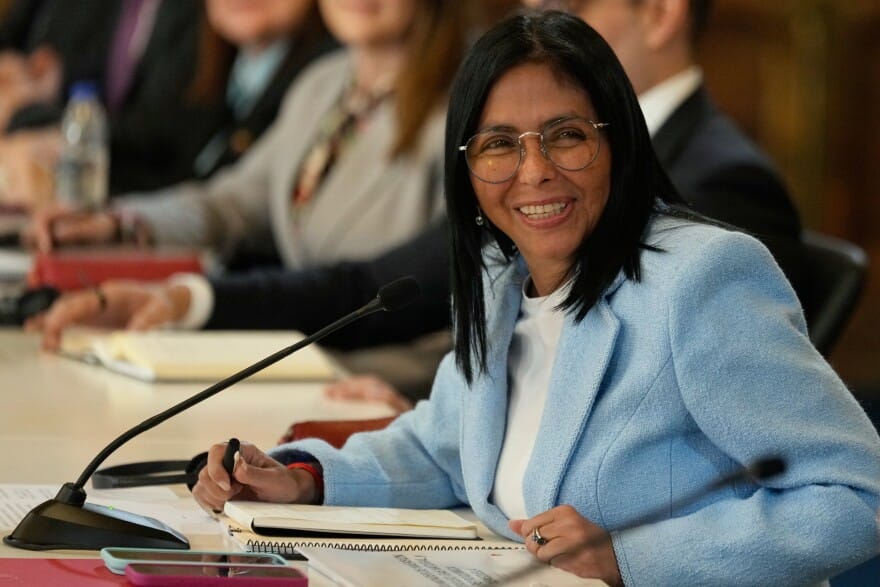
The regulator said the action was carried out “in compliance with instructions issued by the presidency of the republic” — and confirmed the order came directly from acting President Delcy Rodríguez.
Conatel’s statement did not specify which outlets were included, nor whether restoration would apply uniformly across all internet providers and platforms.
The regulator closed its communiqué by reaffirming its “commitment to the regulation of the radio spectrum and the oversight of telecommunications,” pledging continued oversight of secure and orderly access to information services for the Venezuelan public.
Which Outlets Are Restored?
Independent verification filled in the gap Conatel’s own statement left open. According to checks carried out by the monitoring organization VE sin Filtro, at least 10 news portals had been unblocked across multiple internet providers, including:
- Cantv
- Movistar
- Digitel
- Alberto News
- Caraota Digital
- Crónica Uno
- EFE
- Efecto Cocuyo
- El Estímulo
- El Pitazo
- Monitoreamos
- Runrunes
- Revista Semana.
The Restoration’s Direct Trigger
Thursday’s order came two weeks after a meeting between representatives of independent media outlets and government officials, and followed a direct request from the Programa para la Paz y la Convivencia Democrática de Venezuela, which formally asked Rodríguez to lift restrictions on media domains specifically “in order to favor free expression.”
That sequence places Thursday’s action within the broader political dialogue process we’ve covered extensively in recent weeks, one that has so far produced concrete agreements on Venezuela’s Supreme Tribunal of Justice and prisoner releases, even as the question of actual elections remains absent from the table.
A Sharp Rebuttal From a Digital Rights Advocate
The announcement drew pointed skepticism from at least one prominent voice in Venezuela’s digital rights community. Andrés Azpúrua wrote on X:
“Conatel confirms its role as the censor of #internetVE, making clear that both Maduro and Delcy Rodríguez could always have lifted the blocks whenever they wanted.”
The comment underscores a central tension in how the restoration is being read: as a genuine, if partial, opening, or as confirmation that the blocking apparatus was a deliberate, controllable policy tool all along rather than a technical constraint.
Despite Thursday’s order, reporting on the restoration was explicit that the bulk of Venezuela’s web-blocking regime remains intact.
Venezuela has maintained a policy of selective blocking by DNS, HTTP/HTTPS, or IP address for years, with the specific restrictions varying by internet provider — a technically fragmented system that has made both the imposition and any lifting of blocks difficult to track comprehensively, and difficult for the government itself to reverse in a single, uniform action even if it wanted to.
Thursday’s move adds to a string of developments inside Venezuela’s ongoing dialogue and normalization process this September, including the resumption of formal talks between the government and the opposition delegation led by Dinorah Figuera, and separate high-profile U.S. legal actions touching Venezuela, including Alex Saab’s guilty plea in Miami and the FBI’s capture of its final Ten Most Wanted fugitive inside Venezuelan territory.
Taken together, the month has featured a mix of genuine institutional gestures from Rodríguez’s government and continued, unresolved scrutiny of Venezuela’s broader human rights and political conditions.
With most of Venezuela’s internet blocking infrastructure reportedly still active despite Thursday’s order, independent monitors like VE sin Filtro are likely to continue tracking which additional outlets, if any, gain restored access in the coming days and weeks.
Whether Thursday’s move represents the beginning of a broader rollback of Venezuela’s media restrictions, or a narrow, symbolic gesture tied specifically to the current dialogue process, will likely become clearer as monitoring organizations continue verifying which domains remain blocked across the country’s various internet providers.


