

The Colombian government said it will drop its bid to join the BRICS New Development Bank (NDB) on Wednesday, ending a process begun under former President Gustavo Petro. The Foreign Ministry, led by Omar Bula Escobar, said in a four-paragraph statement that the government “will not take actions aimed at the entry and accession of Colombia to the BRICS Group.”I t will not continue pending steps or open new talks with the bank.
The ministry gave no reasons and did not say whether the process could resume later. Colombia will keep working with other multilateral organizations and international partners to mobilize resources and technical assistance for its 2026–2030 National Development Plan.
Petro told Brazilian President Luiz Inácio Lula da Silva in January 2024 that he wanted Colombia to become a full BRICS member, but membership in the bloc never materialized.
On May 16, 2025, during a visit to Shanghai, he gave NDB president Dilma Rousseff a letter from then-Finance Minister Germán Ávila asking to join as a borrowing member. Then-Foreign Minister Laura Sarabia announced on June 19 that Colombia had been admitted.
On July 5, Rousseff confirmed the bank’s board had approved Colombia and Uzbekistan when Petro canceled his trip to Rio amid a diplomatic crisis with the United States. The same China trip included an agreement for Colombia to join the Belt and Road Initiative. Admission was not the same as membership.
The NDB, New Development Bank — a BRICS multilateral development bank — bank lists Colombia among five prospective members, who become members only after depositing an instrument of accession.
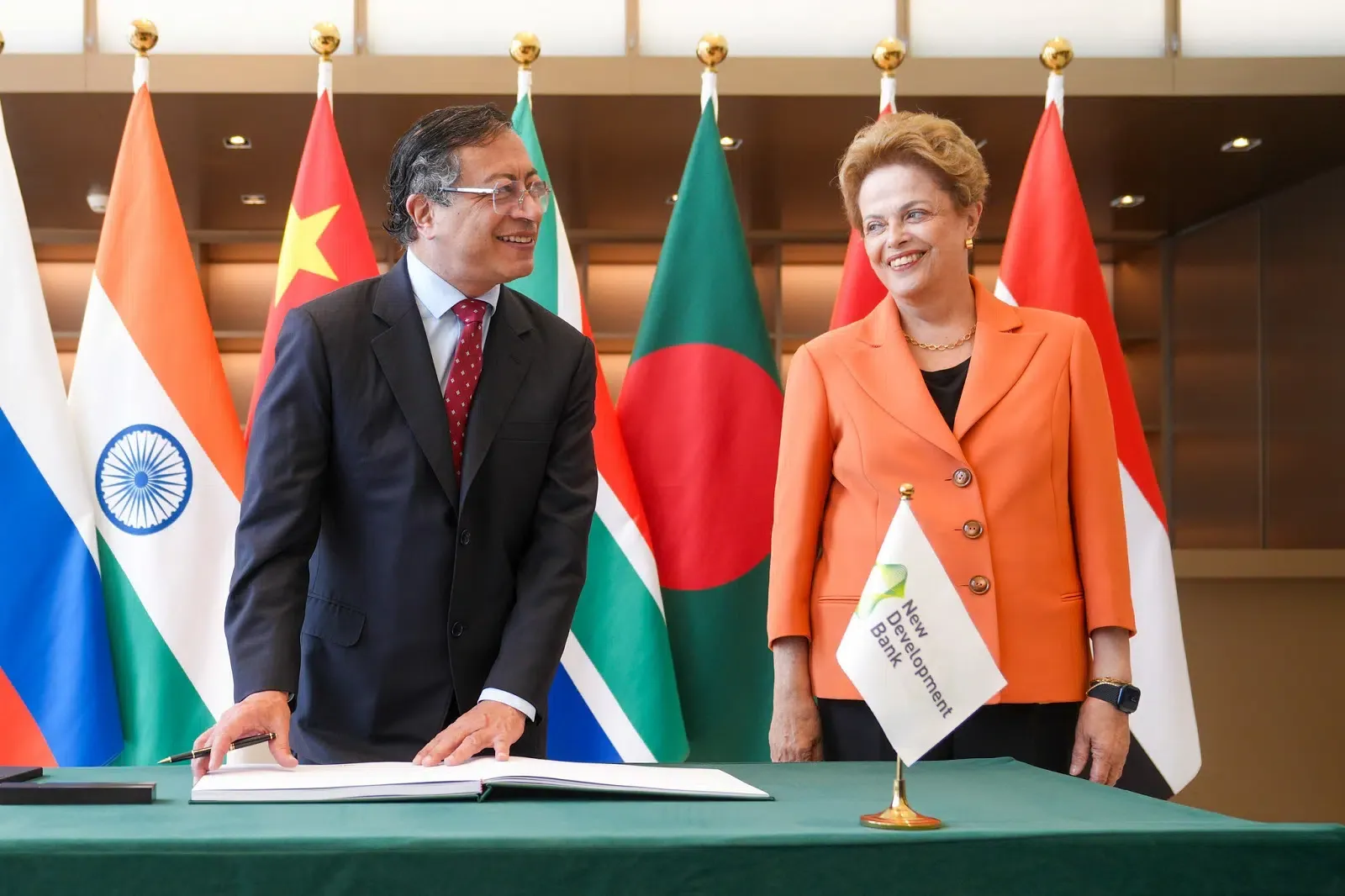
Colombia would have acquired 5,125 shares worth US$512.5 million: US$102.5 million in cash paid-in capital, and US$410 million in callable capital due only if the bank requested it. The first payment was due within six months of delivering the accession document to Brazil, which required congressional approval first.
Petro’s government at the time sought low-interest loans to fund infrastructure, renewable energy and health projects.
The Bill Never Advanced
The NDB agreement, signed in Fortaleza, Brazil, in 2014, is an international treaty, so membership required legislation. The Petro government filed the bill on November 25, 2025.
Favorable committee reports were filed in June 2026, but the bill never passed its first debate. The Chamber’s record shows it was archived when the legislative term ended, and that the government would have had to reintroduce it. With the new government withdrawing support, the bill as effectively dead.
President Abelardo De la Espriella, in office since August, is now seeking to rebuild relations with Washington, which deteriorated under Petro. His government has pledged to strengthen cooperation with the Trump administration and Bula said in July, before taking office, that the priority would be rebuilding ties with the United States and Israel, and he described relations with China as “pragmatic.”
On November 16, a group of former diplomats and ministers issued a statement in opposition to the recent efforts made by De la Espriella, citing “100 days of setbacks” in foreign policy, accusing the government of aligning Colombia with the agendas of Donald Trump and Benjamin Netanyahu.
El Tiempo noted that Petro’s 2025 application came hours after the United States said it “strongly” opposed multilateral financing for China-controlled companies in Colombia and the region.
#Atención | Gobierno nacional no adelantará el ingreso de Colombia al Grupo de los BRICS ni la adhesión al Nuevo Banco de Desarrollo. 👇🏻 pic.twitter.com/cZ2of2Pkg1
— Cancillería Colombia (@CancilleriaCol) November 25, 2026