


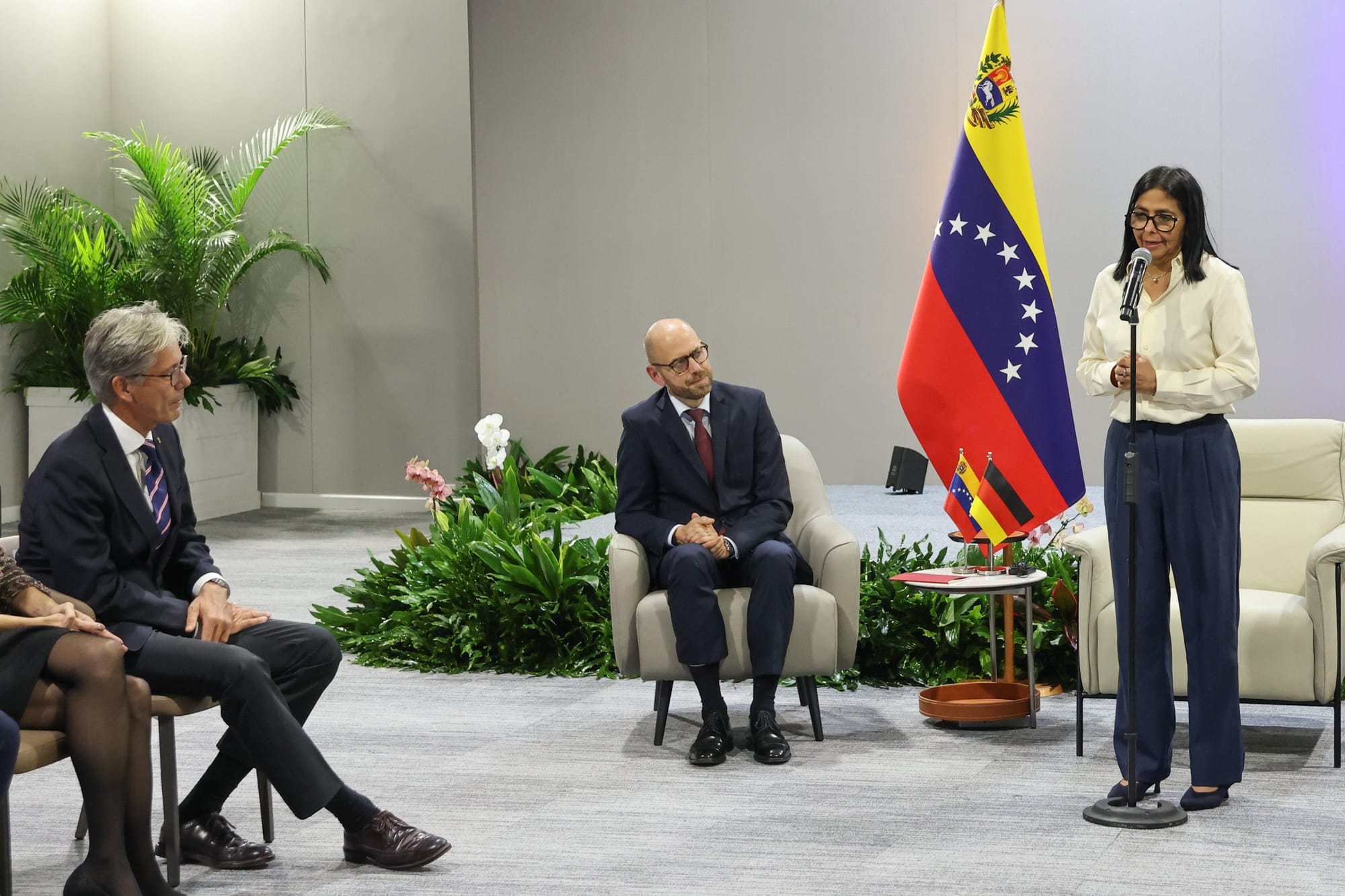
CARACAS — Venezuela and Siemens Energy signed two “start-up accords” in Caracas on Wednesday as Acting President Delcy Rodríguez finalized a pact with the European gas and power giant to restore the nation’s energy infrastructure.
One accord covers electricity for oil operations and was signed by Héctor Andrés Obregón, president of state oil company PDVSA, and Siemens Energy CEO Christian Bruch. The other covers repair and maintenance of the national grid and was signed by Electric Energy Minister Rolando Alcalá and Bruch.
Bruch said the company will contribute new technologies to strengthen power generation in the oil industry and the national grid. Rodríguez said Siemens will also help improve gas use in the hydrocarbons industry through more efficient technologies that reduce environmental impact.
Rodríguez is calling Wednesday’s signing “historic.”
Sanctions & Equipment
Rodríguez said sanctions blocked Siemens’ access to Venezuela and that they were eased this year. “In Siemens’ case we could not get access because of sanctions, and today we are making it possible,” she said. She said much of the thermoelectric fleet uses Siemens equipment and that work would start immediately.
Neither side has said which U.S. licenses or other measures allow the work.
Venezuela has had an electricity crisis for more than a decade, and blackouts worsened over the past year, sparking protests in several states. The opposition and experts blame corruption and poor maintenance, while the government points to sanctions, weather and alleged sabotage.
Experts estimate the country generates about 12,000 megawatts against demand of about 17,000. On November 19, Rodríguez enacted a reform of the electricity law that allows private and foreign participation in power generation and concessions of up to 25 years, and requires oil companies to secure continuous electricity for their operations.
A separate September agreement with U.S. company GE Vernova, backed by Washington, aims to add 5,000 megawatts of capacity within four years.
As Sociedad Media reported in April, technical teams from Siemens and General Electric visited Venezuela in March, inspected the Bajo Caroní hydroelectric complex and key thermoelectric plants, and delivered rehabilitation proposals by mid-April.
On April 19, Acting President Delcy Rodríguez announced her government was negotiating directly with both companies. At that stage, there was no signed contract, confirmed timeline or guaranteed outcome.
The two start-up accords signed in Caracas on Wednesday move Siemens Energy from those talks to a formal start of work.
The step is notable, but the open questions from April remain: no contract value, financing terms, payment details or deadlines have been disclosed, and it is unclear whether the accords are binding contracts.
A separate September agreement with U.S. company GE Vernova, backed by Washington, aims to add 5,000 megawatts of capacity within four years.
AFP noted the signing came three months after an agreement giving the United States control of 20% of Venezuela's oil reserves, whose development depends largely on reliable electricity.