

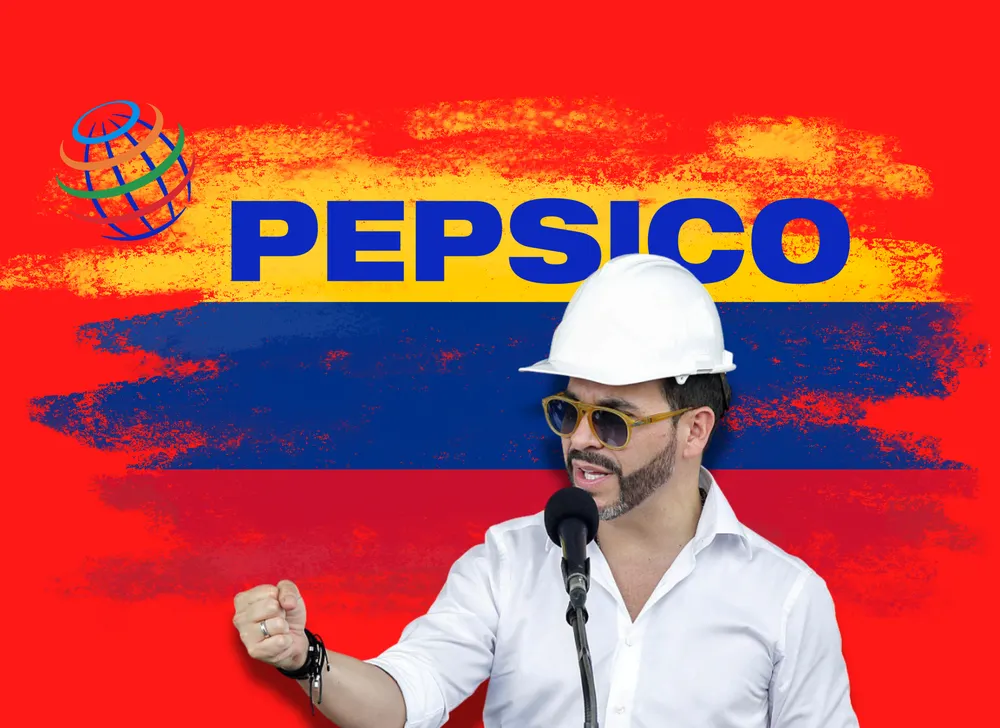
President Abelardo De La Espriella confirms that PepsiCo will invest $1 billion in Colombia over the next five years, marking one of the largest foreign corporate investment announcements of his young administration.
The investment, amounting to roughly $200 million annually, will focus on three core areas: expanding production capacity, modernizing operations, and strengthening the company’s distribution network across the country.
PepsiCo has operated in Colombia since 1975 and currently runs two production facilities, in Funza, Cundinamarca, and Guarne, Antioquia, alongside multiple distribution centers.
Colombia ranks as PepsiCo’s third-largest market in Latin America, trailing only Brazil and Mexico.
Beyond manufacturing, the announcement emphasized the investment’s reach into Colombia’s agricultural sector. PepsiCo is already the country’s largest industrial buyer of potatoes, purchasing roughly 84,000 tons annually, and its primary buyer of plantains, at 25,000 to 28,000 tons per year.
Under the new plan, the company says it will support more than 2,000 farmers, assist 2,200 rural women through productive and leadership training programs, and train 2,784 small retailers in commercial and digital skills — part of an effort to strengthen ties with the more than 400,000 small sales points nationwide that carry PepsiCo products.
De la Espriella framed the announcement as validation of his administration’s business climate, stating: “La confianza se demuestra invirtiendo” — confidence is demonstrated through investment. He added that the plan “promotes employment, supports more than 2,000 farmers and strengthens Colombian shopkeepers.”
The announcement comes as Colombia’s government works to attract foreign direct investment while separately pursuing support from the IMF for fiscal stabilization, positioning corporate commitments like PepsiCo’s as evidence the country remains an attractive destination for multinational capital even amid broader economic pressure.
Neither PepsiCo nor the government has yet detailed which specific regions will receive new plants or infrastructure, how many direct jobs the investment will create, or a year-by-year breakdown of spending — details that are likely to emerge as the plan moves from announcement to implementation.
🇨🇴🥤💸 | ANNOUNCEMENT/BUSINESS: President Abelardo De la Espriella confirms new deal with @PepsiCo to commit $1 Billion in investments to boost production in the country & boosting employment for 2,000 farmers & small-scale retailers.
— Sociedad Media (@sociedadmedia) September 30, 2026
📸 Getty Images pic.twitter.com/ycb4iU1QNy