

PARAGUAY — A single sentence about a war that ended 156 years ago has opened a real diplomatic rift between Brazil and Paraguay. Both chambers of Paraguay’s Congress have formally repudiated President Luiz Inácio Lula da Silva of Brazil, accusing him of distorting the history of the War of the Triple Alliance — one of the deadliest conflicts in South American history — to justify increased Brazilian military spending.
The Spark
Speaking Friday, July 25, during a visit to a factory operated by the defense company Avibras, Lula argued that Brazil must maintain its military capacity, telling the audience that his country loves peace but “cannot forget that, one good day, Paraguay decided to invade Brazil” — before extending the same framing to Argentina and Uruguay.
Lula’s comment was intended to justify increased investment in Brazilian defense capacity, but instead, detonated a political firestorm in neighboring Asunción.
Paraguay’s Response
By Wednesday, July 29, both chambers of Paraguay’s National Congress had acted. The Senate approved a declaration, introduced by opposition Senator Eduardo Nakayama, “energetically repudiating” Lula’s remarks, which it said “distort and unilaterally simplify the origin of the War of the Triple Alliance” and wrongly cast Paraguay as the war’s “exclusive aggressor,” while omitting the Brazilian Empire’s own invasion of Uruguay that preceded the broader conflict.
Opposition legislator Ignacio Iramain put the objection succinctly: “President Lula has the right to defend his country’s security, but he does not have the right to use the Paraguayan tragedy to justify weapons.”
The Chamber of Deputies passed its own Declaration No. 1836, stating that Lula’s remarks “distort and minimize the historical dimension of the War of the Triple Alliance,” disregard “the complexity of the conflict’s origins,” and omit “the profound human suffering endured by the Paraguayan people.”
The declaration went further than words alone: it exhorted Paraguay’s executive branch to pursue diplomatic efforts to secure the return of the “Cañón Cristiano” and other war trophies currently held by Brazil — a demand with real, tangible stakes rather than a purely symbolic gesture.
The Cañón Cristiano
The cannon at the center of the dispute is a specific and deeply symbolic artifact: a piece of artillery cast in 1866, during the war itself, from church bells donated by the Paraguayan people to help defend the country.
It remains today in Rio de Janeiro’s National Historical Museum. Paraguay’s Senate went a step further than the Deputies, voting to legally declare the cannon “inalienable,” formally shielding the relic under Paraguayan law as grounds to permanently demand its restitution from Brazil.
The Senate separately gave preliminary approval to a bill establishing August 12 as Paraguay’s National Day of Commemoration of the “Genocide of the Río de la Plata” — a bill now headed to the Chamber of Deputies for further consideration.
The War Behind the Dispute
The War of the Triple Alliance (1864-1870) pitted Paraguay against the allied forces of Brazil, Argentina, and Uruguay in what remains, by most historical accounts, the bloodiest interstate conflict in South American history. Paraguay’s Senate declaration cited losses of 50% to 60% of the country’s population — a demographic catastrophe with essentially no parallel elsewhere in the region’s history — alongside lasting territorial losses, a prolonged foreign occupation, and institutional damage that shaped Paraguayan politics and identity for generations afterward.
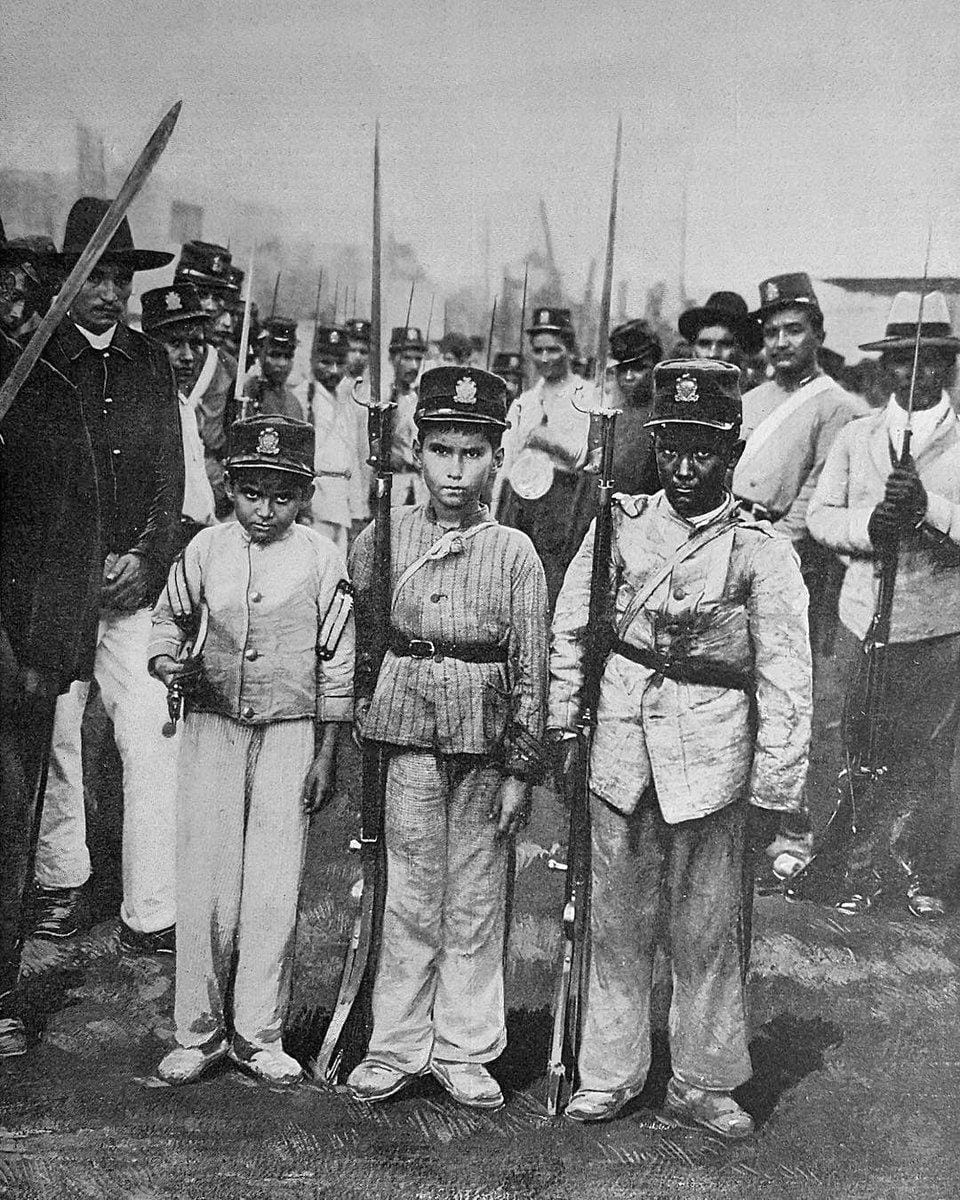
At the war’s outset, Paraguay under President Francisco Solano López possessed one of the largest and most modernized armies in South America relative to its population, a fact López’s government had invested in heavily in the years before the conflict. By the war’s end, that army, and a substantial share of the country’s adult male population, had been effectively destroyed; some demographic estimates suggest the postwar population skewed so heavily female that it took Paraguay generations to recover economically and demographically.
The war also cost Paraguay significant territory, ceded to Brazil and Argentina in its aftermath, and subjected the country to foreign military occupation that shaped its politics for years afterward.
That scale of loss is central to why Paraguayan legislators describe the conflict not merely as a war but, in the language of the pending August 12 commemoration bill, a “genocide.”
The war’s origins remain genuinely, and legitimately, contested among historians, which is precisely why Lula’s off-the-cuff framing struck such a nerve. While the immediate trigger is generally traced to Paraguay’s invasion of Brazilian territory (and, before that, Argentina), a fuller accounting includes the Brazilian Empire’s own prior invasion of Uruguay, regional imperial rivalries over control of the Río de la Plata basin and its river trade routes, and the complex web of alliances and interests among Brazil, Argentina, and Uruguay’s own competing political factions, particularly the rivalry between Uruguay’s Blanco and Colorado parties that drew the larger powers into the conflict in the first place.
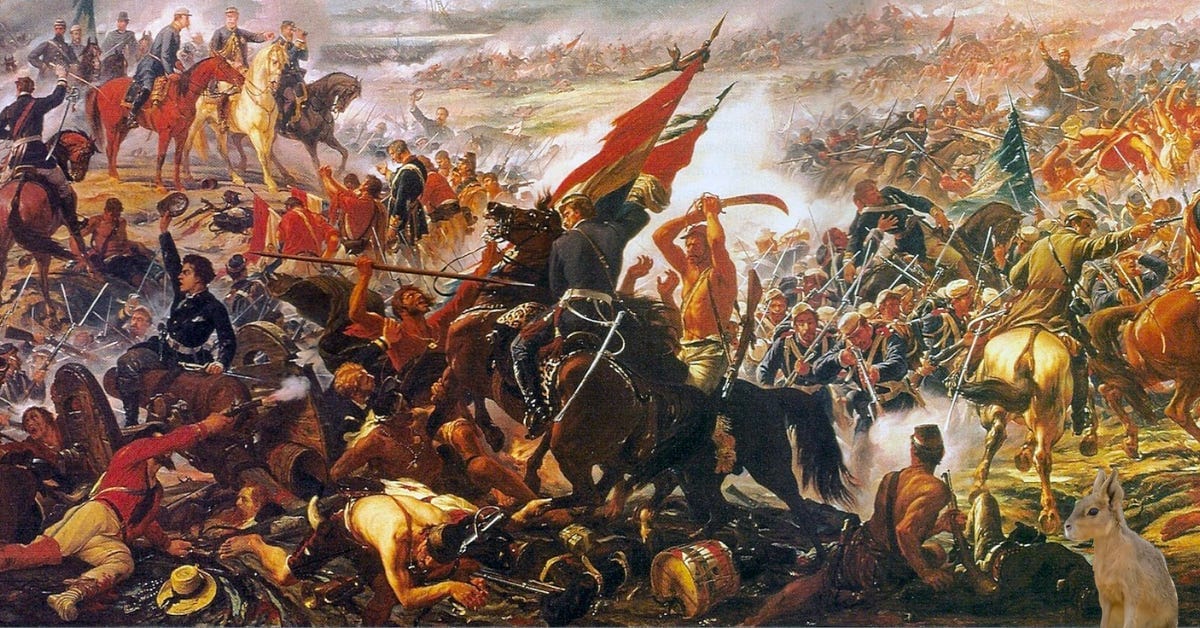
Paraguay’s legislators argue that reducing this into a simple story of unprovoked Paraguayan aggression — deployed, on top of that, as a rhetorical device to justify buying more weapons — trivializes a national trauma that fundamentally reshaped the country’s demographic makeup, its borders, and its place in regional politics for the century and a half since.
A Pattern Beyond This Single Remark
Paraguayan legislators have also framed the moment as part of a broader, ongoing grievance about how the war’s history gets told. The declarations call on Brazilian authorities to adopt what senators described as “respectful, balanced, and truthful treatment of shared history,” explicitly noting that Paraguay counts among “the most peaceful countries” in the Americas today — a framing aimed directly at rebutting any implication that Paraguay carries some enduring aggressive character rooted in the 1864 war.
What This Means for Brazil-Paraguay Relations
The dispute lands at a moment when Brazil is already navigating an unusually turbulent stretch of regional diplomacy — including a separate, ongoing rupture with Argentina after President Javier Milei’s remarks at Flávio Bolsonaro’s campaign launch, which prompted Brazil to recall its own ambassador from Buenos Aires.
A parallel rift with Paraguay, even one rooted in historical memory rather than current politics, adds friction to Brazil’s regional relationships at a moment when Lula is simultaneously managing a tightly contested reelection campaign against Bolsonaro's son ahead of October’s vote.
For Paraguay, a smaller country whose modern political identity was profoundly shaped by the near-annihilation it suffered in the 19th century, the episode underscores how differently the war is remembered depending on which side of the old alliance a country sat on.
For Brazil, it’s a reminder that offhand historical references — even ones deployed purely for a domestic policy argument about defense spending — carry real diplomatic weight when used to describe a war whose memory remains this raw for a neighboring country.
Whether the dispute produces any actual diplomatic consequence — the return of the Cañón Cristiano, a formal Brazilian response, or simply a cooling period before both governments move on — remains to be seen, though Paraguay’s Congress has now put both a formal historical objection and a concrete restitution demand on the record.
Sociedad Media is dedicated to reporting on any ongoing and current diplomatic disputes with origins that date back decades, and even centuries, in an effort to retain a truthful account of the experiences of one of the most unique regions in the world.
Subscribe to our newsletters to stay informed of the latest events across Latin America


