

MIAMI — Every political shift in Latin America eventually shows up in Miami. The money moves first, then the people, then the institutions that serve them both. The right-wing turn now sweeping the region — Argentina, Chile, Ecuador, and potentially Colombia — is producing the most significant reallocation of Latin American capital in a decade, and Miami is the destination of choice.
The numbers are not subtle. Latin American buyers acquired 49% of all new luxury units in South Florida through June 2025, according to the Miami Association of Realtors. Of those buyers, 68% paid entirely in cash — evidence of high liquidity and an explicit intention to protect savings from political and economic instability in their home countries. Ninety-one percent acquired properties for investment or second-home purposes, not primary residence.
The flow of wealth into private banking offices in Miami grew by 10% annually from Mexico, Argentina, Chile, and Peru, as high-net-worth clients sought security amid political instability. Brickell, Miami’s post, foreign national-friendly section, has received a massive influx of Latin American technology startups valued in the millions and investment bankers from across the region.
The Political Triggers
One of the key factors driving wealth migration from Latin America to Miami is regional instability and political shifts. The rise of left-leaning governments sparked capital flight from nations including Chile, Peru, and Colombia as investors sought safer havens for their wealth. Now, with the political pendulum swinging back — Chile’s Boric replaced by Kast, Ecuador firmly under Noboa, Argentina under Milei, and Colombia potentially about to elect de la Espriella — the dynamic is evolving.
Capital that fled left-wing governments does not simply return when those governments fall. It stays in Miami. It builds institutions, employs professionals, and anchors itself in the city’s financial infrastructure. The right-wing turn is not reversing the capital migration — it is changing its character, from flight capital seeking safety to investment capital seeking returns in a region newly friendly to private enterprise as the capital of Latin America.
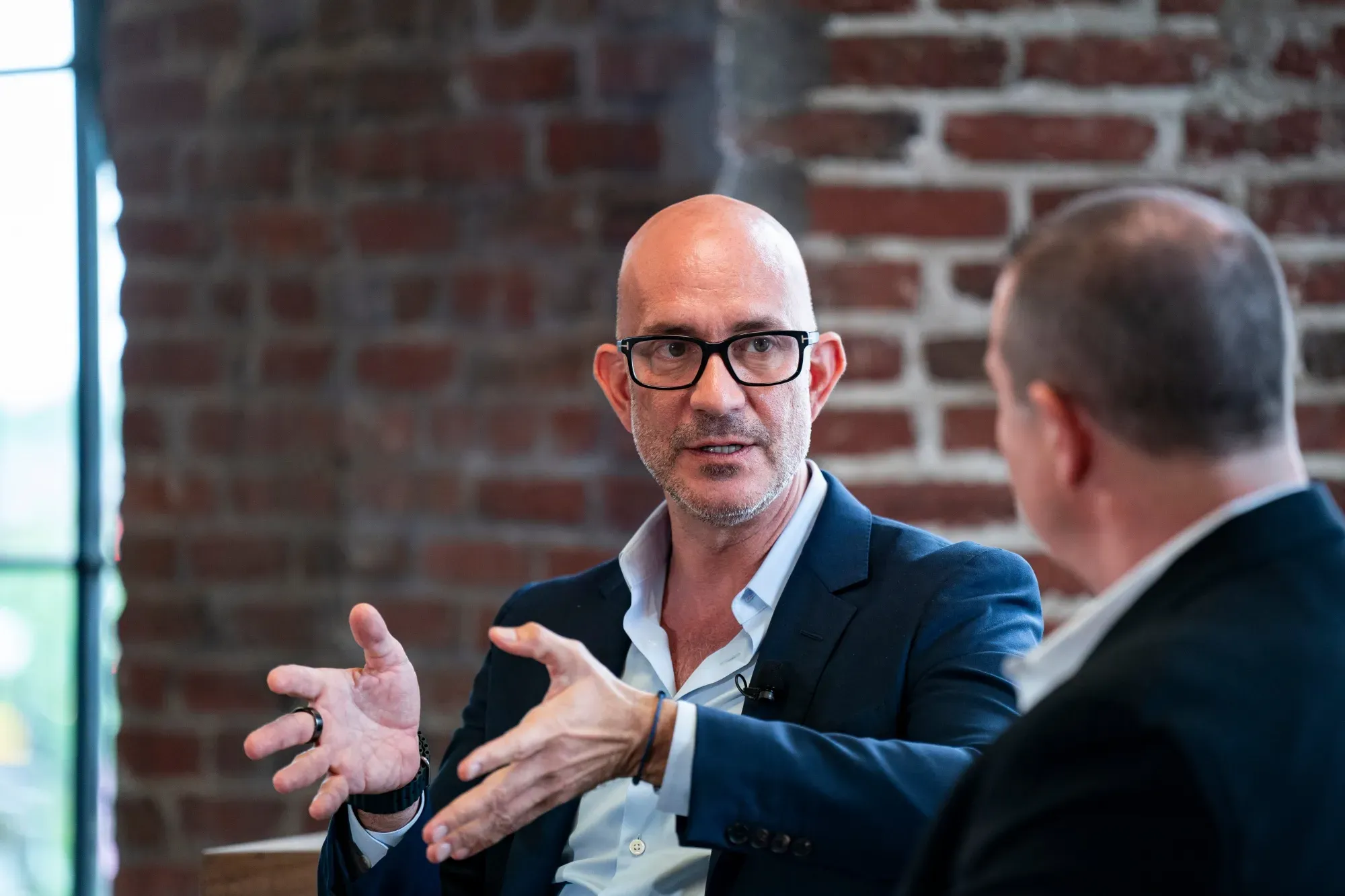
Global investors, policymakers, and business leaders who gathered in Miami for the FII Priority Summit in March reached one central conclusion: Latin America is playing a key role in the reconfiguration of global capital flows, with nearshoring, infrastructure, energy, and human capital identified as the primary long-term drivers.
“This is the moment to move from fragmentation to alignment, from hesitation to action,” said Richard Attias, Chairman of the FII Institute, at the summit’s opening. “The new Latin American order will not be defined by speeches, but by decisions, alliances, and investment.”
Miami as the Infrastructure of Latin American Capital
Miami’s emergence as the financial capital of Latin America is not an accident of geography. It is the result of three decades of deliberate institutional buildout — private banks, law firms, family offices, and now fintech platforms that have positioned the city as the operating system through which Latin American capital moves, invests, and protects itself.
JPMorgan’s Miami team, dedicated to clients from Argentina, Chile, and Peru, has expanded by 10%, serving Latin American clients with $10 million or more to invest. Andbank Miami — one of the key private banking players in the city’s Latin American wealth management corridor — has built its Brickell presence specifically to serve the high-net-worth client base flowing northward from the region.
“I do not see it so much as capital flight, but rather a lack of absorption capacity in Mexico and Latin America because economies are not growing at the same pace as fortunes,” said one Miami-based wealth executive. “The problem lies in the scarcity of productive projects and infrastructure capable of channeling large private capital surpluses with sufficiently attractive returns and long-term stability. This triggers the need to seek jurisdictions and locations capable of absorbing that productive capital.”
The infrastructure absorbing that capital in Miami is increasingly sophisticated. dLocal, the fintech platform that processes cross-border payments across Latin America, operates from Miami’s technology corridor. Securitize, the digital asset securities platform, has positioned itself at the intersection of Miami’s fintech ecosystem and the region’s growing appetite for tokenized investment products.
The Leste Group, the Brazilian alternative asset manager, has built its U.S. operations in Brickell — managing Latin American institutional capital from the city that has become the region’s de facto financial capital.
Among the key findings presented at the FII Priority Summit was a projection that tokenized assets could reach up to $30 trillion by 2030 — a figure that positions Miami’s fintech infrastructure at the center of what could be the region’s most significant financial transformation since dollarization.
The Airport That Proves It
The physical infrastructure of Miami’s Latin American dominance is visible from the air. Miami International Airport offers more flights to Latin America and the Caribbean than any other U.S. airport. It is the leading economic engine for Miami-Dade County and the state of Florida, generating business revenue of $181 billion and accounting for approximately 60% of all international visitors to Florida annually.
MIA’s cargo growth has accelerated into 2026, with freight shipments increasing 15.7% over the prior year in the first quarter alone — a figure that reflects not just trade volume but the degree to which Miami has become the logistics hub through which Latin American commerce flows.
“Most flights from Europeans traveling to Latin America pass through Miami,” noted Manfredi Lefebvre d’Ovidio, Chairman of the World Travel and Tourism Council, at the FII Summit.
“Global public-private collaboration is essential for Latin America’s success, and Miami is proof of that.”
What the Right-Wing Turn Means for the Next Chapter
The political realignment underway across South America is producing a new kind of Latin American presence in Miami — not just wealthy individuals seeking safety, but executives and investors positioning for the investment opportunities that right-wing, pro-market governments are expected to open.
A de la Espriella victory in Colombia on June 21 would represent the most significant single addition to this dynamic — bringing the fourth-largest Latin American economy into alignment with the pro-investment bloc and opening Colombia’s energy, mining, and infrastructure sectors to the kind of foreign capital that flows through Miami’s financial ecosystem.
The pattern is consistent across every country where the right has won. Doral hosts more than 150 corporate headquarters and thousands of small and medium-sized enterprises founded by wealth migrants who have replicated their successful Latin American business models on U.S. soil.
Brickell hosts their bankers. Coral Gables hosts their families. Miami International Airport connects them to the region they left — and to the opportunities they are now positioned to capture from a distance.
The right-wing turn is not ending Latin America’s relationship with Miami. It is deepening it — shifting the city’s role from safe haven to investment platform, from refuge to headquarters.
The money has always known where to go. In 2026, it is moving faster than ever.
Have a tip or story lead? Contact us at info@sociedadmedia.com
Sociedad Media will continue to cover the evolving landscape of the Miami-Latin America relationship, and the impacts of politics, trade, and culture.
Sociedad Media is a Miami-based independent digital publication covering news & developments across Latin America. Our reporting follows strict impartiality standards.


