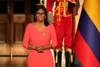



CARACAS — Ten days after Venezuela’s worst earthquake in 125 years killed at least 2,295 people, acting President Delcy Rodríguez held a press conference for foreign journalists and delivered a fiery defense of her government’s response — blaming the private sector, attacking the media, and rejecting the account of virtually every survivor who has spoken publicly since the disaster.
Rodríguez deflected accusations about the scale of the collapse, claiming that about 80% of the collapsed buildings were privately developed, but did not provide evidence that documents her claims.
In La Guaira, several of Chávez’s signature social housing projects were razed by the earthquakes, prompting suspicions of flawed construction. The Chavista and post-Chavista government built tens of thousands of units across Venezuela under the Gran Misión Vivienda program — housing projects that residents and engineers have long criticized for cutting corners on seismic reinforcement. By attributing the collapses to private construction, Rodríguez was deflecting scrutiny from a state housing legacy that predates her government but defines the built environment of the neighborhoods most devastated by the earthquakes.
Pressed on reports that residents were on their own in the first 48 hours after the quakes, with heavy machinery and official aid scarce, Rodríguez acknowledged that “naturally, at the sites where the building collapsed, the first people to arrive were survivors of the collapse itself, relatives and neighbors.”
That acknowledgment — offered as if it were routine — is the core of what survivors are contesting.
Volunteers, many of them residents of La Guaira, began their own rescue efforts to retrieve their neighbours from collapsed apartment buildings. Firefighters, the military and police civil protection were only present in limited areas one day after the earthquake.
Rodríguez railed against what she called “narratives manufactured in propaganda laboratories” and claimed that a day after the quakes, “We had already mobilized the full capacity of the Venezuelan state together with the private sector.” She told journalists: “We did not wait one day, two days or three days. We activated immediately.”
The survivors’ accounts, documented by Al Jazeera, AP, and multiple international outlets, tell a different story. “For me, those were the longest and most traumatic seconds of my life. From where I was standing, I could see the buildings collapsing one after another. The noise was unlike anything I’d ever heard before,” one survivor told Al Jazeera.
“It’s been a very hard blow for all of us, seeing so much death. Our neighbours — practically everyone we knew — died, and every time I pick up the phone, I find out that a longtime client or an acquaintance has died.”
The Structural Stakes
The disasters exposed Rodríguez’s weak grasp on power. The earthquake response has become the first serious test of the U.S.-backed interim government’s capacity to govern — and the verdict from those who lived through it has been damaging.
Any rebuilding effort will have to contend with Venezuela’s structural failures. The country is currently attempting the largest sovereign debt restructuring in modern history. The country has some $240 billion in liabilities; its annual GDP has shrunk from $370 billion in 2012 to roughly $111 billion in 2026, the biggest economic contraction during peacetime in modern history.
A rapid satellite assessment of the UNDP estimated direct physical damage of the earthquakes at $6.7 billion.
The 80% figure — unsubstantiated, delivered without evidence at a press conference — is the kind of claim that circulates widely in the immediate aftermath of a disaster and then quietly disappears as engineers complete their structural assessments. What those assessments will say about Venezuela’s state-built housing is a question the Rodríguez government has every institutional incentive to ensure receives as little attention as possible.