

Here is your Thursday Sociedad Media Now newsletter featuring Brazil’s changing auto industry, new developments in Bolivia’s political crisis, and the start of U.S. military strikes on Central American soil

Chinese Electric Cars Are Taking Over Brazil’s Streets
BRAZIL — Chinese electric cars are taking over Brazil’s streets — and the numbers tell the story.
The Geely EX2 ranked second in Brazilian EV sales just 16 working days after its November 2025 launch, manufactured locally at Renault do Brasil’s Ayrton Senna plant under a partnership in which Geely acquired a 26.4% stake in Renault’s Brazilian division. BYD is building cars in São Paulo. BAIC is preparing its market entry. Brazil imposed no tariffs — while the United States imposed 100% and the EU added significant duties.
For the price of one average American car, you can buy five Chinese EVs. The Chinese automotive offensive is playing out in Latin America’s largest market, one affordable electric car at a time, and Detroit is watching.
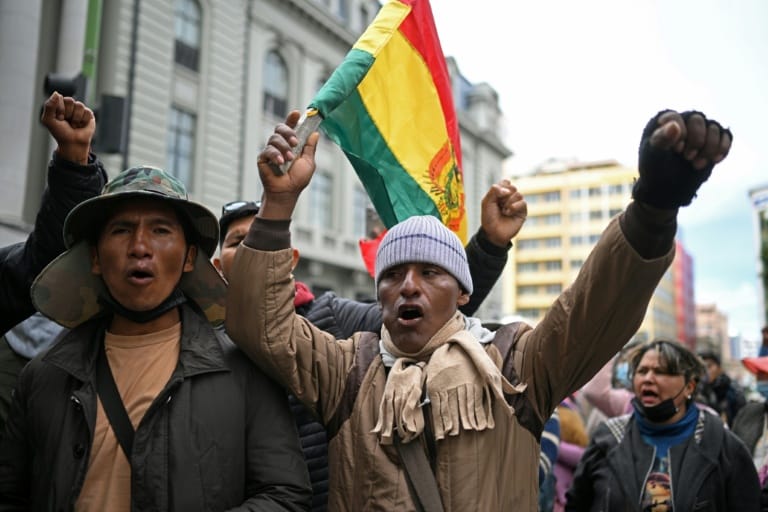
Bolivia Congress Clears Way for Troops to Restore Order — Paz Says Country Is at Breaking Point
LA PAZ — Bolivia’s political crisis crossed a constitutional threshold this week. By a more than two-thirds majority, Congress voted to eliminate the rule restricting President Paz’s ability to invoke emergency measures — clearing the way for him to deploy the army against protesters who have besieged La Paz for four consecutive weeks.
Four people are dead, 90 have been arrested, a cabinet minister was ambushed and rescued on a highway, and food, fuel, and medicine are running critically low in the capital. Paz says the country is at breaking point.
Evo Morales — wanted on trafficking charges — is giving press interviews from hiding and leading marches into the city. The army has been authorized. It has not yet been deployed. What happens next will define whether Bolivia’s democracy survives its worst crisis in years.

Guatemala Welcomes U.S. Strikes on Drug Organizations as Washington Moves Into Central America
GUATEMALA CITY — Washington secures its first agreement for joint military airstrikes on Central American soil today — and immediately began pushing for more. During a call with Defense Secretary Hegseth, Guatemalan President Arévalo agreed to allow U.S. forces to strike cartel infrastructure, logistics hubs, and financial pipelines on Guatemalan territory, with operations expected to begin as early as June.
The agreement was reached aboard the USS Nimitz — the same carrier strike group operating in the Caribbean as part of Washington’s Cuba pressure campaign.
Washington is already pushing Honduras to accept the same deal. The stated goal is to normalize U.S. military presence across Central America and use that presence to apply leverage on Mexico, whose president has said she supports intelligence sharing but will not allow U.S. military operations on Mexican soil.


