

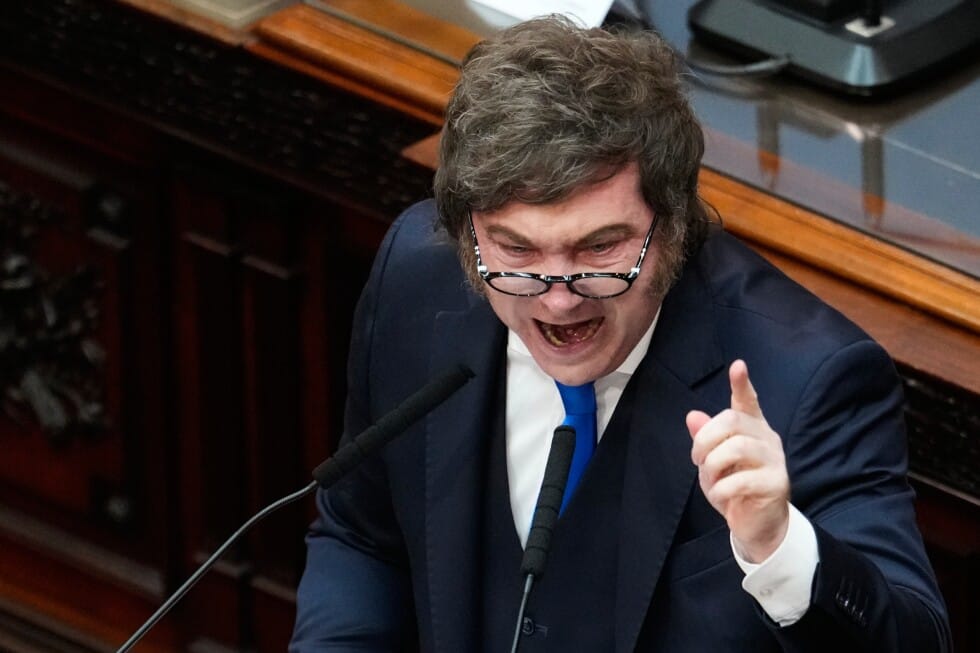
Argentine President Javier Milei opened his country’s legislative calendar on Sunday with a 90-minute address before Congress that resembled less a policy speech than a declaration of war against his political opposition.
Emboldened by a string of recent legislative victories, Milei used Argentina’s annual State of the Nation address as a pulpit to verbally extinguish opposition lawmakers, labeling his rivals “parasites,” “delinquents,” “thieves,” and “murderers,” whom he blamed for the country’s chronic economic crises.
The chamber descended into a shouting match, with opposition deputies hissing and heckling from the floor. One lawmaker held up a sign reading, in Spanish, “Milei equals war.”
In an atmosphere more akin to a football match than a formal address, Milei sought to frame his administration as heroic, claiming it had delivered “the greatest transformation in history.”
“Two years ago, we were trapped with no way out in an eternal present that destroyed our faith and that of our children,” he told lawmakers, “and today we know there is a way forward.”
A String of Victories
Milei has reason to feel emboldened. Just two days before the speech, Argentina’s Senate approved his flagship labor reform bill with 42 votes in favor, handing him one of his most significant legislative wins since taking office.
The so-called Labour Modernisation Law extends working days of up to 12 hours (previously outlawed), reduces severance pay, limits the right to strike, and lowers employer taxes.
The speech came on the heels of additional legislative victories, including a new juvenile criminal justice code, the landmark Mercosur-European Union trade agreement, which passed the Senate last week, and initial approval of a glacier protection law. “This has been one of the most productive extraordinary sessions in our history, fulfilling all the campaign promises made in 2025,” Milei declared.
Those wins, however, came with significant resistance among unionists.
The labor reform bill rallied thousands of protesters onto the streets over two weeks, with the nation’s largest labor unions declaring a nationwide strike in mid-February.
Opposition groups condemn what they call a rollback of workers’ rights.
Critics pointed to the closure of more than 21,000 companies and the loss of an estimated 300,000 jobs since Milei took office as evidence that his austerity agenda, while curbing inflation, is hollowing out Argentina’s economy.
On the economic front, however, successes are piling up since Milei assumed office in late 2023, when the Argentine president inherited what the IMF called the world's highest inflation rate.
Annual inflation dropped from 211% in 2023 to 43.5% by mid-2025, with monthly consumer prices hitting just 1.5% in May 2025—the lowest reading in five years.
Argentina eliminated its fiscal deficit for the first time in 123 years by slashing government spending across subsidies, public sector payrolls, and capital expenditures. The country also posted a record $18.9 billion trade surplus in 2024, according to Latin News.
On poverty, the picture is mixed but trending in the right direction. The poverty rate peaked at 52.9% in the first half of 2024 before falling sharply, with UNICEF noting that 1.7 million children were lifted out of poverty since Milei took office.
By the first quarter of 2025, poverty stood at approximately 31.7%—a level not recorded since 2018, per Al Jazeera.
The IMF made headlines recently after projecting that Argentina’s economy is estimated to grow 4.5% in 2025—the highest growth rate in Latin America—while forecasts for 2026 predict inflation will decline further to an average of 20%.
Targeting the Opposition—and Kirchnerism
Milei reserved some of his harshest language for Argentina’s Peronist establishment and former leftist President Cristina Fernández de Kirchner, who is currently imprisoned on corruption charges.
Turning his anger on businessmen who had benefited from state subsidies under previous governments, Milei declared: “The subsidised national industry makes it clear that they are accomplices to looting.” He added that he had “no qualms” about labeling such figures as “thieves.”
“Privileged businessmen cannot buy privileges that corrupt politicians like you do not put up for sale,” he said, pointing directly at opposition lawmakers. “The greatest responsibility falls on politicians.”
The “Special Relationship”
Beyond the volley of attacks, Milei used the speech to cement his international standing—specifically his alliance with the conservative Trump administration in Washington.
He emphasized the need to maintain alignment with the United States while highlighting the financial support provided by Washington during the past year, describing Trump as a “key ally,” referencing the “special relationship” between the two leaders.
President Milei closed with a slogan borrowed directly from the U.S. president: “We have to create the century of the Americas. Make America Great Again.”
Milei also argued that Argentina’s strategic geography and vast reserves of critical minerals position it as indispensable to the Western economic order.
“We are a natural link in the West’s strategic value chain,” boasted Milei.
Puerto Rican Residents Fear Deployments to Iran Conflict
MIAMI – Two months after the U.S. raid in Caracas that resulted in the capture of Nicolás Maduro, the United States and Israel have launched massive strikes on Iran, and Puerto Ricans on the island are asking whether their sons and daughters will be next to go.
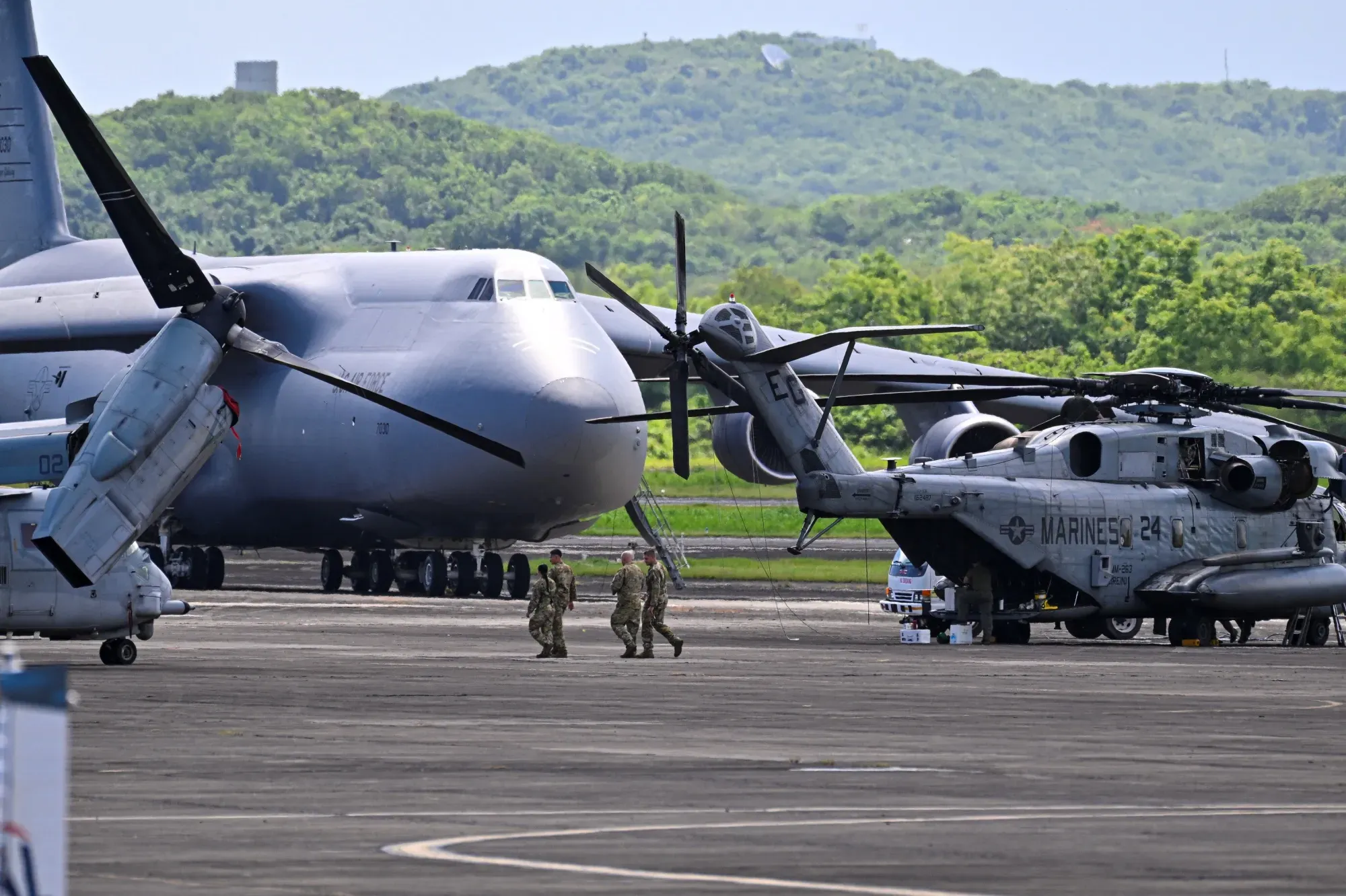
President Trump confirmed on Saturday that the U.S. military had begun major combat operations to reduce Iran’s nuclear development program, triggering fears among Puerto Ricans that units currently stationed on the island will be ordered to deploy to the new combat theater in the Middle East, following in the footsteps of their Puerto Rican forebears.
Puerto Rico has served as Washington’s preferred Caribbean launch pad since the mid-20th century, with thousands of Puerto Ricans serving on a mass scale on the frontlines of every U.S.-involved conflict since the First World War.
This week, however, Puerto Rican influencers and commentators are fueling speculation that Puerto Rican Reservists, active duty personnel from the U.S. Army, the Marines, and the Air Force stationed at Fort Buchanan, could potentially be mobilized to support ongoing combat operations in the Middle East.
Retired Lieutenant Colonel Carlos Cuebas, the official spokesperson for the Reserve units in Puerto Rico, dismissed the speculation, stating: “To date, our mobilization and training directorate has not received any alert to mobilize any units because of what is happening in the Middle East,” according to local Puerto Rican outlet, El Nuevo Día.
Cuebas instead encouraged the island’s relatives of the 15,000 military personnel stationed at the base, many of whom are Puerto Rican, “to stay tuned to our official sources of information and not to pay attention to analysts and ‘influencers’ who often do not have the correct context,” he noted.
The spokesman also stated that speculation can create “unnecessary concern” among relatives of those serving on the island, but maintained that “the facility is dedicated to deploying soldiers and equipment to different parts of the world,” adding:
“We remain focused on conditioning and enabling our military personnel to be ready, both them and the equipment they use.”
Sociedad Media will continue tracking how U.S. military operations abroad affect communities across the Caribbean & Puerto Rico. If you have a family member serving overseas, contact our editorial team.
Venezuela Condemns U.S.-Israeli Strikes on Iran—Then Goes Quiet
MIAMI – Venezuela's post-Maduro government found itself in an awkward diplomatic position this weekend—condemning the United States for bombing Iran while simultaneously criticizing Iran for bombing its neighbors.
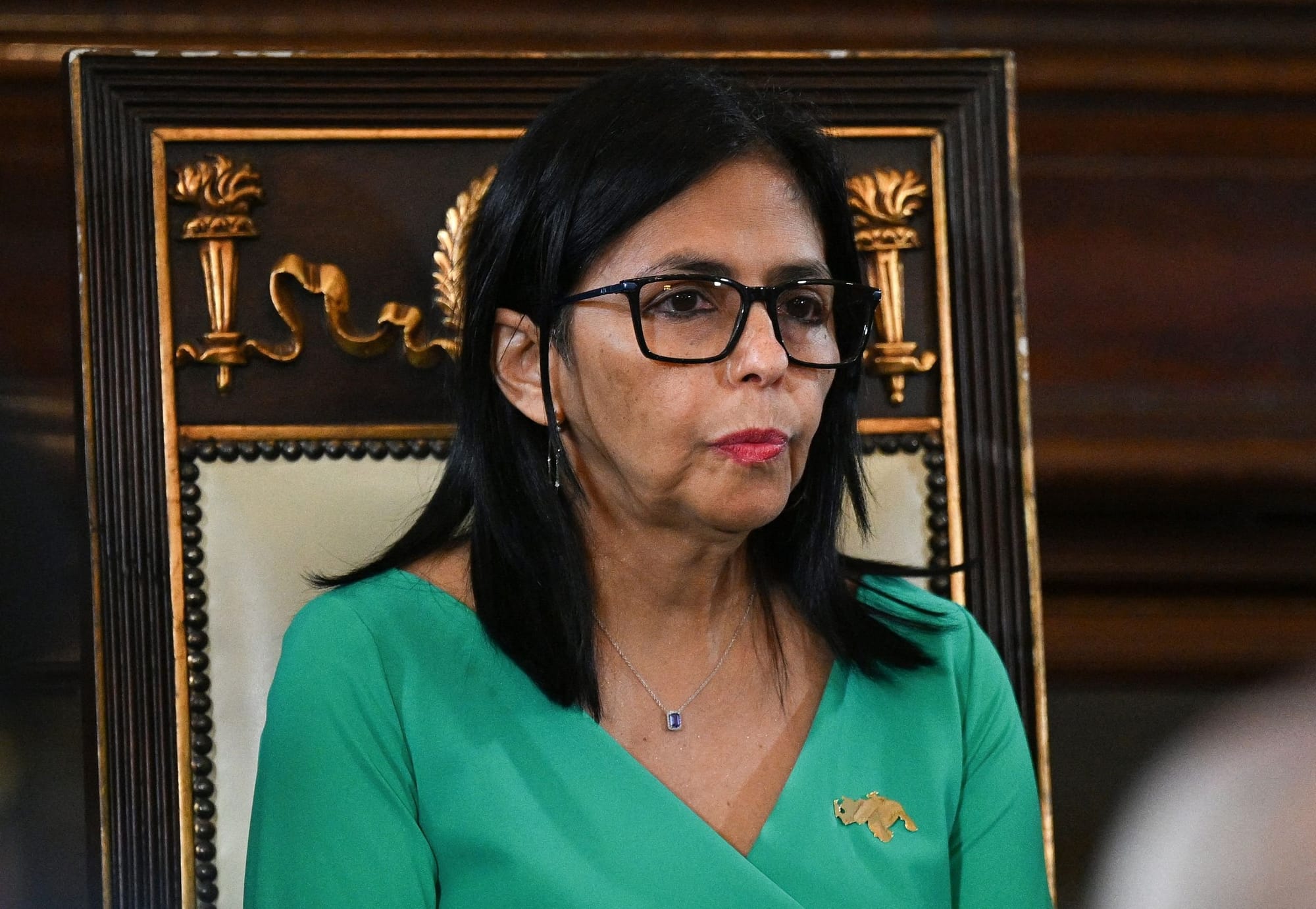
Caracas issued a statement saying that the government of Interim President Delcy Rodríguez, “condemns and regrets deeply that, in a context in which diplomatic efforts and ongoing negotiations are being developed, the military route was opted for, through attacks against Iran.”
Venezuela’s Foreign Ministry also described Iran’s retaliatory strikes as “undue and condemnable,” placing blame on what it called a broader failure of dialogue in the region.
The statement was notable for what it attempted to do—occupy a neutral position between Washington, which now controls Venezuela’s political future, and Tehran, a longtime ideological ally of both the Chávez and Maduro-era regimes.
But following confirmation of the death of Iranian Supreme Leader Ayatollah Ali Khamenei, Venezuela quietly deleted the statement from all of its social media accounts—a telling retreat that underscored just how much Caracas’s relationship with Washington has shifted since Maduro’s capture in January, and just how much its relationship shifted with its former allies.
President Trump has described the Venezuela operation as “the perfect scenario”–a model in which most of the government apparatus stays in place while only the top leadership is removed–a template the administration in Washington is now openly applying to Iran, as well as Cuba.
For Venezuela’s transitional government, however, the message was clear. When Washington moves, Caracas follows—or goes silent.


