


MEXICO CITY — President Claudia Sheinbaum said that Foreign Secretary Roberto Velasco Álvarez contacted U.S. Ambassador Ronald Johnson to lodge a formal complaint over the confidential reporting channels announced by the U.S. Drug Enforcement Administration (DEA) this week.
Per Sheinbaum, Johnson said he would review the matter. She made the announcement at her Friday morning press conference at the National Palace. No direct response from the ambassador has been published, and the DEA and the U.S. embassy had not publicly responded to the complaint as of Saturday evening.
Sheinbaum framed the complaint as a matter of principle. She said the relationship with the United States is one of “coordination, not subordination,” and that when an action by a U.S. agency may affect sovereignty, Mexico has to voice disagreement: “it is an obligation to do so, because we have to defend sovereignty”.
DEA Administrator Terry Cole announced the channels on X on November 25. The agency opened four confidential contact channels for information on organized crime in Mexico: WhatsApp, Signal, Threema and email. They initially target the Sinaloa Cartel, money-laundering networks and officials allegedly linked to them, and the DEA said it will open specific channels for the Jalisco New Generation Cartel (CJNG).
The complaint follows Sheinbaum’s first reaction a day after the announcement, when she rejected what she described as acts of interference. The Mexican government has not said whether the complaint was delivered in writing or only by the foreign secretary’s call to the ambassador.
Beyond the sovereignty argument, Sheinbaum turned the focus to the U.S. side of the drug trade. She questioned Washington’s emphasis on Mexican cartels without enough attention to drug consumption and distribution in the United States, said the U.S. should investigate who sells and distributes fentanyl and where cartel profits are laundered, and said responsibility for fighting trafficking does not rest solely with Mexico.
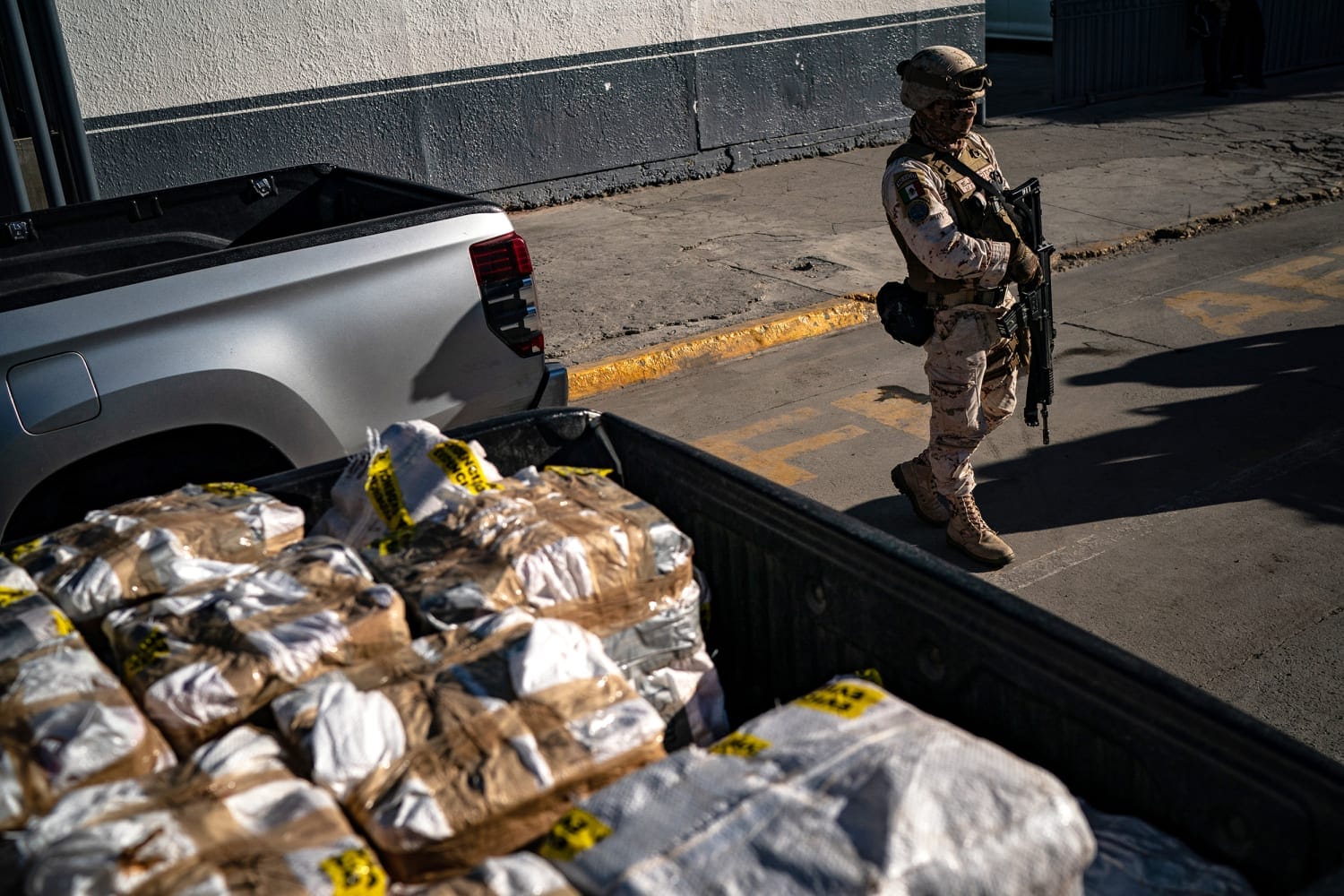
Sheinbaum also credited her government’s seizures and actions against clandestine labs, and claimed a 65% drop in fentanyl crossings into the United States. That figure is Sheinbaum’s own and was not independently verified in the coverage reviewed.
DEA Friction
The episode is the latest in a series of public clashes between Mexico City and the DEA. In July, after Cole said Mexican government and cartel networks were a “deadly connection,” Sheinbaum called the remarks “more of a political statement than one backed by evidence,” and Mexico issued a formal statement rejecting them.
In August 2025, she denied an agreement with the DEA over an operation the agency called Project Portero, saying “there is no agreement with the DEA.” At the time, she said the broader security agreement under negotiation rests on four principles: sovereignty, mutual trust, territorial respect, and coordination without subordination.
Cooperation Continues
Sheinbaum said Mexico will keep cooperating with the United States while defending its sovereignty, and that managing the relationship is not difficult when principles and limits are clear.
In the same press conference, she said she hopes to reach an agreement with Washington in December to reduce tariffs on autos, steel and aluminum, and that her upcoming meeting with President Donald Trump would not be the last chance to close negotiations.