

MIAMI – The ink on the ‘Shield of the Americas’ charter had barely dried when Washington fired its most consequential shot yet at Latin America’s most powerful nation.
The Trump administration has completed the technical groundwork to designate Brazil’s two largest criminal organizations—the Primeiro Comando da Capital (PCC) and the Comando Vermelho (CV)—as Foreign Terrorist Organizations (FTO), a move that would fundamentally reframe U.S. policy toward Brazil and could open the door to the same kind of unilateral military action that led to Nicolás Maduro’s capture in January.
Brazilian Foreign Minister Mauro Vieira called Secretary of State Marco Rubio on Sunday night specifically to discuss the issue, as Lula’s government scrambled to prevent a designation it views not merely as a security matter but as an existential threat to Brazilian sovereignty.
The call underscored just how alarmed Brasília has become—and how rapidly the bilateral relationship is deteriorating even as Lula prepares for a state visit to Washington.
The Designation That Would Change Everything
The U.S. government is moving toward classifying the PCC and Comando Vermelho as terrorist organizations in a decision currently in its final stages of analysis—one that could be announced within days and represents a significant shift in how Washington intends to confront transnational organized crime.
The legal and strategic implications are sweeping. By labeling the PCC and Comando Vermelho with multinational terrorist designations, the U.S. government would bring the Brazilian scenario closer to the framework applied to other geopolitical adversaries—using the fight against crime as a tool to expand military control and political influence in the region.
Under the FTO framework, the consequences would include the blocking of financial resources, greater facility for asset seizure, and expanded international cooperation in narcotics and money laundering investigations.
But the most alarming implication for Brasília is the military one. One of Brazil’s primary fears is that with the designation, PCC and Comando Vermelho operations could become legitimate targets of U.S. attacks, as occurred with Ecuadorian gangs along the Colombian border in recent days, as well as intensifying strikes against vessels off their Pacific coasts weeks after South American drug trafficking groups were designated as terrorist organizations.
Brazil’s government has pushed back firmly on legal and conceptual grounds. Brazil’s National Secretary of Public Security, Mario Sarrubbo, argued that these groups are profit-driven criminal enterprises, not ideologically motivated terrorists—a distinction that matters enormously under international law even if it carries little weight in Washington’s current posture.
The top echelons of Brazil’s Federal Police, the Justice Ministry, and the Foreign Ministry have all expressed opposition to the designation, arguing that Brazil should not follow the line of classifying criminal organizations as domestic terrorist groups.
Despite those objections, the American decision appears set to advance independently.
U.S. authorities assess that both organizations already operate at an international scale with the structure to move large drug trafficking and money laundering networks—a threshold that, in Washington’s view, meets the FTO criteria regardless of Brazil’s objections.
The Primeiro Comando da Capital—the PCC—is Latin America’s biggest drug gang, with a membership of 40,000 lifetime members plus 60,000 contractors. It controls more than 50% of Brazil’s drug exports to Europe and has established itself as a central player in the West African cocaine trade, with operations across five continents through alliances with Italy’s 'Ndrangheta mafia, along with Mexican, Colombian, Russian, and African criminal networks.
The PCC has completed a metamorphosis from a drug trafficking organization into a sophisticated and multifaceted criminal-business conglomerate—a reality exposed by Brazil’s Operação Carbono Oculto in August 2025, which mobilized 1,400 agents and uncovered targets ranging from gas stations in the periphery to air-conditioned offices in São Paulo’s financial center on Avenida Faria Lima.
Intelligence reports indicate that PCC members have used South Florida and Texas as entry points for smuggling operations into the United States, leveraging ties with the Sinaloa Cartel and CJNG to move narcotics into major American cities, including New York, Boston, Chicago, and Los Angeles.
The Absent Giant and the Alliance’s Fatal Flaw
Notably missing at the Doral summit were the presidents of Brazil, Mexico, and Colombia—long the linchpin of U.S. anti-narcotics strategy in the region.
The absence of these three nations is not a peripheral concern. Those three countries represent more than half of the region’s GDP and host a large part of the region’s illicit markets, including narcotics production and trade—the supposed primary targets of the summit itself.
Any security alliance that claims to target transnational criminal networks while excluding the country that hosts the hemisphere’s most powerful one is, by definition, incomplete.
Chatham House’s Latin America program was blunt in its assessment. The openly partisan nature of the ‘Shield of the Americas’ effort hobbles it at the outset, and past Latin American history shows that partisan networking relationships never last—a record that includes the now-defunct UNASUR and the limping CELAC, or socialist-invented ALBA with Venezuela and Cuba.
Trump, Lula, and the Monroe Doctrine Collision Course
The deeper conflict between Washington and Brasília is not really about the PCC. It is about competing visions of who governs the Western Hemisphere—and Brazil’s growing alignment with China, Russia, and the Global South.
Washington’s recent moves targeting Brazil reveal a calculated strategy that extends far beyond bilateral cooperation—from pressuring Brazil to designate its major criminal gangs as terrorist organizations, to threatening sanctions against Supreme Court Justice Alexandre de Moraes, to seeking access to strategic military bases along Brazil’s northeast coast.
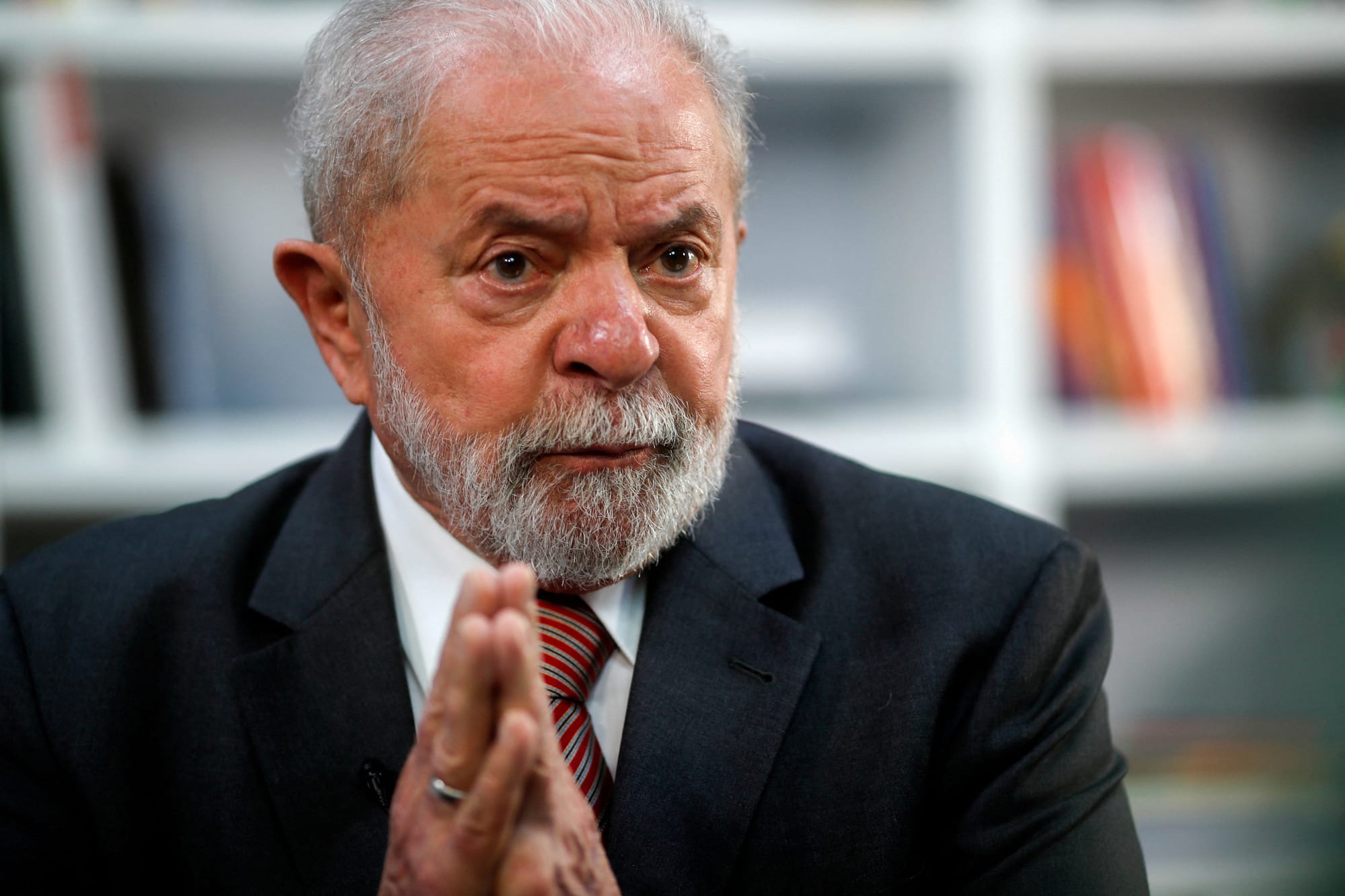
President Trump has become the most pressing foreign policy challenge for Lula’s administration, especially due to the close alignment between the MAGA faction of the Republican Party and the Bolsonaro family, with Trump having declared that Bolsonaro “loves Brazil beyond all else” and giving him his “Complete & Total Endorsement.”
The Trump administration has been invoking the Monroe Doctrine—adapted as the “Trump Corollary”—to justify interventions in Latin America against threats including drug cartels, migration, and Chinese influence.
The Corollary was formally embedded in the U.S. National Security Strategy in December 2025 and the National Defense Strategy in January 2026.
Argentina and Paraguay have already branded the PCC and Comando Vermelho as international terrorist organizations—moves analysts describe as an alignment with Trump’s geopolitical agenda in the region. Paraguay’s designation in October 2025 followed a massive Brazilian state police operation targeting organized crime in Rio de Janeiro favelas that left more than 120 people dead, prompting Paraguayan President Santiago Peña to place the entire border with Brazil on its highest alert level.
The regional domino effect of a U.S. designation would be immediate and far-reaching.
The Stakes for the Shield
The ‘Shield of the Americas’ proclamation signed by Trump on March 7 commits the United States to training and mobilizing partner nation militaries, depriving criminal organizations of territorial control and financing, and keeping external threats—specifically naming malign foreign influences from outside the Western Hemisphere—at bay. Every one of those objectives is complicated by Brazil’s absence.
Brazil’s challenge is to pursue a “contain and engage” strategy—maintaining a non-aligned posture while selectively engaging Washington on specific issues—without allowing U.S. interference in its internal affairs to dominate the bilateral agenda and foreclose any possibility of near-term resolution.
Lula’s upcoming Washington visit, now overshadowed by the FTO designation threat, will test whether that strategy is still viable.
The answer may come sooner than expected. The designation awaits only a political sign-off—one that diplomats say is difficult to reverse and that places Brazil under direct risk of foreign military intervention in the fight against organized crime.
If Trump signs it before Lula lands in Washington, the meeting will begin in crisis. If he holds off, it signals that the administration still sees Brazil as a negotiating partner rather than a target.
For the ‘Shield of the Americas’ to become anything more than a photograph of twelve right-leaning leaders at a golf resort, it needs Brazil inside the tent. The FTO designation may be the move that makes that impossible—not just for Lula, but for whoever governs Brazil after October.


