

In a tumultuous string of diplomatic woes between the governments of the United States and Colombia, President Gustavo Petro remains one of the region's most vocal critics of the Trump administration's ongoing campaign against criminal drug trafficking networks in Latin America.
Colombia, long regarded as the United States' closest ally in the region, and the United States, in turn, as Colombia's largest trading partner in the world, relations between the two American nations have been fraught with tension since President Trump's return to the White House more than 11 months ago.
Although the history of diplomatic relations between the two countries has had its fair share of disputes and disagreements, the current positions of the two leaders of both countries lie on totally opposite poles of the political spectrum and have led each down a course of mutual disdain and distrust, unseen in years.
The major roadblock to more friendly relations between the two governments at the moment is the Pentagon's current strategy to reduce the flow of illicit narcotics into the United States.
The old arguments surrounding the drug trade have now reemerged but from different mouth-boxes with the U.S. accusing South American governments like Colombia of not doing enough to curb cocaine production in the nation's rural regions, and the administration in Bogotá, on the other hand, arguing that Washington remains apathetic to its own nation's drug addiction, citing that the persistent failure to curb North American demand is only exacerbating the crisis.
The Pentagon, since August, has taken a more aggressive approach to drug traffickers in South America and the Caribbean, executing more than a dozen drone strikes on suspected "narco-terrorists" traveling by sea in high-speed vessels, killing at least 80 people.
Analysts speculate that the military build-up along the South Caribbean corridor is also part of the Trump administration's new strategy against the Venezuelan regime in Caracas, suspicious that hardliners in Washington are pushing for regime change in the South American country, and who are spoiling to displace the more than 10-year reign of Chávez's heir, Nicolás Maduro.
This particular narrative seems to have ignited an awakening of nationalist-liberals in the region, like Colombia's Gustavo Petro, warning that the ghosts of U.S. imperialism are alive and well, suffocating the national sovereignty of its Latin American partners who are eager to exercise their own agency in the region.
Earlier in the week, when asked by a reporter during a cabinet meeting in the White House whether potential strikes against drug traffickers on land in the region are exclusive to Venezuela (the apparent target of the U.S. military deployment in the Caribbean Sea), President Trump responded by saying, "No, not just Venezuela."
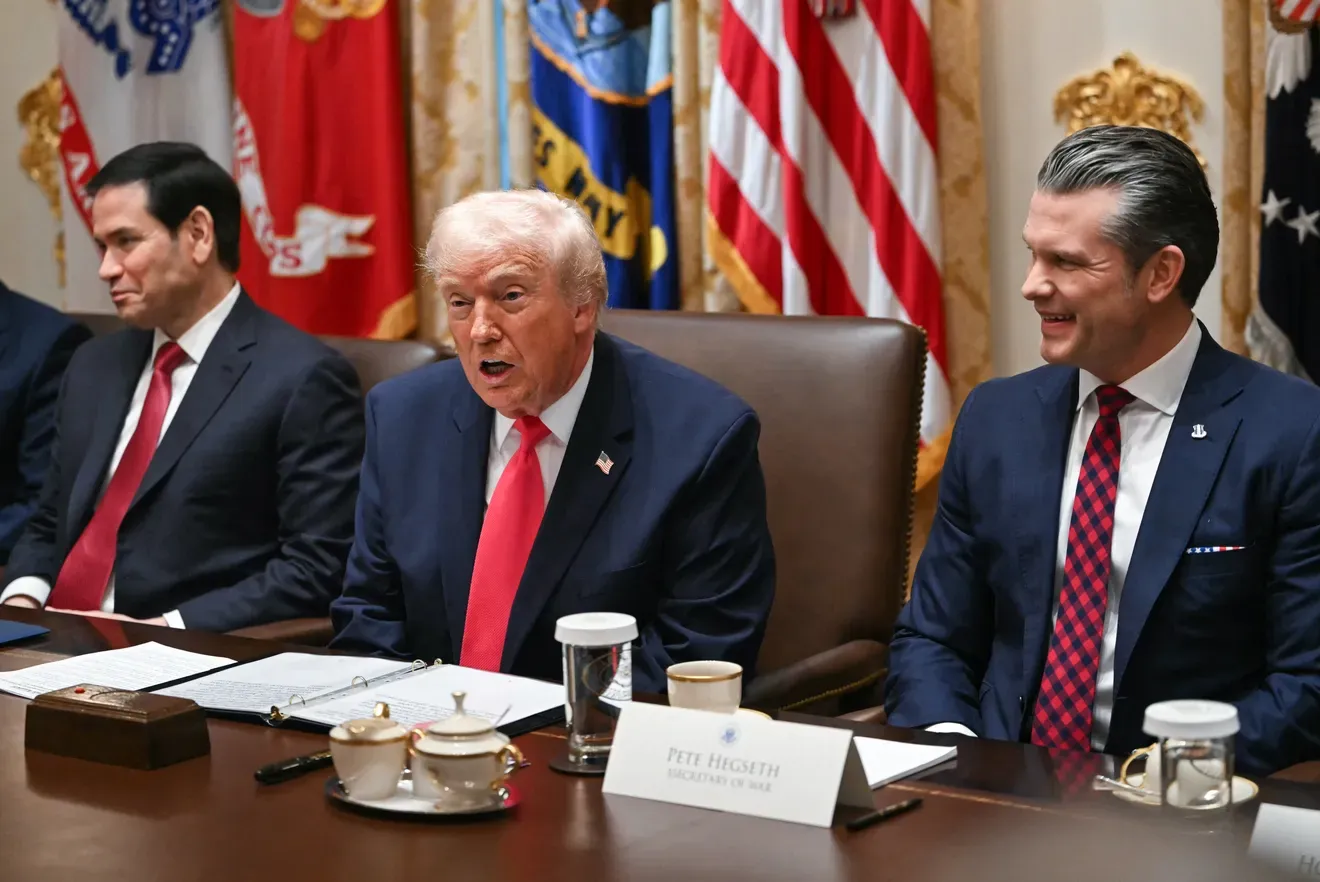
Last month, President Petro warned the President of the United States and Secretary of State Marco Rubio, in response to repeated strikes on boat targets in the Caribbean:
"Beware. There are people in the Caribbean that have always been used to hurricanes and can unleash themselves like one…", adding, "Like the legend goes, 'if the golden eagle attacks the condor, the American people’s jaguar awakens.' Don’t awaken the jaguar. We can still talk."
Last week's announcement by the U.S. president stirred a speedy response by his Colombian counterpart, who wrote on X: "To threaten our sovereignty is to declare war; do not damage two centuries of diplomatic relations."
President Gustavo Petro, a former rebel of the M19 guerrilla movement, also invited the U.S. president to tour the Colombian countryside to witness Colombia's efforts in destroying cocaine-production facilities, writing: "Come with me, and I’ll show you how they are destroyed, one lab every 40 minutes."
Colombia is currently the world's largest cocaine producer, seconded by its southern neighbor, Peru.
The government in Bogotá is also currently embattled with several counterinsurgency groups, like the Frente 33, a FARC dissident group, and the Clan de Golfo–or the Gulf Clan, which controls a large portion of the Colombian drug routes leading into the Isthmus of Central America and the Caribbean coastline destined for the United States and Europe.


