

LIMA, PERU — Peru’s government declared a 60-day state of emergency across five districts of Pisco province, in the Ica region, on Thursday, citing a wave of homicides and extortion that local officials say has overwhelmed police resources.
The measure, formalized through Supreme Decree No. 105-2026-PCM and published in the official gazette El Peruano, covers the districts of Pisco, San Andrés, Paracas, San Clemente, and Túpac Amaru Inca.
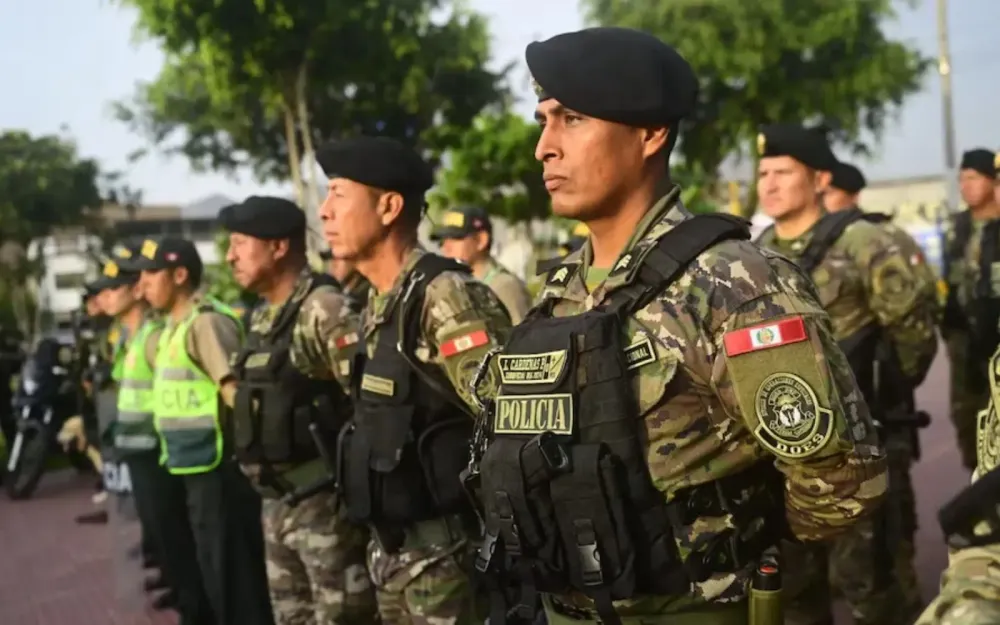
Under the decree, Peru’s National Police will assume control of internal order with support from the Armed Forces, and the government will stand up a Unified Operational Coordination Command led by the head of Ica’s police region to direct security operations for the duration of the emergency.
As with prior declarations of this kind, the measure temporarily suspends several constitutional protections, including the inviolability of the home, freedom of movement, and freedom of assembly; large-scale religious, cultural, or sporting events will require prior government authorization.
A Recurring Response to a Persistent Crisis
This is not Pisco’s first emergency declaration this year. The province was already placed under a state of emergency in January under Supreme Decree No. 004-2026-PCM, which cited the same underlying pattern of homicides and extortion. Pisco’s provincial mayor, Pedro Fuentes Hernández, said in late June that despite the emergency measures already in place, the province still lacked the operational resources — personnel, equipment, and logistics — to make a meaningful dent in the violence, and called for a stronger central government response, including migration enforcement targeting foreign nationals he said were linked to some of the crimes.
The renewed Pisco decree arrives alongside a broader national pattern. Lima and Callao have had their own states of emergency extended repeatedly through 2026 in response to a surge in extortion and contract killings; a March extension cited data from Peru’s Crime and Violence Observatory showing that roughly one in four Peruvian adults — more than six million people — reported being a victim of extortion or knowing someone affected within a three-month period.
The same report noted that extortion has begun spreading beyond Lima into central, southern, and eastern regions, as well as rural areas, and flagged the continued growth of gota a gota informal lending schemes tied to extortion, alongside a rise in digital and phone-based scams.
Peru’s transport sector has been especially hard-hit, with 239 drivers reportedly killed in extortion-linked violence in 2025 alone.
A Government in Transition
The Pisco emergency was announced the same week Peru’s Council of Ministers, led by interim President José María Balcázar, approved a package of citizen-security and territorial-development legislative proposals. It also coincided with a symbolically significant moment for the country: Balcázar attended the ceremony in which Peru’s National Elections Board formally handed presidential credentials to president-elect Keiko Fujimori, who takes office July 28.
The government described Balcázar's presence as a signal of an orderly, transparent transition of power.
Peru has leaned on states of emergency as a primary tool against organized crime for several years, with declarations and extensions covering Lima, Callao, Trujillo, Tumbes, and the Ayacucho-Cusco-Junín corridor at various points.
However, the approach has drawn criticism from analysts who note that the measure suspends constitutional rights without addressing the structural drivers of the crisis — including low conviction rates and limited investigative capacity — and that repeated, rolling declarations risk becoming a routine substitute for a longer-term security strategy.
Whether Fujimori’s incoming government, elected on a hardline anti-crime platform, will alter that approach remains to be seen once she takes office later this month.
Sociedad Media is a Miami-based digital news publication covering security incidents, organized crime, and political developments across the Andes & Latin America.
For questions, corrections, or tips, contact info@sociedadmedia.com